
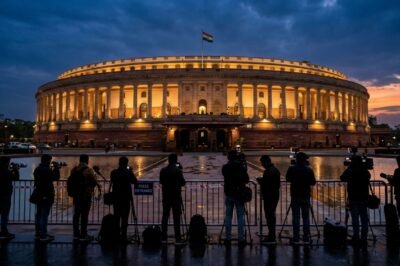
The Indian legislative landscape is currently witnessing a tectonic shift as the Delimitation Bill takes center stage, prompting a flurry of strategic maneuvers within the high-stakes corridors of New Delhi. As the INDIA bloc convenes a critical meeting ahead of the upcoming special Parliament session, the political atmosphere is thick with anticipation and tactical repositioning. The sudden announcement by the DMK to support the Centre’s proposal has sent shockwaves through the opposition alliance, complicating a narrative that was previously framed as a monolithic resistance against the ruling party’s constitutional overhaul. This development is not merely a matter of seat redistribution; it is a fundamental debate about the future of Indian federalism, the weight of regional voices, and the demographic balancing act that will define the Lok Sabha for decades to come. As journalists and analysts scramble to decode the nuances of the special session, the underlying tension revolves around whether the new boundaries will favor specific political geographies or uphold the democratic ideal of equitable representation. The convergence of the opposition leaders signifies a desperate search for a unified front, even as regional heavyweights like the DMK prioritize localized strategic interests over collective ideological purity.
The Delimitation Bill is a legislative instrument designed to redraw the boundaries of various assembly and Lok Sabha constituencies based on recent population data. While the process is constitutionally mandated to ensure that every vote carries roughly the same weight across the country, it has been frozen since the 42nd Amendment in 1976 to prevent states with successful population control measures from losing parliamentary representation. The impending end of this freeze in 2026 has brought the issue to a boiling point. The Centre’s proposal, which suggests a significant increase in the total number of seats in the Lok Sabha, is seen by some as a necessary expansion to accommodate a growing electorate and by others as a move that could potentially marginalize the southern states. The INDIA bloc’s meeting is an attempt to harmonize these conflicting regional anxieties into a coherent national policy, a task made significantly more difficult by the DMK’s recent pivot towards supporting the proposal under specific conditions.
The Historical Context and Constitutional Necessity of Delimitation
To appreciate the gravity of the current debate, one must look back at the history of seat redistribution in India. Since independence, delimitation commissions have been set up four times—in 1952, 1963, 1973, and 2002. However, the seat allocation for states in the Lok Sabha has remained stagnant based on the 1971 Census. The rationale behind the 1976 freeze was to ensure that states like Tamil Nadu and Kerala, which proactively implemented family planning programs, were not penalized with reduced political power compared to northern states like Uttar Pradesh and Bihar, where population growth remained high. This freeze has created a massive disparity; today, an MP from a northern state may represent significantly more voters than an MP from the south, leading to arguments about the erosion of the ‘one person, one vote’ principle.
The 84th Amendment in 2002 extended this freeze until 2026, meaning the first census conducted after 2026 will be the basis for the next major delimitation. The Centre’s current push suggests a desire to prepare the legislative framework well in advance of this deadline. The proposal is inextricably linked to the construction of the new Parliament building, which features a significantly larger seating capacity, signaling a physical preparation for a vastly expanded Lok Sabha. For the INDIA bloc, the challenge lies in addressing the constitutional requirement for updated representation without triggering a North-South divide that could threaten national integrity and the very foundations of the federation.
DMK’s Strategic Support: A Shift in Regional Dynamics
The DMK’s announcement of support for the Centre’s proposal is a landmark moment in the current political cycle. Traditionally, the DMK has been one of the most vocal critics of any measure that might dilute the influence of southern states. However, the party’s leadership seems to have calculated that a policy of outright obstruction may be less effective than a policy of conditional engagement. By supporting the proposal, the DMK aims to position itself as a constructive player that can negotiate safeguards for Tamil Nadu’s interests from within the legislative process rather than being sidelined. This move also places pressure on other regional parties within the INDIA bloc to reconsider their rigid stances.
Inside sources suggest that the DMK’s support is contingent on guarantees regarding the protection of regional autonomy and a potential formula that balances population-based seat increases with weightage for socio-economic performance. This ‘performance-based representation’ is a novel concept that the DMK is reportedly championing to ensure that states are not ‘punished for their progress.’ This strategic pivot has forced the INDIA bloc to hold emergency consultations, as the alliance’s strength relies on a unified front against the BJP’s majoritarian impulses. If the DMK breaks ranks on this issue, it could set a precedent for other regional powers like the TMC or the NCP to seek their own separate deals with the Centre, thereby weakening the collective bargaining power of the opposition.
The INDIA Bloc’s Meeting: Searching for a Unified Narrative
The INDIA bloc meeting, held in the shadow of the special Parliament session, is focused on creating a ‘Common Minimum Program’ regarding the Delimitation Bill. The leaders are faced with a dual challenge: they must oppose any move that looks like a gerrymandering exercise intended to benefit the ruling party, while also acknowledging the democratic necessity of redrawing constituency boundaries. High-profile leaders from the Congress, AAP, and the Left have been vocal about the timing of the bill, questioning why a special session was called without a clearly defined agenda until the last minute. They argue that such a significant constitutional change requires thorough vetting by a parliamentary standing committee and extensive public consultation.
The bloc is also expected to raise the issue of the ‘Women’s Reservation Bill’ in tandem with delimitation. There are strong rumors that the Centre may link the implementation of women’s quotas to the completion of the delimitation exercise, a move the opposition views as a ‘delay tactic.’ By bringing these two issues together, the INDIA bloc hopes to shift the narrative from a technical boundary dispute to a broader debate on social justice and gender equality. The meeting’s outcome will likely determine whether the opposition will participate in the special session with a spirit of debate or resort to protests and walkouts to register their dissent against what they term as the ‘hasty’ imposition of the bill.
Socio-Political Implications of a Realigned Lok Sabha
The redistribution of seats has profound implications for India’s social fabric. If the delimitation follows a strictly population-based model, the northern ‘Hindi Heartland’ could see its seat count swell by nearly 30-40%, while the southern states remain stagnant or see marginal increases. This would effectively shift the center of gravity of Indian politics even further towards the north, potentially making it possible for a party to win a majority in the Lok Sabha without winning a single seat in the south. Such a scenario raises fears of ‘majoritarianism’ where the cultural and linguistic diversity of the south is overshadowed by the political dominance of the north.
Furthermore, the delimitation process impacts the representation of Scheduled Castes (SC) and Scheduled Tribes (ST). As boundaries change, the reservation status of various constituencies will also be re-evaluated. This could lead to significant shifts in local power dynamics, affecting grassroots leadership and the political aspirations of marginalized communities. The INDIA bloc is particularly sensitive to this aspect, as their voter base includes a large segment of these communities. Any perceived unfairness in the redrawing of reserved seats could lead to widespread social unrest and a backlash against the electoral process itself, making the role of the Delimitation Commission one of the most scrutinized tasks in modern Indian history.
Economic and Market Implications of Legislative Uncertainty
From a business and economic perspective, the Delimitation Bill is a double-edged sword. On one hand, a more representative parliament could lead to more stable and popular governance, which is generally viewed positively by investors. Markets crave predictability, and a clear roadmap for India’s electoral future could reduce long-term political risk. However, the immediate friction caused by the bill—especially the potential for a North-South rift—could lead to policy paralysis or regional instability. If southern states, which contribute a disproportionate share to the national GDP and attract significant foreign direct investment (FDI), feel politically disenfranchised, it could affect their economic cooperation with the Centre.
Fiscal federalism is also at stake. The 15th Finance Commission already used the 2011 Census data for tax devolution, which was met with stiff resistance from southern states. If political representation follows the same path, the tension over resources and revenue sharing will only intensify. Investors are closely watching the special session for signs of consensus. A chaotic session with no clear resolution could lead to short-term market volatility, particularly in sectors heavily dependent on government policy and infrastructure spending. Conversely, a smooth passage of the bill with bipartisan support—as hinted by the DMK’s stance—could be interpreted as a sign of institutional maturity, boosting confidence in India’s democratic resilience.
Conclusion: The Future of the Indian Republic
The Delimitation Bill is much more than a routine administrative task; it is a test of India’s constitutional morality and its ability to manage diversity within a democratic framework. The INDIA bloc’s meeting and the DMK’s strategic support highlight the complexity of this challenge. As the special Parliament session begins, the nation will be watching whether the leaders can rise above narrow partisan interests to forge a path that ensures every citizen feels represented. The outcome will not only determine the number of seats in the Lok Sabha but will also define the very nature of the Indian union for the next century. Whether this exercise results in a more vibrant democracy or a fragmented federation remains to be seen, but one thing is certain: the decisions made in the coming days will echo through the halls of history, shaping the political destiny of over 1.4 billion people. The road to 2026 is paved with constitutional intricacies, and the current session is but the first major step in a long and arduous journey towards a new democratic equilibrium.
































Leave a Reply