
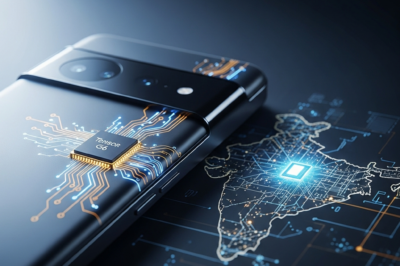
The Evolution of Google’s Smartphone Ambitions in India
The smartphone landscape in India has witnessed a dramatic shift over the last half-decade, moving from a market dominated by value-segment Chinese OEMs to a sophisticated ecosystem where premium flagship devices are increasingly sought after. At the heart of this transition is Google’s Pixel lineup. While the early iterations of the Pixel were often viewed as developer-focused niche products, the recent success of the Pixel 8 and Pixel 9 series has firmly established Google as a top-tier competitor against the likes of Apple and Samsung in the Indian subcontinent. Now, as whispers regarding the Google Pixel 11 begin to surface, the tech community is abuzz with anticipation. This isn’t just about another annual update; the Pixel 11 represents Google’s most ambitious attempt to vertically integrate its hardware and software, leveraging its own silicon expertise to redefine what a smartphone can do. The Indian market, in particular, stands at the center of this strategy, with Google recently initiating local manufacturing to circumvent high import duties and offer more competitive pricing. This long-form analysis dives deep into every leak, every internal rumor, and the technological implications of the upcoming Pixel 11 series.
The Core Powerhouse: TSMC-Manufactured Tensor G6 Chipset
Perhaps the most significant piece of information surrounding the Pixel 11 is the transition of its heart—the Tensor chipset. For years, Google’s Tensor chips, produced in partnership with Samsung Foundry, have faced criticism for thermal throttling and efficiency issues when compared to Qualcomm’s Snapdragon or Apple’s A-series silicon. However, the Pixel 11 is expected to debut the Tensor G6, which reports suggest will be manufactured using TSMC’s cutting-edge 2nm or advanced 3nm process nodes. This shift is monumental. By moving to TSMC, Google aims to achieve a level of power efficiency and peak performance that has previously eluded the Pixel line. The Tensor G6 isn’t just about raw speed; it is being designed from the ground up to handle ‘on-device’ AI processing. With Google’s Gemini Nano models becoming more complex, the Tensor G6 will likely feature a dedicated NPU (Neural Processing Unit) that can handle real-time video translation, advanced generative AI photo editing, and proactive assistant features without needing to ping the cloud. For Indian users, who often deal with varying network conditions, robust on-device AI means a smoother, more reliable experience regardless of connectivity.
Display and Design: Refining the Iconic Aesthetic
Google has found its design language with the ‘visor’ camera bar, and the Pixel 11 is expected to refine this further rather than reinvent it. Leaks suggest a shift toward more durable materials, possibly a high-grade titanium frame or a new ceramic-glass composite that is more resistant to drops and scratches—a welcome feature for the rugged Indian environment. The display is rumored to be an ‘Actua Display’ 3.0, utilizing the latest LTPO 5.0 technology. We are looking at a variable refresh rate from 1Hz to 144Hz, providing buttery smooth animations while conserving battery life when the screen is static. Peak brightness is expected to soar past 3000 nits, ensuring that even under the harsh, direct midday sun in cities like Delhi or Mumbai, the screen remains perfectly legible. Furthermore, rumors indicate that Google might finally reduce the bezel thickness even further, achieving a nearly symmetrical, edge-to-edge look that rivals the most expensive flagships on the market.
The Camera Revolution: Beyond Megapixels
In the world of smartphone photography, the Pixel has always been the gold standard for computational processing. The Pixel 11 aims to push this lead further with a completely revamped sensor array. While the 50MP main sensor has served Google well, the Pixel 11 Pro models are rumored to include a new 1-inch type primary sensor. This would allow for a massive increase in light intake, drastically improving night-time photography and natural bokeh in portraits. But the real story is in the telephoto and ultra-wide lenses. Expected is a new variable aperture system on the primary lens, allowing users to manually control the depth of field—a feature usually reserved for professional DSLRs. For the Indian consumer who loves capturing vibrant festivals and diverse landscapes, the Pixel 11’s ‘Magic Editor’ will likely receive an AI-powered ‘Video Boost 2.0,’ which can upscale 4K video to 8K-like quality while applying HDR frame-by-frame. The front-facing camera is also slated for an upgrade with autofocus and 4K 60fps support across all models, catering to the growing community of content creators in India.
Software and the Gemini Integration: Android 16 and Beyond
The Pixel 11 will be the launch vehicle for Android 16, an OS version that is expected to be built entirely around the concept of ‘AI-first.’ This goes beyond simple chatbots. We are looking at an OS that understands context across apps. Imagine asking your phone to ‘find the flight details from my WhatsApp chat and add the hotel location from my email to my calendar,’ and having it done instantly. Google is also expected to offer an unprecedented software support cycle—potentially up to 8 or 10 years of OS and security updates. This long-term viability is a major selling point in India, where consumers are increasingly looking for devices that offer longevity. Exclusive features for the Indian market might include enhanced support for regional languages via Live Translate, allowing for seamless communication across the country’s diverse linguistic landscape. The integration of Gemini will be so deep that the Assistant as we know it will be replaced by a proactive agent that can book tables, filter spam calls with even greater accuracy, and manage daily schedules with human-like intuition.
Battery Life, Charging, and Connectivity
Historically, charging speeds have been a weak point for the Pixel series, especially when compared to the 80W or 120W speeds offered by competitors like OnePlus or Xiaomi. The Pixel 11 is rumored to finally address this with 45W or even 65W wired fast charging, alongside improved Qi3 wireless charging support. Coupled with the efficiency of the Tensor G6, the Pixel 11 is expected to feature a 5,100mAh battery in the Pro model, comfortably lasting over 36 hours on a single charge for the average user. Connectivity-wise, the device will support Wi-Fi 7 and a new 5G modem that is better optimized for India’s growing 5G infrastructure, ensuring better signal retention in basement parking lots or high-density urban areas. There is also talk of satellite connectivity for emergency SOS services, a feature that is becoming a standard in the premium segment.
Expected Price in India and Market Strategy
Pricing is the ultimate factor that will determine the Pixel 11’s success in India. With Google’s ‘Made in India’ initiative now in full swing, there is hope that the company can avoid the 22% import duty on CBU (Completely Built Units). This could lead to a more aggressive pricing strategy. Industry analysts expect the base Pixel 11 to start at approximately ₹74,999, while the Pixel 11 Pro could start at ₹1,09,999. The Pixel 11 Pro XL, the flagship of the flagship, might cross the ₹1,25,000 mark. By positioning the Pixel 11 at these price points, Google is directly challenging the iPhone 17 and Samsung Galaxy S26 series. The strategy involves not just selling a phone, but an entire ecosystem including Pixel Buds and Pixel Watch, which are also expected to see major refreshes alongside the phone. For the Indian consumer, the Pixel 11 represents a high-status, high-utility device that promises the purest version of Android with the most advanced AI features available.
Conclusion: A New Era for Google in India
The Google Pixel 11 is shaping up to be more than just a smartphone; it is a statement of intent. By finally moving to a superior manufacturing process with the Tensor G6 and doubling down on local Indian manufacturing, Google is removing the final hurdles that have kept it from dominating the premium segment. While the leaks paint a picture of a powerhouse device, the true test will be in the real-world performance and how well the AI features resonate with the daily lives of Indian users. If the Pixel 11 can deliver on the promise of all-day battery life, professional-grade cameras, and truly helpful AI, it may very well become the definitive Android flagship of its generation. As we wait for the official unveiling, one thing is certain: the competition in the Indian smartphone market is about to reach fever pitch, and Google is playing for keeps.




































Leave a Reply