
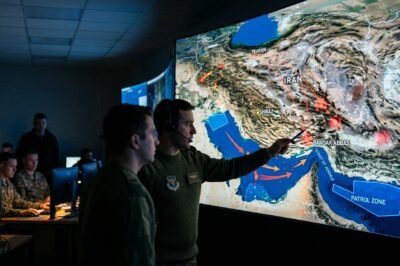
The shadow war that has defined Middle Eastern geopolitics for over four decades has finally emerged from the darkness into the blistering heat of direct, kinetic confrontation. As tensions between the Islamic Republic of Iran, Israel, and the United States reach a fever pitch, the world watches with bated breath to understand how Tehran might calibrate its response to further military strikes. The paradigm of ‘strategic patience’—a long-standing Iranian doctrine involving the use of regional proxies to avoid direct state-on-state conflict—appears to have been discarded in favor of a more assertive ‘active deterrence’ model. This shift was most notably evidenced by the massive missile and drone barrages launched directly from Iranian soil in April and October of 2024. However, the prospect of a sustained bombing campaign by the US and Israel presents a different set of challenges for the Iranian leadership. Tehran now finds itself at a critical crossroads, where the need to project strength and maintain domestic legitimacy must be balanced against the existential risk of an all-out regional war that could jeopardize the very survival of the clerical establishment. The following analysis explores the multifaceted strategies Iran is likely to employ, ranging from military escalation to economic warfare and diplomatic maneuvering.
The Evolution of Iranian Deterrence: From Proxies to Direct Strikes
Historically, Iran’s military strategy was built around the concept of ‘forward defense.’ By supporting a network of non-state actors—collectively known as the Axis of Resistance—Tehran was able to project power across Lebanon, Syria, Iraq, and Yemen without triggering a direct attack on its own territory. This strategy allowed the Islamic Revolutionary Guard Corps (IRGC) to bleed its adversaries through a thousand cuts while maintaining a degree of plausible deniability. However, the landscape changed significantly following the assassination of high-ranking IRGC officials and the direct targeting of Iranian diplomatic facilities. In response, Tehran has signaled that the era of relying solely on proxies is over. Any future response to a US-Israeli bombing campaign would likely involve a hybrid approach, combining high-intensity ballistic missile strikes with coordinated actions from its regional allies.
Military analysts suggest that Iran has spent years preparing for this exact scenario, hardening its critical infrastructure and expanding its missile silos deep underground. The ‘missile cities’—vast subterranean complexes housing thousands of precision-guided munitions—are designed to survive initial waves of aerial bombardment and ensure a second-strike capability. By launching direct attacks, Tehran aims to establish a new ‘red line,’ demonstrating that the cost of striking Iran will be met with immediate and proportional destruction within the territories of its attackers. This shift from asymmetrical warfare to conventional deterrence represents a high-stakes gamble that could either prevent further escalation or trigger a catastrophic cycle of violence.
Military Arsenal: Missiles, Drones, and the ‘Ring of Fire’
Iran possesses the largest and most diverse missile arsenal in the Middle East, a factor that remains its primary tool of deterrence. In the event of a renewed bombing campaign, Tehran would likely deploy its most advanced assets, including the Fattah hypersonic missile and the Kheibar Shekan, which are designed to penetrate sophisticated air defense systems like Israel’s Iron Dome and Arrow-3. The sheer volume of fire is a key component of Iranian strategy; by saturating the airspace with hundreds of drones and missiles simultaneously, Tehran hopes to overwhelm defensive batteries and ensure that at least a fraction of its warheads reach their targets. This ‘swarming’ tactic is not just a military necessity but a psychological one, aimed at shattering the sense of security within the civilian populations of its adversaries.
Beyond its domestic capabilities, Iran’s ‘Ring of Fire’—the encirclement of Israel by armed groups—would be activated in full force. Hezbollah in Lebanon remains the most potent threat, with an estimated 150,000 rockets capable of reaching every corner of Israel. A full-scale mobilization by Hezbollah, coupled with drone strikes from the Islamic Resistance in Iraq and Houthi anti-ship operations in the Red Sea, would force the US and Israel to fight on multiple fronts simultaneously. This coordinated regional response is designed to stretch Western military resources thin and force a diplomatic ceasefire by making the cost of continued conflict unbearable for the global community.
Economic Warfare: The Strait of Hormuz and Global Oil Markets
The financial implications of a direct conflict with Iran are profound and reach far beyond the borders of the Middle East. Perhaps the most potent weapon in Tehran’s arsenal is not a missile, but its geographic control over the Strait of Hormuz. Approximately 20% of the world’s total oil consumption passes through this narrow waterway daily. Iranian officials have frequently hinted that if they are prevented from exporting their own oil due to war or sanctions, they will ensure that no other nation in the region can do so either. A blockade or even a significant disruption in the Strait would send global oil prices skyrocketing, likely exceeding $150 per barrel, which would trigger a global inflationary crisis and potentially tip major economies into recession.
Financial markets are notoriously sensitive to geopolitical instability in the Persian Gulf. A sustained US-Israeli bombing campaign would likely result in an immediate flight to safety, with investors pouring capital into gold and US Treasuries while abandoning emerging market assets. Furthermore, Iran’s cyber warfare capabilities should not be underestimated. The IRGC’s cyber units have demonstrated the ability to target financial institutions, energy grids, and shipping logistics in the past. A coordinated cyber offensive against Western banking systems or Israeli infrastructure would serve as a low-cost, high-impact method of retaliation that avoids direct kinetic engagement while inflicting significant economic pain.
The Domestic Dimension: Legitimacy and the IRGC’s Power
Inside Iran, the response to foreign military strikes is inextricably linked to the survival of the political system. While the country has faced years of economic hardship and civil unrest, a foreign attack often has a ‘rally around the flag’ effect, at least in the short term. The clerical leadership and the IRGC would use any bombing campaign to justify further crackdowns on domestic dissent, framing all opposition as a ‘fifth column’ working for foreign interests. This internal consolidation is crucial for the Supreme Leader, Ayatollah Ali Khamenei, as he manages the complex dynamics of succession and the growing influence of the hardline military elite.
However, this strategy carries significant risks. If the Iranian government is seen as unable to protect its citizens or its critical infrastructure, the narrative of strength could quickly crumble. The IRGC’s legitimacy is built on its role as the defender of the nation; a failure to effectively retaliate against US or Israeli strikes could embolden internal critics and lead to fractures within the security apparatus itself. Therefore, any response from Tehran will be calibrated to satisfy the expectations of its core supporters while avoiding a level of escalation that leads to the total destruction of the Iranian state’s economic foundations.
Global Geopolitical Realignment: The Russia-China Factor
Tehran’s response would also be heavily influenced by its deepening ties with Moscow and Beijing. In recent years, Iran has moved firmly into the ‘anti-Western’ camp, providing Russia with thousands of Shahed drones for its war in Ukraine. In return, Tehran expects diplomatic protection at the UN Security Council and advanced military technology, such as Su-35 fighter jets and S-400 air defense systems. If the US and Israel bomb Iran, Tehran would likely turn to Russia for intelligence sharing and logistical support. While Russia may not enter the conflict directly, its role as a spoiler for Western interests could complicate US military planning and provide Iran with the endurance needed for a long-term confrontation.
China, as the primary buyer of Iranian oil, has a vested interest in regional stability but also benefits from the US being bogged down in another Middle Eastern conflict. Beijing’s response would likely be diplomatic and economic, providing Tehran with a financial lifeline through continued energy purchases and using its ‘Belt and Road’ influence to prevent a total international isolation of the Islamic Republic. The emergence of this ‘triple alliance’ (Iran, Russia, China) signifies a shift in the global order, where Tehran is no longer a pariah state but a key node in a coalition aimed at challenging Western hegemony. Any escalation in the Middle East will therefore be viewed through the lens of this broader global competition.
Conclusion: The Path Forward and Future Implications
The question of how Tehran would respond to further bombing by the US and Israel does not have a simple answer, as it involves a complex calculation of military necessity, economic survival, and political legitimacy. What is clear, however, is that the era of limited engagements is likely over. Iran has signaled its readiness to engage in direct conflict, and its regional proxies stand ready to expand the battlefield across multiple nations. The potential for a miscalculation on either side is immense, and the risks of a ‘forever war’ in the heart of the world’s energy supply are higher than they have been in decades. As the international community seeks to de-escalate the situation, the fundamental tensions remain: Iran’s nuclear ambitions, Israel’s security imperatives, and the United States’ desire to maintain regional dominance. The coming months will determine whether the Middle East moves toward a fragile new balance of power or descends into a regional conflagration with global consequences.





































Leave a Reply