
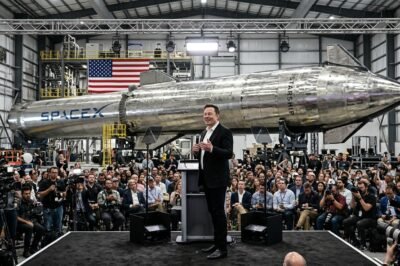
In a move that has stunned the global financial community and redefined the boundaries of corporate philanthropy, Elon Musk has announced an unprecedented initiative to distribute two shares of SpaceX to every child currently residing in the United States. This announcement, first reported by Reuters, represents a seismic shift in how private equity is perceived and utilized as a tool for social engineering and long-term economic stability. Musk, who has often spoken about the need to incentivize a multi-planetary future, appears to be pivoting toward a terrestrial model of wealth distribution that leverages the skyrocketing valuation of his aerospace empire. The proposal suggests that as SpaceX continues to dominate the commercial launch sector and expand its Starlink satellite constellation, the inherent value of these shares will serve as a foundational nest egg for the next generation of American citizens. This bold strategy not only captures the imagination of the public but also presents a labyrinth of legal, regulatory, and economic challenges that will likely occupy the attention of Wall Street and Washington for years to come. By tying the future of the American youth to the success of Martian colonization and global satellite internet, Musk is effectively making the entire nation a stakeholder in the private space race.
The Mechanics of the National Share Distribution
The logistics of distributing private equity to approximately 74 million children under the age of 18 are staggering. According to the initial reports, the program would require the creation of a specialized trust or a digital registry system capable of managing a massive influx of fractional owners. Each child would be allocated two shares of SpaceX common stock, which are currently traded only on the secondary private market at valuations exceeding $180 billion. The mechanics would likely involve a lock-up period, preventing the sale or transfer of these shares until the recipient reaches the age of majority. This ensures that the equity remains a long-term investment rather than a short-term liquidity event, theoretically allowing the value to compound as SpaceX achieves its more ambitious goals, such as the successful landing of humans on Mars.
Furthermore, the issuance of such a vast number of shares would require a significant restructuring of SpaceX’s capitalization table. Analysts suggest that Musk might use his own personal holding of shares to seed this initiative, or the company might authorize a new class of non-voting common stock specifically for this purpose. The technical implementation would likely necessitate a partnership with major fintech platforms or a government-backed digital wallet system to ensure that every child, regardless of their family’s banking status, has access to their allocated equity. This democratized approach to private equity could potentially bridge the wealth gap in a way that traditional social programs have struggled to achieve, provided the company’s valuation continues its upward trajectory.
Financial Implications and SpaceX Valuation
From a financial perspective, the pledge is a double-edged sword. On one hand, it creates a massive base of future brand advocates and stakeholders who have a vested interest in the company’s success. On the other hand, the potential dilution of existing shareholders is a concern that venture capital firms and private investors are currently grappling with. If SpaceX is valued at $200 billion and there are roughly 150 million new shares issued to children, the per-share value would naturally be impacted unless the company can prove that this social investment drives even greater long-term returns. Market analysts are already speculating on how this move will affect future funding rounds and the long-rumored IPO of the Starlink subsidiary.
SpaceX has become the most valuable private company in the United States, largely due to its near-monopoly on heavy-lift launches and the rapid expansion of Starlink. By pledging shares to children, Musk is essentially betting that the company will eventually reach a trillion-dollar valuation, making the two-share gift a substantial asset by the time today’s toddlers reach adulthood. If the company hits a $5 trillion valuation in the next twenty years, those two shares could represent a significant down payment on a home or a college education for millions of Americans. This speculative wealth creation is the core of Musk’s argument: that the prosperity of the future is inextricably linked to the frontier of space.
Regulatory and Legal Hurdles
The legal landscape for such an initiative is fraught with complexity. The Securities and Exchange Commission (SEC) has strict rules regarding the number of shareholders a private company can have before it is forced to go public or comply with rigorous disclosure requirements. Currently, most private companies are limited to 2,000 shareholders under the JOBS Act. Distributing shares to 74 million individuals would blow past these limits, necessitating an act of Congress or a specific exemption from the SEC. Legal experts suggest that Musk might frame the shares as a new type of ‘Social Equity Token’ that bypasses traditional definitions of security ownership, though this would undoubtedly face intense scrutiny from regulators.
Moreover, the tax implications for the recipients and their families are a major point of contention. If the shares are granted as a gift, they may be subject to gift taxes or, more importantly, income tax for the recipients if the value is deemed immediate. Managing the tax liability for 74 million households would be an administrative nightmare. There is also the question of fiduciary responsibility; as a private company, SpaceX does not have the same transparency requirements as public firms. Ensuring that these young shareholders are protected from corporate mismanagement or predatory secondary market practices will require a robust new framework of consumer protection specifically tailored to the aerospace industry.
Strategic Impact on the Aerospace Industry
This move is not just about social welfare; it is a brilliant strategic maneuver in the ongoing aerospace arms race. By making every American child a SpaceX shareholder, Musk is creating a political firewall around his company. It becomes significantly harder for the federal government to cut NASA contracts or impose restrictive regulations on a company that is essentially a collective asset of the American people. This ‘too big to fail’ strategy on a grassroots level ensures that the public interest is directly aligned with SpaceX’s corporate interests, providing a level of political insulation that no amount of lobbying could buy.
Competitors like Blue Origin and Boeing now find themselves in a precarious position. How can they compete for public favor when their primary rival is literally giving away the future to the nation’s youth? This initiative could force a paradigm shift in how government contractors operate, moving toward a model where public-private partnerships include direct equity stakes for the citizenry. It also accelerates the timeline for commercial space activity, as the pressure to deliver returns for 74 million shareholders will drive SpaceX to achieve its operational milestones with even greater urgency. The internal pressure to innovate will be matched by an external expectation of performance from an entire generation.
Societal and Generational Wealth Redefinition
The broader societal implications of this pledge cannot be overstated. We are witnessing the potential birth of ‘Universal Basic Equity,’ a concept where the gains of technological advancement are distributed across the population rather than being concentrated in the hands of a few billionaires. While Musk remains one of the world’s wealthiest individuals, this pledge suggests a recognition that the sustainability of his long-term goals requires a more equitable distribution of the rewards. For many families, these SpaceX shares would represent their first entry into the world of high-growth equity, potentially sparking a renewed interest in STEM education and financial literacy among the youth.
Critics, however, argue that this is a form of ‘technological feudalism,’ where the future of the citizenry is dependent on the success of a single corporation and the whims of its enigmatic leader. They point out that if SpaceX were to fail, the promised wealth would evaporate, leaving an entire generation with nothing. Despite these risks, the sheer scale of the ambition has captured the public’s imagination. It challenges the traditional notions of welfare and social security, replacing them with a high-risk, high-reward model of participation in the space economy. It is a gamble on the human spirit and the power of innovation to lift all boats, or in this case, all rockets.
Conclusion: The Future of a Shareholding Nation
As we look toward the horizon, the Musk-SpaceX pledge stands as a provocative experiment in economic and social policy. Whether it is a visionary masterstroke or a logistical impossibility remains to be seen, but the conversation it has started is irreversible. The integration of private corporate success with the individual economic prospects of the American youth could redefine the relationship between the state, the corporation, and the citizen. If successful, it would create a nation of space-farers, investors, and pioneers, all united by a common stake in the stars. The next few months will be critical as Reuters and other outlets dig deeper into the formal filing and regulatory responses that will determine if this pledge can truly take flight. For now, the dream of a shareholding nation is as vast and ambitious as the rockets currently sitting on the pads at Starbase.





































Leave a Reply