
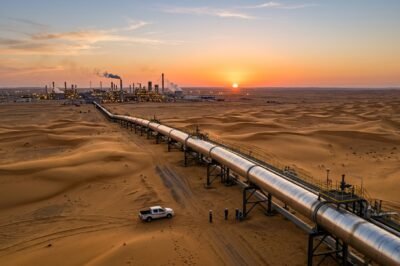
The global energy landscape is often defined by its vulnerabilities, particularly the precarious maritime chokepoints through which millions of barrels of crude oil flow daily. At the heart of this geopolitical chessboard lies the Strait of Hormuz, a narrow waterway that serves as the primary exit point for oil from the Persian Gulf. However, as regional tensions fluctuate and the threat of maritime blockades looms, Saudi Arabia’s East-West Pipeline, also known as the Petroline, has emerged as the most critical piece of infrastructure for global energy resilience. Spanning the vast expanse of the Arabian Peninsula, this 1,200-kilometer artery provides a vital alternative, allowing the world’s largest oil exporter to bypass the volatile waters of the Gulf and deliver crude directly to the Red Sea. In an era where energy security is synonymous with national security, the Petroline is not merely a logistical asset; it is a strategic insurance policy that protects the global economy from catastrophic price shocks and supply disruptions. Understanding its significance requires a deep dive into the intersection of geography, geopolitics, and the shifting dynamics of the international oil market.
The Strategic Architecture of the Petroline
The East-West Pipeline is a marvel of industrial engineering, stretching approximately 745 miles from the massive oil fields of the Eastern Province, specifically the Abqaiq processing facility, to the port city of Yanbu on the Red Sea coast. Originally constructed in the late 1970s and early 1980s during the height of the Cold War and the regional instability following the Iranian Revolution, the pipeline was designed with a single, clear objective: to ensure that Saudi crude could reach international markets even if the Strait of Hormuz was closed. Today, the system consists of twin pipes that have undergone significant upgrades to increase their capacity and reliability.
With a current throughput capacity of approximately 5 million barrels per day (bpd), and ongoing plans to expand this toward 7 million bpd, the Petroline represents a significant portion of Saudi Arabia’s total export capability. The infrastructure includes multiple pumping stations equipped with sophisticated monitoring systems that track pressure, temperature, and flow rates in real-time. This allows Saudi Aramco, the state-owned energy giant, to maintain a steady flow of crude across diverse terrains, from the low-lying eastern plains to the rugged Hijaz Mountains before descending to the Red Sea. The sheer scale of the operation ensures that even in the event of a localized failure or technical glitch, the system remains operational, providing a level of redundancy that few other energy corridors can match.
Bypassing the Strait of Hormuz: A Geopolitical Necessity
The primary reason the East-West Pipeline dominates headlines is its role as a bypass for the Strait of Hormuz. Roughly one-fifth of the world’s total oil consumption passes through this narrow strait, making it the world’s most important energy transit point. However, its proximity to Iran has historically made it a flashpoint for conflict. During the “Tanker War” of the 1980s, commercial vessels were frequently targeted, and in recent years, incidents involving seized tankers and drone attacks have reignited fears of a total blockade. For Saudi Arabia, the Petroline offers a way to decouple its export potential from the immediate threats present in the Gulf.
By shipping oil from Yanbu on the Red Sea, Saudi Arabia can directly access the Suez Canal and the SUMED pipeline, facilitating faster and more secure delivery to European and North American markets. This geographic shift significantly reduces the transit time for tankers that would otherwise have to navigate the entire length of the Arabian Peninsula. Furthermore, it places the point of export further away from the immediate reach of regional adversaries, providing a tactical buffer that enhances the Kingdom’s sovereign control over its most valuable resource. In the context of global energy markets, the existence of this pipeline acts as a psychological stabilizer, tempering the “risk premium” that traders often add to oil prices during times of Middle Eastern tension.
Vision 2030 and the Industrialization of Yanbu
The significance of the East-West Pipeline extends far beyond the simple transport of crude; it is a foundational element of Saudi Arabia’s Vision 2030, the ambitious roadmap aimed at diversifying the Kingdom’s economy. The terminus of the pipeline at Yanbu has been transformed into a massive industrial hub, home to world-class refineries and petrochemical complexes. This allows Saudi Arabia to not only export raw crude but also process it into higher-value refined products like gasoline, diesel, and aviation fuel, which are then shipped globally.
The growth of Yanbu as a secondary energy hub reduces the country’s reliance on the Eastern Province’s ports, such as Ras Tanura and Juaymah. By creating a dual-coast export strategy, the Kingdom enhances its logistical flexibility. The industrial city of Yanbu also serves as a gateway to the emerging markets of Africa and the Mediterranean, aligning with the Kingdom’s goal of becoming a global logistics hub. The integration of the pipeline with local manufacturing and refining capacity ensures that the Petroline contributes directly to the national GDP, creating thousands of high-skilled jobs and fostering technological innovation in the energy sector.
Security Challenges and Infrastructure Resilience
Despite its strategic advantages, the East-West Pipeline is not without its vulnerabilities. Its 1,200-kilometer path through the desert makes it a potential target for asymmetric warfare and sabotage. In 2019, the pipeline was the target of a coordinated drone attack that caused temporary damage to two pumping stations, an event that highlighted the evolving nature of threats to critical infrastructure. In response, Saudi Arabia has significantly bolstered its domestic security measures, deploying advanced surveillance drones, satellite monitoring, and a specialized division of the Saudi industrial security forces to patrol the length of the pipeline.
Beyond physical security, the pipeline must also contend with the harsh environmental conditions of the Arabian desert. Extreme heat, sandstorms, and corrosion are constant threats to the integrity of the steel pipes. Saudi Aramco utilizes cutting-edge “intelligent pigging” technology—robotic devices that travel inside the pipeline to detect internal cracks or thinning—to perform preventative maintenance without disrupting flow. This commitment to technical excellence ensures that the pipeline remains one of the most reliable pieces of energy infrastructure in the world, capable of operating at near-full capacity even under extreme operational stress.
Global Market Dynamics and Price Stability
From the perspective of a global energy consumer, the East-West Pipeline is a guardian of price stability. In the highly sensitive world of oil futures, any hint of a disruption in the Strait of Hormuz can send prices spiraling upward, impacting everything from the cost of gasoline at the pump to the price of plastic goods and international shipping. The Petroline provides a “safety valve” that reassures markets that at least a significant portion of Saudi production will remain available even if the Gulf becomes impassable.
International energy agencies and market analysts closely monitor the throughput of the Petroline as a barometer for global supply health. During periods of scheduled maintenance in the Gulf or regional escalations, the Kingdom often shifts its export volumes toward Yanbu to maintain its contractual obligations to international buyers. This flexibility is a key component of Saudi Arabia’s role as the “swing producer” in the OPEC+ alliance. By maintaining the ability to reroute millions of barrels of oil at short notice, the Kingdom exerts a stabilizing influence on global Brent and WTI benchmarks, preventing the kind of extreme volatility that can lead to global economic recessions.
The Geopolitical Chessboard of the Red Sea
While the pipeline allows Saudi Arabia to bypass the Strait of Hormuz, it brings the Kingdom’s energy exports into another complex maritime arena: the Red Sea. The southern entrance to the Red Sea, the Bab el-Mandeb strait, presents its own set of geopolitical challenges, particularly due to the ongoing conflict in Yemen and the presence of non-state actors capable of threatening maritime traffic. However, the Red Sea is generally seen as a more manageable environment compared to the enclosed and heavily militarized Persian Gulf.
The strategic importance of the Red Sea has led to increased international cooperation, with various naval task forces operating in the area to ensure the freedom of navigation. For Saudi Arabia, securing the Red Sea is a top priority, leading to the formation of the Council of Arab and African Coastal States of the Red Sea and the Gulf of Aden. The Petroline, therefore, is at the center of a new maritime security paradigm, where the focus has shifted from the Gulf to the western coast. This shift underscores the Kingdom’s broader geopolitical pivot, seeking to strengthen ties with African and European partners while maintaining its status as the bedrock of global energy supply.
Conclusion: The Future of the East-West Corridor
The East-West Pipeline is far more than a conduit for oil; it is the physical manifestation of Saudi Arabia’s strategic foresight and its commitment to global energy security. As the world transitions toward a more complex energy mix, the reliability of traditional supply routes remains paramount. The ongoing expansion of the Petroline’s capacity, coupled with the integration of digital technologies and enhanced security protocols, ensures that it will remain a cornerstone of the global economy for decades to come. By effectively neutralizing the threat of a Hormuz blockade, the pipeline provides the world with a much-needed layer of protection against energy-driven crises. In the final analysis, the Petroline is a testament to the idea that in the world of geopolitics, geography may be destiny, but infrastructure is the ultimate tool for overcoming it. As long as the world relies on liquid hydrocarbons to power its industries and transport, the desert-spanning pipes of the East-West corridor will remain among the most important miles of steel on the planet.






































Leave a Reply