
The Midnight Interception: A Dramatic Escalation in Regional Warfare
In a series of events that have sent shockwaves through the corridors of power from Washington to Tehran, the United States military has officially confirmed the successful interception of a significant barrage of missiles launched by Iran. This unprecedented direct confrontation marks a dangerous new chapter in the long-standing shadow war between the two nations and their respective allies. The night sky across several Middle Eastern nations was transformed into a kinetic battlefield as US naval assets and land-based defense systems engaged high-speed ballistic and cruise missiles. According to reports from NDTV and various defense departments, the scale of this Iranian assault was intended to overwhelm existing defense architectures, yet the coordinated response from the US Central Command (CENTCOM) demonstrated a level of technological and tactical readiness that prevented a catastrophic loss of life and infrastructure. This incident does not merely represent a localized skirmish; it is a geopolitical watershed moment that threatens to dismantle the fragile stability of the entire region. The global community now watches with bated breath as the Biden administration and regional leaders weigh their next moves in an environment where a single miscalculation could ignite a full-scale regional conflagration.
The Tactical Breakdown: How US Defenses Countered Iranian Ballistic Technology
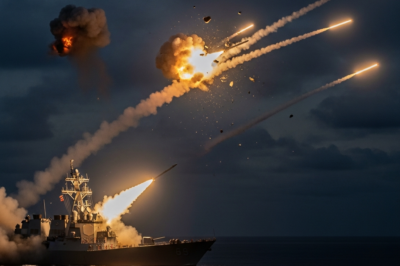
The technical aspects of this interception are a testament to the sophistication of modern integrated air and missile defense (IAMD) systems. Reports indicate that US Arleigh Burke-class destroyers stationed in the eastern Mediterranean and the Red Sea played a pivotal role. These vessels, equipped with the Aegis Combat System, utilized SM-3 interceptors to target Iranian ballistic missiles while they were still in their mid-course phase, high above the Earth’s atmosphere. Furthermore, land-based Patriot (MIM-104) batteries located at various strategic installations throughout the region were engaged to provide terminal-phase defense against lower-altitude cruise missiles and suicide drones. The sheer volume of the Iranian launch suggests a multi-pronged attack strategy designed to exploit gaps in radar coverage and saturate the defensive capabilities of any single nation. However, the high degree of interoperability between US forces and their regional partners, including the sharing of real-time early warning data from satellite constellations, allowed for a comprehensive ‘kill chain’ that neutralized the vast majority of threats before they reached their intended targets. Military analysts suggest that Iran utilized a mix of its most advanced long-range systems, possibly including variants of the Khorramshahr or Haj Qasem missiles, which are known for their high speeds and evasive maneuvering capabilities.
Historical Context: The Long Road to Direct Confrontation
To understand the gravity of this interception, one must look back at the decades of friction that have defined US-Iran relations since the 1979 Islamic Revolution. For years, the conflict was characterized by ‘gray zone’ activities, including proxy warfare, cyberattacks, and maritime harrassment. However, the departure of the United States from the Joint Comprehensive Plan of Action (JCPOA) in 2018 under the Trump administration, followed by the ‘maximum pressure’ campaign, significantly heightened tensions. The 2020 assassination of Qasem Soleimani, the commander of the Quds Force, was perhaps the most significant precursor to current direct hostilities. Since then, the Islamic Revolutionary Guard Corps (IRGC) has increasingly moved toward direct action, seeking to establish a new ‘deterrence equation’ against US and Israeli interests in the region. The recent missile barrage is seen by many historians and political scientists as a calculated move by Tehran to demonstrate that it is no longer willing to hide behind its ‘Axis of Resistance’ proxies but is prepared to use its own soil as a launchpad for major offensive operations. This shift fundamentally alters the security calculus for every nation in the Middle East and necessitates a complete re-evaluation of Western containment strategies.
The Role of Regional Allies and the ‘Axis of Resistance’
While the US military provided the heavy lifting in terms of interceptions, the role of regional allies cannot be understated. Nations like Jordan and potentially Saudi Arabia found themselves in a precarious position, with some reports suggesting that their airspace was utilized for interceptions or that their own defense systems were on high alert. This highlights the complex web of alliances that are being tested. On the other side, the Iranian ‘Axis of Resistance’—which includes Hezbollah in Lebanon, the Houthis in Yemen, and various militias in Iraq and Syria—remains a potent force. During the missile launch, these groups reportedly engaged in diversionary tactics, including drone swarms and short-range rocket fire, intended to distract US and Israeli sensors. The failure of this coordinated effort to cause significant damage may lead to a strategic review within the IRGC. However, it also raises questions about how long these regional partners can remain on the sidelines or act as buffers before they are fully pulled into a wider war. The diplomatic pressure on Arab nations to either support the US-led defense or maintain neutrality is reaching a breaking point, as domestic populations remain deeply divided over the ongoing humanitarian crises in the region.
Global Economic Fallout: Oil Markets and Maritime Security
The immediate reaction to the news of the interception was felt most acutely in the global energy markets. Oil prices saw an immediate spike, with Brent crude futures jumping as investors factored in the risk of a major disruption to the Strait of Hormuz, through which approximately 20% of the world’s total oil consumption passes. Any direct conflict between the US and Iran places this vital maritime artery at risk. Furthermore, the insurance costs for commercial shipping in the Persian Gulf and Red Sea have skyrocketed, adding further inflationary pressure to a global economy already struggling with supply chain issues. The potential for ‘tit-for-tat’ attacks on tankers or offshore energy infrastructure remains a primary concern for global economists. Beyond oil, the instability threatens major trade routes between Europe and Asia. If the conflict expands, the Suez Canal could see a significant decrease in traffic as shipping companies opt for the longer and more expensive route around the Cape of Good Hope to avoid the threat of missile or drone strikes. The economic implications are truly global, affecting everything from the price of gasoline in the American Midwest to the cost of manufacturing in East Asia.
The Diplomatic Path Forward: Can De-escalation Be Achieved?
In the wake of the interception, the United Nations Security Council has been called into emergency sessions, with world leaders urging maximum restraint. The Biden administration faces a delicate balancing act: it must project strength to deter further Iranian aggression while simultaneously preventing a full-scale war that would be disastrous for US interests and global stability. Diplomatic channels, often mediated by nations like Oman or Switzerland, are undoubtedly working overtime to convey messages between Washington and Tehran. The core challenge lies in finding a ‘ladder’ for both sides to de-escalate without losing face. For Iran, the ‘success’ of the operation can be framed domestically as a bold defiance of Western hegemony, regardless of the interception rate. For the US, the success lies in the proof of its defensive umbrella. However, hawks in both capitals are calling for more decisive action. The future of the region depends on whether the pragmatic elements within both governments can prevail over those who see total victory through military means as the only viable outcome. The possibility of a new security framework for the Middle East remains a distant dream as long as the fundamental issues of nuclear proliferation and regional hegemony remain unaddressed.
Conclusion: Navigating the New Normal of High-Stakes Conflict
The interception of Iranian missiles by the US military is more than a news headline; it is a signal that the ‘old rules’ of Middle Eastern engagement have been permanently discarded. We are now in a ‘new normal’ where direct state-on-state kinetic actions are becoming increasingly frequent, bypassing the traditional proxy-led skirmishes of the past. The success of the US military in this instance provided a temporary reprieve from disaster, but technology alone cannot solve the deep-seated political and ideological divisions that fuel this fire. As the dust settles from this latest encounter, the international community must confront the reality that the Middle East stands on a knife’s edge. Continued reliance on military interceptions without a robust and realistic diplomatic strategy is a recipe for eventual failure. The path forward requires not just better missiles and radars, but a renewed commitment to regional dialogue and a recognition of the shared catastrophic consequences of a broader war. The world has been warned; the next barrage may not be so successfully contained.




































Leave a Reply