
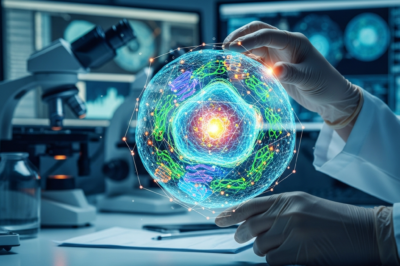
The human body is often described as the most complex machine in the known universe, but even that metaphor fails to capture the dynamic, chaotic, yet orchestrated reality of our biology. While the completion of the Human Genome Project at the turn of the millennium provided us with a comprehensive ‘parts list’ of human life, it did not provide the operating manual. Knowing the sequence of DNA is akin to having a dictionary without understanding the grammar, syntax, or context of the language. Today, a monumental new project has been announced that aims to bridge this gap by systematically mapping over a billion cellular interactions. This endeavor, often referred to as the ‘Interactome’ mapping project, represents a paradigm shift in how we understand health, disease, and the very fabric of life. By detailing how proteins, RNA, and other molecules communicate within the cellular environment, scientists are moving toward a holistic view of biology that could revolutionize drug discovery and personalized medicine.
Beyond the Genome: Why the Interactome is the Key to Life
For decades, biological research was dominated by a reductionist approach. Scientists would isolate a single gene or a single protein and study its function in a vacuum. While this led to significant discoveries, it often failed to explain why certain drugs worked for some patients and not others, or why complex diseases like cancer and Alzheimer’s remained so difficult to treat. The reality is that no molecule in a cell works in isolation. Proteins, which are the workhorses of the cell, function as part of intricate networks and complexes. They signal to one another, modify each other’s structures, and form physical bonds to carry out essential tasks like DNA repair, energy production, and waste management.
The ‘Interactome’ is the sum total of all these physical and functional interactions. Mapping a billion of these interactions is a task of staggering proportions. To put it in perspective, the human genome contains roughly 20,000 protein-coding genes. However, through processes like alternative splicing and post-translational modifications, these genes can produce hundreds of thousands of different protein variants. When you consider the combinations of how these proteins can interact with one another, as well as with RNA and metabolites, the number of potential interactions reaches into the billions. This project seeks to capture this complexity, providing a high-definition map of the cellular conversation.
The Technical Challenges of Mapping at Scale
Systematically mapping a billion interactions is not just a biological challenge; it is a monumental feat of engineering and data science. Traditionally, mapping protein-protein interactions (PPIs) relied on techniques like the yeast two-hybrid system or affinity purification followed by mass spectrometry. While effective, these methods are labor-intensive and often prone to high rates of false positives and negatives. To reach the billion-interaction milestone, the project utilizes next-generation technologies that combine high-throughput laboratory automation with advanced computational modeling.
Modern mass spectrometry has become sensitive enough to detect minute quantities of molecules within a complex mixture, allowing researchers to see which proteins are physically bound together in various cell types and under different conditions. Furthermore, the integration of CRISPR-Cas9 gene editing allows scientists to ‘tag’ proteins in living cells, observing their interactions in a natural environment rather than a test tube. The sheer volume of data generated by these experiments—petabytes of raw information—requires a new infrastructure for storage and analysis. This is where the intersection of biology and big data becomes critical, as researchers must distinguish meaningful biological signals from the ‘noise’ inherent in high-throughput screening.
The Role of Artificial Intelligence in Biological Discovery
One of the most exciting aspects of this project is its reliance on Artificial Intelligence (AI) and Machine Learning (ML). In recent years, tools like Google DeepMind’s AlphaFold have transformed our ability to predict the three-dimensional structures of proteins. The new mapping project takes this a step further by using AI to predict not just what proteins look like, but how they fit together. AI algorithms can analyze existing datasets to identify patterns that human researchers might miss, predicting potential interactions that can then be validated in the lab.
Machine learning is also essential for dealing with the ‘dark matter’ of the interactome. Many proteins have unknown functions or are ‘intrinsically disordered,’ meaning they lack a fixed structure. AI can help simulate how these flexible molecules interact with more rigid structures. By combining experimental data with predictive modeling, the project can fill in the gaps of the map much faster than traditional methods allowed. This ‘AI-augmented biology’ is expected to accelerate the timeline of the project, moving us from a fragmented understanding of cellular life to a comprehensive, interconnected model within the next decade.
Revolutionizing Drug Discovery and Clinical Therapeutics
The implications for the pharmaceutical industry are profound. Currently, the process of bringing a new drug to market takes over a decade and costs billions of dollars, with a high failure rate in clinical trials. Many drugs fail because they have ‘off-target effects’—they interact with proteins they weren’t intended to, causing toxic side effects—or because the target protein’s role in the wider cellular network was misunderstood. With a comprehensive interactome map, drug developers can use ‘Network Medicine’ to predict how a drug will affect the entire system.
Instead of just targeting a single ‘broken’ protein, researchers can look for nodes in the network where an intervention would be most effective. For example, in cancer, many different mutations can lead to the same result: uncontrolled cell growth. By looking at the interactome, scientists can identify the common pathways that all these mutations converge upon, allowing for the development of ‘pan-cancer’ therapies. Furthermore, this map will allow for more precise ‘repurposing’ of existing drugs, as we discover that a medication used for one condition might effectively modulate a protein interaction relevant to a completely different disease.
Global Collaboration and the Open Science Movement
A project of this magnitude cannot be accomplished by a single laboratory or even a single nation. It is a global effort involving consortiums of universities, research institutes, and biotechnology companies. Similar to the Human Genome Project, the data generated by this mapping initiative is being treated as a public good. Open-access databases allow researchers from around the world to contribute their findings and query the existing map, fostering a spirit of collaborative discovery.
This ‘Open Science’ approach is vital for ensuring that the benefits of the project are distributed equitably. By making the interactome map available to all, it empowers researchers in developing nations to tackle diseases that are specific to their populations but may be overlooked by major Western pharmaceutical firms. Moreover, it creates a standard language for biology, ensuring that a discovery made in Tokyo can be seamlessly integrated with data from Berlin or New York. The project is as much about building a global community as it is about building a map.
Future Outlook: Towards a ‘Digital Twin’ of the Human Cell
Looking further into the future, the ultimate goal of mapping a billion cellular interactions is the creation of a ‘digital twin’ of a human cell. Imagine a computer simulation so accurate that a doctor could input a patient’s genetic and proteomic data and ‘test’ various treatments in a virtual environment before ever prescribing a pill. We are still far from a complete digital human, but the interactome map is the essential scaffolding for such a model.
As we move into the era of longevity science and preventative medicine, understanding the interactome will allow us to detect the earliest signs of cellular dysfunction. Before a tumor forms or a brain begins to show the signs of neurodegeneration, the cellular ‘conversation’ begins to change. By monitoring these interactions, we may eventually be able to intervene in the aging process itself, repairing the network before it breaks. The journey to map a billion interactions is not just a scientific milestone; it is the beginning of a new chapter in the history of humanity, where we transition from being victims of biological chance to being the architects of our own health.
Conclusion: A New Map for a New Era
The systematic mapping of a billion cellular interactions is a testament to human curiosity and our relentless drive to understand the world around us. It represents a move away from the simplistic view of biology and toward an appreciation of the complex, interconnected systems that sustain life. While the challenges are immense—ranging from the technical difficulties of mass spectrometry to the computational hurdles of big data—the potential rewards are even greater. As this map grows, it will guide the next generation of scientists toward cures for our most devastating diseases, more effective and safer medications, and a deeper understanding of what it means to be alive. We are finally beginning to read the full story of the cell, and the insights gained will undoubtedly shape the future of medicine for centuries to come.







































Leave a Reply