
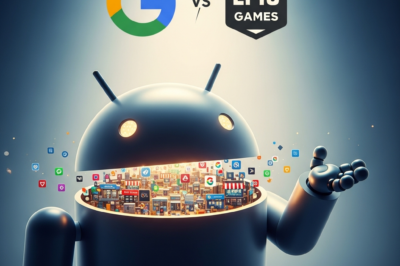
The landscape of the mobile software economy is about to undergo its most seismic shift since the inception of the smartphone. After years of litigation, high-stakes courtroom drama, and intense lobbying, Google and Epic Games have reached a critical juncture. The news, first highlighted by industry analysts and reinforced by outlets like Daring Fireball, signals that the era of the Google Play Store’s absolute dominance on Android is drawing to a close. Starting next week, the barriers are coming down, and third-party app stores will finally be granted a level playing field on the world’s most popular mobile operating system. This is not just a minor policy tweak; it is a fundamental restructuring of how software is distributed, monetized, and discovered by billions of users worldwide. The implications of this move will ripple through the tech industry for decades, affecting everyone from solo indie developers to multi-billion dollar corporations like Microsoft and Amazon.
For the uninitiated, the battle between Epic Games and Google was never just about a video game. While the removal of Fortnite from the Play Store in 2020 served as the spark, the underlying fire was a deep-seated resentment toward the ‘tax’ that Google and Apple impose on digital transactions. Epic Games, led by CEO Tim Sweeney, argued that Google’s control over Android was a monopoly maintained through anti-competitive practices and secret deals with device manufacturers. After a lengthy trial, a US jury agreed, finding that Google had indeed stifled competition. Now, following a comprehensive permanent injunction issued by Judge James Donato, Google is forced to open the gates. Next week represents the ‘Day One’ of this new reality, where the Android ecosystem must transition from a curated walled garden to a truly open marketplace.
The Legal Catalyst: Understanding the Court Mandate
The shift occurring next week is the direct result of a permanent injunction that seeks to dismantle the pillars of Google’s mobile monopoly. Judge James Donato’s ruling was surgical in its precision. For a period of three years, Google is strictly prohibited from several key behaviors that previously ensured the Play Store’s dominance. First and foremost, Google can no longer pay developers or device manufacturers to launch apps exclusively on the Play Store. This practice, often hidden behind program names like ‘Project Hug,’ was a cornerstone of Google’s strategy to keep high-profile games like League of Legends or Genshin Impact from seeking alternative distribution methods.
Furthermore, the court has mandated that Google must allow third-party app stores to be distributed through the Play Store itself. This is a massive win for competitors. Imagine opening the Play Store to download the Epic Games Store or the Amazon Appstore directly—this eliminates the friction of ‘sideloading,’ which often involves scary security warnings and complex menu navigation. The court also ruled that Google cannot require developers to use Google Play Billing for apps distributed on its store. Developers are now free to use their own payment processors, keeping 100% of their revenue instead of surrendering the traditional 30% cut to Google. This legal framework creates a vacuum where competition can finally breathe, forcing Google to compete on the merits of its service rather than the strength of its restrictions.
Breaking the Monopoly: How Third-Party Stores Will Function
When the changes take effect next week, the user experience on Android will begin to look significantly different. Currently, if a user wants to install an app from outside the Play Store, they are met with a series of ‘Play Protect’ warnings that suggest the file might be harmful. While security is important, the court found these warnings were often weaponized to discourage users from leaving Google’s ecosystem. Moving forward, Google must ensure that the process for installing third-party stores is streamlined and neutral. This means that if you choose to install the Epic Games Store, the system should treat it with the same level of trust and integration as the Play Store itself.
Third-party stores will have full access to the Android library of apps, provided the developers opt-in. Google is required to give these rival stores access to the full catalog of Play Store apps for a period of three years, allowing them to build a competitive inventory quickly. This ‘interoperability’ is crucial. It prevents a ‘cold start’ problem where a new store has no users because it has no apps, and no apps because it has no users. By forcing Google to share its catalog, the court has jump-started a competitive market that would have otherwise taken a decade to form organically.
The Economic Shift: Revenue Models and Fee Structures
The most immediate impact of this news is financial. For years, the ‘30% tax’ has been the industry standard, a figure that many developers argued was arbitrary and exploitative. With the introduction of viable third-party stores next week, we are likely to see a ‘race to the bottom’ regarding platform fees. Epic Games has already pioneered a 12% fee on its PC store, and it is expected to bring a similar, or perhaps even more aggressive, structure to Android. If a developer can sell a $10 skin in a game and keep $8.80 on the Epic Store versus $7.00 on the Play Store, the choice becomes a mathematical certainty.
However, the economic shift goes deeper than just the headline percentages. We are likely to see the rise of niche stores. Imagine a store dedicated entirely to open-source software, or a store curated specifically for high-end photography tools, or a subscription-based store like ‘Netflix for Apps.’ By removing the requirement to use Google Play Billing, developers can now implement creative monetization strategies that were previously banned. We might see loyalty programs, cross-platform bundles, and direct-to-consumer discounts that bypass the middleman entirely. This decentralization of wealth will empower smaller studios to reinvest in their products, potentially leading to a golden age of mobile innovation.
Security and Fragmentation: The User Experience Dilemma
While the opening of Android is a victory for competition, it is not without its risks. Google has long argued that its tight control over the Play Store is necessary to protect users from malware, fleeceware, and privacy violations. When the ecosystem fragments next week, the responsibility for security will be distributed. Every third-party store will be responsible for its own vetting process. For tech-savvy users, this is a non-issue; however, for the average consumer, the risk of accidentally downloading a malicious app from an unverified store increases. Google will likely lean heavily into this narrative, positioning the Play Store as the ‘safe’ option compared to the ‘wild west’ of third-party alternatives.
Fragmentation is another concern. If major publishers like EA, Ubisoft, or Microsoft decide to launch their own exclusive stores, users might find themselves needing five or six different ‘launcher’ apps just to play their favorite games. This is a phenomenon already familiar to PC gamers, where Steam, Epic, Battle.net, and EA Play all compete for space. While this competition is good for prices, it can be frustrating for the user experience. The challenge for the industry over the coming months will be to create a unified way to manage apps across different stores so that the user doesn’t feel overwhelmed by the complexity of an open market.
Competition and the Future of the Play Store
How will Google respond to this existential threat? They won’t simply sit back and watch their multi-billion dollar revenue stream evaporate. We can expect Google to transform the Play Store into a service-oriented platform. To keep developers from leaving, Google will have to offer more than just distribution. They will need to improve their discovery algorithms, provide better developer tools, and perhaps even lower their own fees to remain competitive. We might see the ‘Google Play Pass’ become a much more central part of their strategy, offering a curated bundle of apps that provides better value than what a user could find individually across multiple stores.
Furthermore, Google will likely double down on its hardware integration. By making the Play Store work more seamlessly with ChromeOS, WearOS, and Android Automotive, they can create a ‘sticky’ ecosystem that third-party stores will struggle to replicate. The battle is shifting from a fight over ‘control’ to a fight over ‘value.’ In an open market, Google has to prove every day why it deserves its 30% cut, and that level of competition is exactly what the antitrust ruling intended to achieve.
Global Impact and Regulatory Trends
The timing of this change is no coincidence. It mirrors the regulatory pressure Google and Apple are facing globally, most notably from the European Union’s Digital Markets Act (DMA). While the US court ruling is specific to the United States, the technical infrastructure Google is building to comply with Judge Donato’s order will likely be leveraged globally. Regulators in the UK, Japan, and South Korea are watching this rollout closely. If the transition to third-party stores next week goes smoothly without a massive spike in security breaches, it will provide ammunition for regulators worldwide to demand similar openings in their jurisdictions.
This marks a definitive end to the era of the ‘Mobile Duopoly.’ For over a decade, Google and Apple have dictated the terms of the mobile internet. By next week, that power dynamic shifts. We are moving toward a world where the operating system is a neutral platform, and the services on top of it must compete fairly. Whether you are a gamer looking for cheaper V-Bucks or a developer looking for a fair shake, the events starting next week represent a new chapter in the history of technology—one defined by choice, competition, and the dismantling of digital gatekeepers.
Conclusion: A New Era for Mobile Computing
The conclusion of the Google vs. Epic saga is more than just a legal settlement; it is a declaration of independence for the Android platform. By allowing third-party app stores to compete directly with the Play Store starting next week, the industry is entering uncharted territory. There will be growing pains, security scares, and corporate posturing, but the ultimate winner is the consumer. With more choices, better prices, and increased innovation, the mobile landscape will finally reflect the open nature that Android originally promised. As we look ahead, the success of this transition will depend on how well third-party stores can build trust with users and how gracefully Google can adapt to its new role as a competitor rather than a ruler. The walls are coming down, and the future of Android looks more diverse and competitive than ever before.





































Leave a Reply