
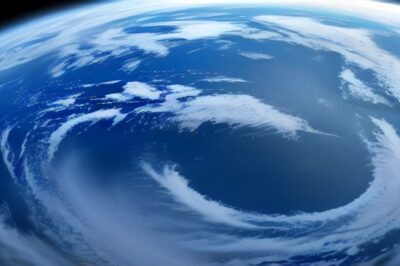
The Looming Meteorological Crisis: A Century-Scale El Niño Event
As the world grapples with escalating climatic volatility, meteorologists from the United Kingdom, supported by reports from Al Jazeera, have issued a chilling warning: the current El Niño event is on track to become the most intense recorded in over a hundred years. This announcement has sent shockwaves through the scientific community, policy-making circles, and the global agricultural sector. An El Niño is a naturally occurring climate pattern associated with the warming of the ocean surface temperatures in the central and eastern tropical Pacific Ocean. However, the sheer scale of the projected event suggests that we are entering uncharted territory. Forecasters from the UK Met Office and other international agencies have identified that the combination of natural variability and human-induced climate change is creating a ‘perfect storm’ of atmospheric conditions. This is not merely a seasonal shift; it is a global phenomenon that threatens to rewrite the record books, potentially surpassing the devastating El Niño events of 1997-98 and 2015-16. The implications for global temperatures, food security, and extreme weather frequency are profound, necessitating an immediate and comprehensive international response to mitigate the worst of the projected impacts.
The Anatomy of a Super El Niño: Understanding the ENSO Phenomenon
To understand why this specific forecast is so alarming, one must first grasp the mechanics of the El Niño-Southern Oscillation (ENSO). In a neutral year, trade winds blow from east to west across the tropical Pacific, pushing warm surface water toward Asia and allowing cooler, nutrient-rich water to well up from the depths along the South American coast. During an El Niño, these trade winds weaken or even reverse. This allows the vast pool of warm water to migrate eastward toward the Americas. The resulting shift in sea surface temperatures (SSTs) alters atmospheric circulation on a global scale. What makes the current cycle so unique is the baseline heat already present in the oceans. Scientists note that the ocean heat content is currently at record highs due to global warming, which acts as a massive fuel tank for the developing El Niño. When the atmosphere reacts to this unprecedented oceanic warmth, the results are amplified. The UK’s forecast models suggest that the anomalies in SSTs could exceed 2.5 degrees Celsius above the historical average, a threshold that marks the transition from a ‘strong’ event to a ‘super’ El Niño, the likes of which have not been seen in the modern industrial era.
Historical Perspectives: From 19th Century Observations to Modern Satellites
Looking back over the last century, only a handful of events reach the magnitude of what is currently projected. The late 19th century saw massive famines linked to El Niño-induced droughts, but documentation was sparse. In the 20th century, the 1982-83 event was a wake-up call for modern science, causing billions of dollars in damage and significant loss of life. However, it was the 1997-98 event that set the standard for a ‘monster’ El Niño, leading to record-breaking global temperatures and catastrophic flooding in South America. The most recent major event in 2015-16 further demonstrated how a warming planet interacts with ENSO, resulting in the hottest year ever recorded at that time. UK forecasters now warn that the current trajectory could exceed these milestones. By comparing current atmospheric pressure data, wind patterns, and subsurface ocean temperatures to historical archives reaching back over 100 years, experts have concluded that the intensity of this cycle is accelerating faster than previous records. This historical context is vital because it provides a roadmap of the potential devastation, but also serves as a warning that our previous benchmarks for ‘extreme’ may no longer be applicable in a rapidly heating world.
The Amplification Effect: How Climate Change Fuels the Fire
While El Niño is a natural cycle, it is now occurring within a climate that has been fundamentally altered by human activity. The synergy between anthropogenic global warming and the ENSO cycle is a primary concern for researchers. Greenhouse gases have trapped immense amounts of heat in the Earth’s system, over 90 percent of which has been absorbed by the oceans. This ‘pre-heating’ means that the El Niño starts from a much higher temperature baseline. Consequently, the atmospheric response is more violent. UK meteorologists emphasize that we are likely to see global average surface temperatures temporarily breach the 1.5 degrees Celsius threshold set by the Paris Agreement during this event. This amplification is not just about heat; it is about moisture. For every degree of warming, the atmosphere can hold about 7 percent more water vapor. This leads to more intense rainfall in regions like California and the southern United States, while simultaneously intensifying the evaporation and drought conditions in the Western Pacific, such as Australia and Indonesia. The feedback loops created by this interaction are complex and potentially self-sustaining, leading to a prolonged period of climatic instability that could last well into the next calendar year.
Global Socio-Economic Disruption: Agriculture and Food Systems
The economic ramifications of a century-scale El Niño are staggering. Agriculture is the first and hardest-hit sector. In Southeast Asia, El Niño typically brings suppressed rainfall, which is devastating for water-intensive crops like rice. Already, major exporters like India and Vietnam are monitoring reservoir levels with growing concern. In contrast, the Americas may see increased rainfall, which can benefit some crops but leads to catastrophic soil erosion and crop diseases in others. The fishing industry off the coast of Peru and Ecuador is also expected to collapse as the warm water prevents the upwelling of nutrients that support vast schools of anchovies. Beyond the immediate local impacts, the global supply chain for commodities such as sugar, coffee, and cocoa is highly sensitive to these weather shifts. Analysts are already predicting a surge in ‘agflation’—inflation driven by rising food prices—which could exacerbate the cost-of-living crises facing many nations. The energy sector is also at risk; hydroelectric power generation in regions like Brazil and parts of Africa relies on consistent rainfall. A severe drought could lead to power shortages, further hampering industrial production and economic growth on a global scale.
Regional Weather Extremes: A Continental Breakdown
The intensity of the upcoming El Niño will manifest differently across the globe, creating a patchwork of extremes. In North America, the ‘traditional’ El Niño pattern involves a shifted jet stream, bringing cooler and wetter conditions to the southern tier of the United States and warmer, drier conditions to the north and Canada. However, with the projected intensity, these patterns could become extreme, leading to record-breaking snowfall in some areas and unprecedented winter heatwaves in others. In Australia, the threat of drought and catastrophic bushfires is looming large. After several years of La Niña-induced moisture, the heavy vegetation growth now serves as a massive fuel load for fires as the land dries out. In Africa, the impacts are split; East Africa often experiences increased rainfall and flooding, which can lead to locust swarms and waterborne diseases, while Southern Africa faces the prospect of severe drought and crop failure. Europe, though less directly affected by ENSO than other regions, is not immune. The shift in global atmospheric pressure can influence the North Atlantic Oscillation, potentially leading to more frequent storm systems or extreme cold snaps depending on how the system interacts with the polar vortex. The sheer geographic reach of these impacts underscores why UK forecasters are treating this as a top-tier global security threat.
Health Risks and the Proliferation of Disease
A secondary but equally critical impact of a record-breaking El Niño is the threat to public health. Extreme weather events are often followed by outbreaks of infectious diseases. In regions experiencing heavy flooding, the risk of waterborne diseases such as cholera and typhoid increases exponentially as sanitation systems fail. Conversely, in areas of drought, people are forced to store water in open containers, creating ideal breeding grounds for mosquitoes that carry dengue fever, Zika, and malaria. The heat itself is a silent killer; as global temperatures spike during an El Niño year, heat-related mortality is expected to rise, particularly among the elderly and vulnerable populations in urban ‘heat islands.’ UK health experts and the World Health Organization (WHO) are already advising governments to bolster their public health infrastructure in anticipation of these challenges. The mental health toll of losing livelihoods to drought or homes to floods must also be considered, as the psychological impact of repeated climate disasters can lead to long-term societal instability.
Conclusion: The Urgency of Strategic Preparedness
As we stand on the precipice of what could be the most significant climatic event of the century, the necessity for proactive adaptation has never been clearer. The warnings from UK forecasters and the extensive reporting by Al Jazeera serve as a clarion call for international cooperation. We are no longer in an era where we can treat such events as isolated anomalies; they are part of a shifting global reality. Governments must invest in early warning systems, resilient infrastructure, and diversified food supplies to withstand the coming volatility. The scientific data is unequivocal: the ocean is warming, the atmosphere is responding, and the records of the last hundred years are about to be challenged. While we cannot stop El Niño, we can control how we prepare for it. The resilience of our global civilization will be tested by this ‘super’ El Niño, and the lessons learned—or ignored—will define our ability to navigate the even more turbulent climate future that lies ahead. It is a moment for science-led policy, humanitarian foresight, and a collective recognition that our planet’s systems are more interconnected than ever before.






































Leave a Reply