
The European Society of Cardiology (ESC) Congress 2026 served as a monumental stage for one of the most anticipated dialogues in modern medicine: an exclusive interview with Dr. Valentín Fuster, conducted by EMJ. As a titan of cardiology whose influence spans decades, Dr. Fuster’s presence at the congress was not merely a formality but a beacon for the future of global heart health. In this session, the physician-scientist, who currently serves as the Physician-in-Chief at Mount Sinai Hospital and the General Director of the Centro Nacional de Investigaciones Cardiovasculares (CNIC), delved into the complexities of cardiovascular disease (CVD) management in an era increasingly defined by digital disruption and socio-economic shifts. For many attendees, the interview provided a rare glimpse into the mind of a man who has successfully bridged the gap between microscopic scientific discovery and macroscopic public health policy. Dr. Fuster’s insights at ESC 2026 emphasized a critical transition in the field: the move from reactive treatment to proactive, lifelong prevention. This dialogue serves as a cornerstone for medical professionals looking to navigate the next decade of cardiovascular care, blending high-tech diagnostics with the fundamental human element of patient education. The urgency of his message resonated with a global audience, highlighting that the battle against heart disease is as much about social change as it is about clinical excellence. To understand the significance of Fuster’s ESC 2026 interview, one must recognize his long-standing commitment to the whole-of-life approach. Having led major institutions like Mount Sinai and CNIC, Fuster has consistently pushed for a greater understanding of how lifestyle choices in our 20s and 30s dictate cardiovascular outcomes in our 70s. His previous work on the polypill and his leadership in the FREEDOM trial have already changed how we treat multi-vessel disease and secondary prevention. At ESC 2026, he built upon this foundation, incorporating modern advancements like artificial intelligence and precision imaging to refine his vision of preventive cardiology 2.0. The EMJ interview served as a strategic briefing for the next generation of cardiologists, who are entering a field where data is abundant but clarity is often scarce. Fuster’s ability to synthesize complex biological data into actionable health strategies remains unparalleled, making this interview a vital document for the medical community. ## The Evolution of Cardiovascular Medicine: Insights from ESC 2026 Dr. Fuster began by tracing the trajectory of the field, noting that while mortality from acute myocardial infarction has dropped significantly in developed nations, the overall burden of cardiovascular disease remains staggeringly high. He pointed out that we have become excellent at fixing broken hearts but remain relatively poor at preventing them from breaking in the first place. The discussion highlighted a shift from a reactive healthcare model to a proactive one. Statistics shared during the congress suggested that nearly 80% of premature heart disease is preventable, yet current healthcare spending remains overwhelmingly skewed toward hospital-based tertiary care. Fuster argued that the evolution of medicine must now focus on the social determinants of health, ensuring that the environments in which people live, work, and play are conducive to cardiovascular wellness. This shift requires a multidisciplinary approach, involving urban planners, educators, and policy makers alongside clinicians. He emphasized that the cardiologist of the future must be a community advocate, not just a technician in a cath lab. The evolution of the field is therefore not just technical, but cultural, requiring a fundamental reassessment of how we value long-term health over short-term interventions. ## Multimodal Imaging: A Paradigm Shift in Early Diagnosis A significant portion of the interview was dedicated to the role of imaging in identifying risk before symptoms appear. Fuster discussed the use of 3D vascular ultrasound and low-dose CT scans to detect subclinical atherosclerosis. He cited recent data showing that many individuals classified as low risk by traditional scoring systems like the Framingham Risk Score actually possess significant plaque buildup in their carotids or femoral arteries. By utilizing multimodal imaging, clinicians can provide patients with visual proof of their disease, which Fuster believes is a powerful motivator for behavioral change. The integration of AI in interpreting these images was also a key theme, as it allows for a more standardized and rapid assessment of arterial health, potentially making these screenings a routine part of adult health check-ups. Fuster argued that seeing is believing for the patient, and a picture of their own arteries is worth a thousand clinical warnings. This personalized feedback loop is essential for maintaining adherence to prevention strategies. Furthermore, he explored how these imaging techniques can be scaled down in cost to be applicable in broader population screenings, moving beyond the elite clinics to the general public. ## The Polypill Strategy: Bridging Global Health Disparities Addressing the global challenge of medication adherence, Fuster reiterated the importance of the cardiovascular polypill. The interview touched on the results of the SECURE trial, which demonstrated that a single pill containing aspirin, an ACE inhibitor, and a statin significantly reduces major adverse cardiovascular events compared to traditional multi-pill regimens. Fuster highlighted that this is not just a solution for low-resource settings but also for high-income countries where adherence rates drop to below 50% after just one year post-infarction. He described the polypill as a humanistic approach to medicine, recognizing the psychological burden of complex drug schedules. By simplifying the treatment, we can bridge the gap between clinical efficacy and real-world effectiveness. The polypill represents a triumph of practical science over pharmaceutical complexity, offering a streamlined path to better patient outcomes. Fuster urged regulatory bodies and healthcare systems to facilitate the wider distribution of polypills, emphasizing that the cost-savings from prevented hospitalizations would far outweigh the initial investment. This strategy is a cornerstone of his vision for global health equity, ensuring that effective prevention is accessible to all. ## Behavioral Science in Preventive Cardiology: Fuster’s Holistic Approach Perhaps the most passionate part of the interview concerned the Fuster-7 and the role of education. Dr. Fuster emphasized that the battle against heart disease starts with children. He shared updates on his foundations’ work in Spain and Colombia, where educational programs are teaching children about the importance of nutrition, physical activity, and emotion management. Fuster argued that by the time an individual reaches middle age, many unhealthy behaviors are already deeply ingrained. Therefore, the future of cardiology lies in behavioral science. We must understand the neurobiology of habit formation to effectively help patients quit smoking, improve their diets, and maintain an active lifestyle. This holistic view integrates mental health with physical health, recognizing that stress and depression are significant risk factors for cardiac events. He spoke about the science of motivation, explaining that clinical advice must be coupled with psychological support to achieve lasting change. The Fuster-7, a set of simple metrics for cardiovascular health, provides a clear framework for both patients and clinicians to track progress. By focusing on behavior early in life, Fuster believes we can create a generation that is naturally more resilient to the drivers of cardiovascular decay. ## Artificial Intelligence and the Future of Heart Failure Management Looking toward the technological horizon, Fuster and the EMJ interviewer discussed the integration of AI and big data. Fuster expressed cautious optimism, noting that AI can help personalize treatment plans by analyzing vast datasets to predict which patients are most likely to respond to specific therapies. However, he warned against technological blindness, stressing that AI should complement, not replace, the clinical judgment and the doctor-patient relationship. At ESC 2026, the focus was on using AI to manage the rising prevalence of heart failure and atrial fibrillation through wearable devices that monitor patients in real-time. Fuster envisioned a future where continuous data streams from wearables are filtered by AI algorithms to alert clinicians only when intervention is necessary, thereby optimizing resource allocation. This digital transformation allows for a more responsive healthcare system, where patient status is monitored outside the four walls of the hospital. However, he emphasized the need for robust data privacy and the ethical use of patient information, ensuring that AI remains a tool for empowerment rather than surveillance. The goal is to create a digital health ecosystem that enhances the human connection between doctor and patient, rather than distancing it. ## The Global Burden of Disease: Scaling Solutions for Developing Nations Finally, the interview turned to the global stage. Dr. Fuster highlighted the alarming rise of cardiovascular disease in low- and middle-income countries, where healthcare infrastructure is often ill-equipped to handle chronic conditions. He called for a global alliance to share medical innovations and simplify treatment protocols. He stressed that the science we discuss at ESC must be translatable to a clinic in rural Africa or a neighborhood in Southeast Asia. This involves scaling low-cost interventions, like the polypill, and investing in community health workers who can manage risk factors like hypertension at the local level. Fuster’s vision for the future is one where cardiovascular health is recognized as a fundamental human right, not a luxury of the wealthy. He discussed the role of international organizations in fostering collaboration and reducing the price of essential diagnostics and medications. The global burden of disease requires a global response, and Fuster’s leadership in this area continues to inspire international efforts to reduce cardiovascular mortality by 25% by 2030. He concluded that our success as a global community will be measured by our ability to protect the most vulnerable populations from preventable heart disease. ## Conclusion on Future Implications In conclusion, the ESC 2026 interview with Valentín Fuster by EMJ serves as a definitive roadmap for the future of the specialty. It underscores a profound truth: while our technology has advanced at an exponential rate, our success in combating heart disease will ultimately depend on our ability to influence human behavior and address systemic inequalities. Dr. Fuster’s legacy is not just in the papers he has published or the awards he has won, but in his unwavering commitment to a world where heart disease is a rare exception rather than a leading cause of death. As the congress concluded, his message remained clear: the future of cardiology is not just in the heart, but in the mind and the society as a whole. Medical professionals must leave the confines of the clinic and become advocates for a healthier world, armed with the science of prevention and the art of compassion. The implications of his words will likely shape clinical guidelines and research priorities for years to come, ensuring that the legacy of ESC 2026 is one of transformation and hope. By embracing the multi-faceted approach advocated by Fuster, the global medical community can move closer to achieving a world free from the devastation of cardiovascular disease.
ESC 2026 Interview: Valentín Fuster – Bridging the Gap Between Cardiovascular Science and Global Health
Posted by

Stories





-

Hunkkaar Teaser Analysis: Aneet Padda’s Gritty Transformation and the Evolving Landscape of Indian Thrillers
-

Mithila Palkar: The Relatable Queen of Indian Web Series and Her Meteoric Rise
-

Wamiqa Gabbi: The Meteoric Rise of Indian Web Series’ Most Versatile Leading Lady
-

Triptii Dimri Biography: The Evolution of India’s Newest Cinematic Sensation and Web Series Star
-

Wamiqa Gabbi: The Rise of India’s New Digital Icon and the Future of OTT Stardom
-

Mithila Palkar: The Unstoppable Evolution of India’s Digital Darling and Her Journey to the Silver Screen
-

Mithila Palkar: The Comprehensive Journey of India’s Web Series Sensation and Digital Pioneer
-

Mithila Palkar: The Relatable Queen of Indian Web Series and Her Inspiring Journey to Stardom
-

Sobhita Dhulipala Biography: The Meteoric Rise of India’s Most Versatile Web Series Star
-

Mithila Palkar: The Unstoppable Journey of India’s Digital Darling and Web Series Queen
-

Triptii Dimri: The Complete Biography of India’s Newest Cinematic Sensation and Web Series Icon
-

Wamiqa Gabbi: The Ethereal Rise of India’s Most Versatile Web Series Star
-

Sobhita Dhulipala: The Unstoppable Rise of India’s Most Versatile Web Series Icon
-

Wamiqa Gabbi: The Meteoric Rise of the New Queen of Indian Web Series and Her Unstoppable Journey to Stardom
-

Triptii Dimri: The Meteoric Rise of India’s New Cinema Sweetheart and Web Series Icon
-

Wamiqa Gabbi: The Versatile Queen of Indian OTT and Her Phenomenal Rise to Stardom
-

Tripti Dimri Biography: The Rise of India’s New National Crush and Her Journey from Laila Majnu to OTT Stardom
-

Wamiqa Gabbi Biography: The Meteoric Rise of India’s Newest OTT Sensation and Versatile Powerhouse
-

Wamiqa Gabbi Biography: The Meteoric Rise of the Digital Queen of Indian Web Series
-

The Rise of Wamiqa Gabbi: A Deep Dive into the Journey of India’s Most Versatile OTT Sensation
-

The Meteoric Rise of Triptii Dimri: Biography, Acting Prowess, and the Journey of India’s Newest Cinema Sensation

Launching Soon: The Future of News with Our E-Newspaper
In the ever-evolving landscape of media and technology, we are thrilled to announce the upcoming launch of our innovative e-newspaper, set to redefine the way news is consumed in the digital age. Embracing the convenience and accessibility that the digital world offers, our e-newspaper aims to deliver real-time news updates, insightful articles, and interactive features directly to your devices. With a commitment to journalistic integrity and a passion for storytelling, we are dedicated to keeping you informed, engaged, and connected, no matter where you are. Stay tuned for the launch of our e-newspaper, where the future of news awaits at your fingertips.
Recent News
- A Century-Old Physics Effect Just Got a New Dimension – SciTechDaily

- US Open 2026: Elena Rybakina wins her first title and rises to world No. 1 – olympics.com

- Neena Gupta’s Empowerment Masterclass: Navigating Body-Shaming and Intrusive Life Questions

- Why Apple’s iPhone Duo Costs Nearly Rs 1 Lakh More in India Than in the US: A Deep Dive

- Kiara Advani joins viral 1980s AI trend: 5 ChatGPT prompts to create retro Bollywood photos – The Indian Express

- Scientists Unveil the Microscopic Masterpiece: How a Tiny Protein Region Orchestrates the Strength of Tooth Enamel

Politics
- Sanjeev Sanyal’s Stand: Why ‘Dhurandhar’ Is a Cultural Narrative, Not Propaganda

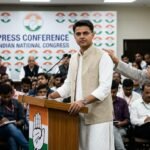
- Strategic Reshuffle: Analyzing the Impact of Sachin Pilot Replacing Bhupesh Baghel in Punjab
- The Pentagon’s High-Stakes Hunt: Mass Polygraph Tests and the Investigation into the Iran War Data Leak

- PM Modi Recycles Half Water-Half Air Line At Shri Ram College, 13 Years After Big Launch Speech – NDTV

- The India-Iran-USA Triad: Deciphering the Geopolitical Fallout of the Modi-Pezeshkian Meeting

- Rupee gains 47 paise as record FCNR inflows boost forex liquidity – The Times of India

Categories
- Art & Culture 101
- Auto 85
- Beauty 15
- Blog 270
- Books 7
- Business 359
- Celebrities 217
- Crime Files 139
- Democracy 308
- Education 84
- Entertainment 154
- Environment 133
- epaper 1
- Fashion 37
- Food 58
- Gadgets 86
- Guide 150
- Handicrafts 11
- Health 268
- Healthy Living 107
- History 5
- incidents 158
- Lifestyle 40
- Music 6
- Photography 15
- Politics 433
- Science & Technology 160
- Sports 243
- Tech 124
- Television 2
- Travel 68
- Travel & Tourism 30
- Trends 44
- Weather 8
- Web Series 97
- Workout 4
- World 655
Leave a Reply