
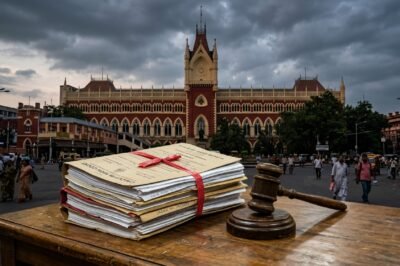
The legal landscape of West Bengal was recently rocked by a monumental judgment from the Calcutta High Court, a decision that has sent shockwaves through the political and social corridors of the state. In a landmark ruling, a division bench comprising Justice Tapabrata Chakraborty and Justice Rajasekhar Mantha declared the Other Backward Classes (OBC) status of several classes, issued after the year 2010, as null and void. This decision effectively strikes down the reservation benefits for a significant portion of the population that had been categorized under the OBC umbrella over the last decade and a half. The verdict is not merely a legal technicality; it is a profound commentary on the procedural rigors required for social engineering and the constitutional mandates that govern the identification of backward classes. As the state grapples with the immediate fallout, the ruling has ignited a fierce debate over the criteria for reservation, the role of the Backward Classes Commission, and the intersection of judicial oversight with executive policy-making in one of India’s most politically vibrant states.
The genesis of this legal battle lies in the challenges posed against the methodology adopted by the West Bengal government in classifying various communities as OBCs. The court’s scrutiny focused on the period after 2010, particularly the enactments and executive orders that followed the change in state leadership. The petitioners argued that the classification lacked empirical data and did not follow the established norms laid down by the Supreme Court in the historic Indra Sawhney case. By striking down these classifications, the High Court has emphasized that reservation is not a tool for political expediency but a constitutional mechanism intended for genuine social upliftment based on quantifiable data and objective assessment. The scale of this decision is unprecedented, affecting thousands of individuals who have either utilized or were planning to utilize these reservation benefits for education and employment purposes.
Legal Earthquake: The Calcutta High Court Verdict
The core of the Calcutta High Court’s judgment rests on the procedural lapses identified in the identification process of backward classes. The court observed that the inclusion of several communities in the OBC list after 2010 was done without adequate consultation with the Backward Classes Commission, or in some instances, by bypassing the commission’s recommendations entirely. The bench noted that the state’s exercise of power under the West Bengal Backward Classes (Other than Scheduled Castes and Scheduled Tribes) (Reservation of Vacancies in Services and Posts) Act, 2012, was not in alignment with the constitutional requirement of establishing ‘backwardness’ through a rigorous, data-driven approach.
Furthermore, the court highlighted that the executive orders issued during this period often lacked the necessary legislative backing or were based on insufficient surveys. The ruling points out that the identification of a community as ‘backward’ must be a result of a meticulous study of their socio-economic conditions, and not merely an administrative declaration. By striking down these specific entries in the OBC list, the court has essentially ordered a reset of the reservation criteria to the pre-2010 status, effectively nullifying the additions made under the current administration’s tenure. This aspect of the ruling is particularly significant as it scrutinizes the ‘hasty’ nature of the classifications made shortly before and after major electoral cycles.
The 2010 Threshold: Why the Cut-off Matters
The selection of 2010 as the threshold is significant because it marks a period of major political transition in West Bengal. The court identified that the surge in the number of communities added to the OBC list post-2010 coincided with a shift in the state’s political landscape. The judges remarked that the process of identifying backward classes must be insulate from political considerations. The bench found that the state government had failed to produce evidence of any fresh, comprehensive survey conducted after 2010 that would justify the inclusion of these new groups. Under the Indra Sawhney guidelines, a periodic review of the OBC list is mandatory to ensure that the benefits reach the most deserving and that the ‘creamy layer’ is excluded, but the court found the state’s process lacking in these essential safeguards.
Statistics presented during the hearings suggested a disproportionate increase in the number of sub-castes and communities recognized as OBCs within a very short timeframe. Critics of the state’s policy argued that this was an attempt to broaden the electoral base through reservation quotas. The High Court’s decision to specifically target the post-2010 inclusions serves as a corrective measure to ensure that the integrity of the reservation system is maintained. It reinforces the principle that backwardness is a multi-faceted concept involving social, educational, and economic deprivation, none of which can be determined without a robust and transparent methodology.
Protecting Current Beneficiaries: The Nuance of the Ruling
Recognizing the potential for widespread administrative chaos, the Calcutta High Court provided a crucial caveat to its ruling. While it struck down the OBC status for the identified classes, it clarified that individuals who have already secured jobs or educational admissions based on these certificates will not be affected. This ‘prospective’ application of the judgment ensures that those who have already entered the workforce or completed their studies under the quota are not penalized for the state’s procedural errors. This balanced approach was designed to prevent a total collapse of the state’s administrative machinery and to protect the livelihoods of thousands of families who acted in good faith based on the certificates issued to them.
However, the ruling explicitly bars any future appointments or admissions under these categories. This means that current recruitment processes and upcoming admission cycles for the 2024-25 academic year will have to be recalibrated. The state government now faces the Herculean task of filtering out applications that were submitted under the now-invalidated OBC status. This has led to concerns among students and job aspirants who are currently in the middle of competitive examinations or interview processes, as the legal uncertainty clouding their status could lead to delays or litigation in individual cases.
The Constitutional Challenge and the 2012 Act
A significant portion of the judgment deals with the West Bengal Backward Classes (Other than Scheduled Castes and Scheduled Tribes) (Reservation of Vacancies in Services and Posts) Act, 2012. The court examined whether the provisions of this Act were being used to circumvent the requirement of a commission-led inquiry. The bench emphasized that while the legislature has the power to enact laws for reservation, those laws must satisfy the ‘test of reasonableness’ and the ‘data requirement’ mandated by Articles 15 and 16 of the Constitution. The court found that Section 16 of the 2012 Act, which gave the state government sweeping powers to include classes in the OBC list, was applied in a manner that undermined the role of the statutory Backward Classes Commission.
The legal breakdown provided by the court also touched upon the ‘50% ceiling’ on reservations. While the total percentage of reservation in West Bengal remained within the permissible limits, the court focused on the ‘identity’ of those receiving the benefits. It reiterated that adding groups to the list without a scientific basis results in ‘over-inclusion,’ which unfairly dilutes the benefits meant for communities that are genuinely backward. This part of the analysis is a significant contribution to Indian reservation jurisprudence, as it focuses on the quality and accuracy of the list rather than just the quantity of the quota.
Political and Socio-Economic Repercussions
The political fallout of the Calcutta High Court’s decision was immediate. The ruling Trinamool Congress (TMC) has expressed strong disagreement with the verdict, with Chief Minister Mamata Banerjee stating that the state will challenge the order in the Supreme Court. The state government maintains that the classifications were done following due process and were intended to provide social justice to marginalized sections of society. On the other hand, the opposition parties, particularly the BJP, have hailed the judgment as a victory for the rule of law, alleging that the OBC status was used as a tool for ‘appeasement politics’ and to create a dedicated vote bank.
Beyond the political rhetoric, the socio-economic implications are deep. Many of the communities whose status has been revoked were recently integrated into the socio-economic mainstream through these reservations. The sudden loss of this status could lead to a sense of disenfranchisement and social unrest. Economists and social scientists are now looking at how this will impact the labor market in West Bengal, particularly in government sectors where OBC representation has seen a steady rise over the last decade. There is also the question of the ‘Other Backward Classes’ within the minority communities, as a significant number of the affected groups belong to specific religious minorities, adding a layer of communal sensitivity to the legal dispute.
Future Implications for Reservation Policy
The Calcutta High Court’s ruling is likely to serve as a precedent for similar challenges in other states where reservation lists have been expanded through executive orders. It reinforces the judiciary’s role as a watchdog against the potential misuse of reservation policies for political gains. The future of this case now rests with the Supreme Court of India. If the apex court upholds the High Court’s decision, it will necessitate a complete overhaul of the Backward Classes Commission in West Bengal and a fresh, state-wide socio-economic survey to re-identify backward communities. This could take years to complete, during which time many communities will remain without reservation benefits.
Ultimately, this judgment underscores the necessity of a ‘permanent commission’ as envisioned by the Supreme Court, which operates independently of the state executive. It calls for a move towards ‘evidence-based policy-making’ in the realm of social justice. As West Bengal prepares for the next round of legal battles, the focus will remain on how the state can balance its commitment to affirmative action with the rigorous standards of constitutional law. The outcome will not only determine the fate of the OBC communities in West Bengal but will also shape the discourse on reservation and social justice across the entire country for years to come.





































Leave a Reply