
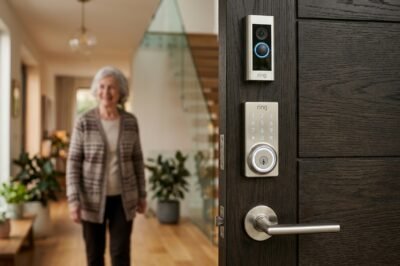
The landscape of home security has undergone a seismic shift over the last decade, transitioning from expensive, professionally installed hardwired systems to the agile, DIY-friendly world of smart devices. At the heart of this revolution has been Ring, the Amazon-owned titan that essentially invented the video doorbell category. For years, Ring users have been able to see who is at their door, talk to visitors from across the globe, and record every motion on their porch. However, there has always been a missing link in the Ring ecosystem: the ability to actually grant or deny physical entry through a first-party hardware solution. While Ring has long integrated with third-party locks from brands like Schlage and Yale, the announcement of the Ring Smart Lock Pro marks a definitive new chapter. By entering the smart lock market with a $249 device that features a unique battery-backup system, Ring is not just adding a product to its catalog; it is attempting to seize total control of the front door experience. This move signals a significant escalation in the battle for the smart home, as Amazon leverages its massive distribution network and deep integration to challenge established lock manufacturers on their own turf.
The Engineering Marvel: Breaking Down the Ring Smart Lock Pro
The Ring Smart Lock Pro is not merely a late entry into a crowded field; it is a sophisticated piece of hardware designed to address specific pain points that have plagued the smart lock industry for years. Priced at $249, it positions itself at the premium end of the market, competing directly with the likes of the August Wi-Fi Smart Lock and the Yale Assure series. The standout feature, and the one that has captured the attention of industry analysts, is the inclusion of a dedicated battery-backup system. Most smart locks rely on a single set of batteries, and when those die, the user is often left relying on a physical key or a jump-start terminal. Ring’s solution provides a secondary power source, ensuring that even if the primary batteries fail, the lock remains functional and connected to the network. This redundancy is a masterstroke in consumer psychology, addressing the ‘lockout anxiety’ that prevents many traditionalists from making the switch to digital entry.
Beyond power management, the device is built on a foundation of versatile connectivity. It supports Wi-Fi out of the box, eliminating the need for a separate bridge, but more importantly, it is designed with the future in mind. The lock is compatible with Z-Wave and is slated for Matter support, the unifying smart home standard that allows devices from different ecosystems to work together seamlessly. This means that while it is optimized for the Ring and Alexa apps, it won’t be a walled garden. The physical design follows Ring’s established aesthetic: clean lines, durable materials, and an intuitive interface. It replaces the interior deadbolt hardware while allowing users to keep their existing exterior hardware and keys, making it a ‘retrofit’ solution that appeals to renters and homeowners alike who do not wish to change their exterior curb appeal or rekey their entire house.
Strategic Ecosystem Synergy: The Amazon Advantage
Amazon’s strategy with Ring has always been about ‘the Ring of Security’—a layers-of-protection approach that starts at the sidewalk and ends inside the home. By launching its own smart lock, Ring closes the loop on the ‘In-Garage’ and ‘In-Home’ delivery services that Amazon has been piloting for years. Currently, Amazon Key allows delivery drivers to place packages inside a garage or front door using compatible smart locks. By owning the hardware, Amazon can streamline this process, offering a more reliable and tightly integrated experience for Prime members. This vertical integration is something that competitors like Google (with Nest) and Apple (with HomeKit) struggle to match at the same scale. When a user receives a notification that a package has arrived via their Ring Doorbell, they can now theoretically unlock the door for a trusted neighbor or a delivery person within the same application, without the latency or software friction often found in third-party integrations.
Furthermore, the data generated by a first-party lock is invaluable. Ring can now track not just who is approaching the door, but exactly when the door is locked and unlocked, and by which specific user code. For a company built on data and consumer habits, this provides a granular look into the daily rhythms of the American household. This information can be used to trigger other smart home routines; for example, unlocking the door could automatically disarm the Ring Alarm system, turn on the hallway lights via Alexa, and start the kettle. This level of automation is the ‘holy grail’ of the smart home, and by providing the lock—the literal gateway—Ring becomes the central nervous system of the house.
Competitive Landscape: Challenging the Locksmith Giants
The entry of Ring into this space is a direct shot across the bow of heritage brands like Kwikset and Schlage. These companies have spent decades building trust through physical security and mechanical engineering. However, they have often struggled with the ‘smart’ aspect of their products, frequently plagued by buggy apps and poor battery life. Ring, conversely, is a software and services company first. They understand user experience, cloud storage, and mobile connectivity better than almost anyone in the hardware space. By pricing the lock at $249, Ring is signaling that they are not interested in the ‘budget’ tier; they are going after the high-value customers who prioritize reliability and ecosystem cohesion.
Statistics show that the smart lock market is expected to grow at a CAGR of over 12% through 2030, driven largely by the rise in home rentals and the increasing popularity of Airbnb-style short-term stays. Ring is perfectly positioned to capture this segment. The ability to issue temporary digital keys and monitor access logs is a killer feature for property managers. While brands like August have dominated the retrofit market for years, Ring’s brand recognition and the sheer number of Ring Doorbells already installed globally give them an almost unfair advantage in customer acquisition costs. If a consumer already pays for a Ring Protect subscription, adding a Ring lock is a frictionless decision.
Addressing Privacy Concerns and Digital Security
With great connectivity comes great responsibility, and Ring has not been without its share of controversies regarding privacy and law enforcement access to footage. A smart lock, however, represents a different level of trust. While a camera records what is happening outside, a lock controls who can enter your private sanctum. Amazon has anticipated these concerns by implementing end-to-end encryption for the Smart Lock Pro’s communication. They are also leaning heavily into the ‘local control’ capabilities of Z-Wave, which allows the lock to function even if the internet goes out, provided there is a local hub. This is a crucial distinction for security-conscious users who are wary of ‘cloud-only’ devices that can become bricks during a server outage.
The $249 price point also reflects the cost of high-grade encryption and secure hardware modules. Unlike cheap, generic smart locks found on discount marketplaces, Ring is aiming for ANSI Grade certification to prove that their digital security is matched by physical durability. In an era where ‘hacking’ a smart home is a common trope in media, Ring is doubling down on the narrative that their devices are more secure than traditional locks, which can be easily picked or bumped. The digital ‘key’ used by the Ring Smart Lock Pro changes constantly and is virtually impossible to duplicate without authorized access to the encrypted app, providing a level of security that a physical piece of brass simply cannot offer.
The Power Crisis: Why Battery Backup Changes the Game
In the world of IoT (Internet of Things), power is the ultimate constraint. Smart locks are notoriously power-hungry because they must maintain a wireless connection while also physically moving a mechanical bolt. Most users find themselves changing batteries every 3 to 6 months, an annoyance that often leads to the ‘smart’ features being ignored once the batteries die. Ring’s decision to include a battery-backup system is a direct response to this industry-wide failure. The system likely utilizes a small internal rechargeable cell or a secondary compartment that stays dormant until the primary AA batteries reach a critical level. This ensures that the Wi-Fi radio—the most power-intensive component—doesn’t kill the lock’s primary function.
This innovation also allows for more aggressive features. Typically, smart locks limit how often they ‘check in’ with the server to save power. With a more robust power management system, the Ring Smart Lock Pro can offer faster response times and more frequent status updates. When you check your phone to see if you locked the door, you won’t have to wait 10 seconds for the device to wake up; the connection can be near-instantaneous. This reliability is what will turn casual users into brand evangelists, as the device moves from being a ‘gadget’ to a dependable piece of home infrastructure.
Conclusion: The Future of Entryway Automation
Amazon’s Ring entering the smart lock market is more than a product launch; it is the final piece of the puzzle for the modern smart home exterior. By integrating a $249 premium lock with a fail-safe battery backup, Ring has addressed the primary barriers to adoption: reliability and fear of failure. As we look toward the future, the implications are clear. The front door is no longer just a barrier; it is a smart portal. We can expect to see even tighter integration with biometric data, such as palm scanning or facial recognition, as Amazon’s ‘One’ technology potentially migrates from Whole Foods stores to residential doorsteps. For now, the Ring Smart Lock Pro stands as a formidable competitor that will force the entire industry to innovate faster, prioritize battery life, and consider the holistic ecosystem of the user. For the consumer, it means one less app to manage, one more layer of security, and the peace of mind that comes with knowing the door is always locked—and will stay powered even when the grid fails.




































Leave a Reply