
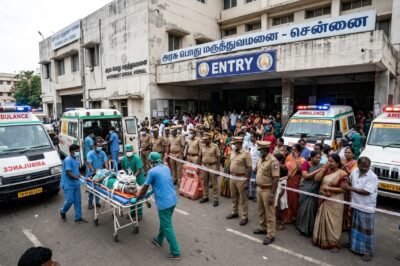
The state of Tamil Nadu is currently reeling from a profound humanitarian crisis as the death toll from the consumption of spurious liquor in the Kallakurichi district has tragically surged to 37. This harrowing incident, which primarily unfolded in the Karunapuram area, has sent shockwaves across the socio-political landscape of Southern India, highlighting the persistent and deadly menace of illicit alcohol trade. The tragedy began to surface on Wednesday when several residents started reporting severe physical distress, ranging from excruciating abdominal pain and nausea to a complete loss of vision—classic symptoms of methanol poisoning. As the hours progressed, the local healthcare infrastructure was pushed to its limits, with victims being rushed to the Kallakurichi Government Medical College and Hospital, while those in more critical conditions were shifted to specialized facilities in Salem, Villupuram, and the Jawaharlal Institute of Postgraduate Medical Education and Research (JIPMER) in Puducherry. The sheer scale of the loss has left families devastated and the community in a state of mourning, as the state government scrambles to contain the fallout and provide relief to the hundreds still undergoing intensive medical treatment.
Detailed Timeline and the Immediate Aftermath
The genesis of this catastrophe can be traced back to the late hours of Tuesday and the early morning of Wednesday, when laborers and residents of Karunapuram consumed locally sourced arrack. By Wednesday afternoon, the first reports of fatalities began to emerge, initially numbering in the single digits but rapidly escalating as the toxicity of the adulterated brew took hold of the victims’ systems. Forensic experts and medical professionals have confirmed that the illicit liquor was laced with lethal quantities of methanol, a highly toxic industrial solvent that, when ingested, causes rapid organ failure and permanent neurological damage. The speed at which the toxin acted meant that many victims had little time to seek help before collapsing in their homes or on their way to clinics.
By Thursday morning, the official count stood at 37, with local officials warning that the number could rise further as nearly 80 individuals remain hospitalized, several of whom are currently on ventilator support. The atmosphere at the Kallakurichi Government Hospital has been one of desperation and grief, with relatives waiting for news of their loved ones amidst a heavy police presence. The tragedy has exposed significant gaps in the local monitoring of illegal brewing activities, particularly in pockets where economic vulnerabilities make residents susceptible to cheaper, albeit deadly, alternatives to regulated alcohol. The state’s response has been swift in terms of administrative reshuffling, but the human cost remains an irreversible stain on the district’s history.
The Science of Spurious Liquor: The Methanol Menace
At the heart of this tragedy lies the chemical composition of the ‘hooch’ or illicit arrack. Unlike ethanol, which is the primary component of legal alcoholic beverages, methanol is an industrial-grade chemical used in the production of formaldehyde, fuel, and anti-freeze. In the illicit liquor trade, bootleggers often add methanol to their mixtures to increase the perceived potency or ‘kick’ of the drink, or simply as a result of poor distillation processes. However, even a small dose—as little as 10ml—can lead to permanent blindness, while higher concentrations result in metabolic acidosis, kidney failure, and cardiac arrest. The clinical progression of methanol poisoning is particularly cruel, as there is often a ‘latent period’ where the victim feels relatively fine before the metabolic byproducts, such as formic acid, begin to destroy the optic nerve and vital organs.
Medical teams in Tamil Nadu are currently employing aggressive treatment protocols, including the administration of ethanol as an antidote and emergency hemodialysis to flush the toxins from the victims’ bloodstreams. However, the success of these interventions depends heavily on how quickly the patient reaches a tertiary care center. In the case of Kallakurichi, many victims belonged to marginalized backgrounds and delayed seeking help due to fear of legal repercussions or lack of immediate transportation, which significantly worsened their prognosis. This technical aspect of the tragedy underscores the need for greater public awareness regarding the chemical dangers of unregulated spirits.
Administrative and Political Consequences
The political fallout of the Kallakurichi liquor tragedy has been immediate and severe. Chief Minister M.K. Stalin has expressed his profound shock and grief, directing a comprehensive probe into the incident by the CB-CID (Crime Branch-Criminal Investigation Department). In a decisive move to enforce accountability, the state government has placed the District Collector under transfer and suspended the Superintendent of Police (SP) along with several other high-ranking officials from the prohibition wing. These measures are intended to signal a zero-tolerance policy toward negligence in administrative duties. Furthermore, the state has announced a solatium of Rs 10 lakh for the families of each of the deceased and Rs 50,000 for those currently undergoing treatment.
However, the opposition parties, led by the AIADMK and the BJP, have launched a scathing attack on the ruling DMK government, alleging a systemic failure of the intelligence and prohibition departments. Leader of the Opposition, Edappadi K. Palaniswami, has demanded more stringent action and questioned how such a large-scale operation of illicit liquor could thrive under the nose of the local administration. The political discourse has shifted toward the effectiveness of the Tamil Nadu State Marketing Corporation (TASMAC) and whether the pricing and availability of legal alcohol are inadvertently driving poorer sections of society toward the black market. This debate is expected to intensify in the coming weeks as the judicial inquiry progresses.
Social and Economic Impact on Local Communities
Beyond the statistics and political maneuvering, the tragedy has hollowed out the Karunapuram community. Most of the victims were the primary breadwinners for their families, working as daily wage laborers in agricultural or construction sectors. The sudden loss of these individuals has plunged dozens of households into deep economic uncertainty and emotional trauma. The social fabric of the region is under strain as the community grapples with the collective loss of its members. There is also a significant psychological toll on the survivors, many of whom may face lifelong disabilities such as vision loss or chronic renal issues, further hampering their ability to earn a living.
Community leaders have pointed out that the prevalence of illicit liquor is often a symptom of deeper socio-economic issues, including poverty, lack of educational opportunities, and inadequate recreational facilities. While the government’s monetary compensation provides temporary relief, it does not address the systemic vulnerabilities that allowed the bootlegging network to establish deep roots in the district. There are now growing calls for comprehensive social intervention programs that focus on de-addiction and the provision of alternative livelihoods for those involved in the fringes of the illegal alcohol trade.
- Immediate arrest of prime suspect ‘Kovai’ Malliga and others involved in the supply chain.
- Seizure of over 200 liters of methanol-laced arrack in coordinated raids.
- Deployment of additional medical specialists to Kallakurichi from neighboring districts.
- Establishment of a one-man commission headed by a retired High Court judge to investigate the root causes.
Historical Context and Regional Implications
This is not the first time Tamil Nadu has witnessed such a calamity. Only last year, the twin tragedies in Marakkanam and Chengalpattu claimed over 20 lives, raising similar questions about the efficacy of the state’s prohibition enforcement. The recurrence of such incidents suggests that the illicit liquor networks are highly resilient and capable of adapting to law enforcement crackdowns. For a state that prides itself on its robust healthcare and administrative systems, these tragedies represent a significant challenge to its governance model. The regional implications are also notable, as the proximity of Kallakurichi to other districts and the neighboring union territory of Puducherry facilitates the movement of industrial chemicals and illicit goods across borders.
The current crisis has prompted neighboring states to heighten their vigil along border crossings to prevent the spillover of contaminated spirits. It also highlights the broader national issue of ‘hooch’ tragedies in India, which frequently occur in states with varying degrees of alcohol regulation or prohibition. The persistence of these events points to a lucrative, underground economy that exploits the gaps between demand, affordability, and legal supply. For Tamil Nadu, the Kallakurichi tragedy is a grim reminder that law enforcement alone is insufficient; a multi-dimensional approach involving community policing, chemical regulation, and social welfare is essential to prevent such loss of life in the future.
Conclusion: Future Implications and Necessary Reforms
As the death toll in Kallakurichi stands at 37, the focus must now shift from immediate crisis management to long-term structural reforms. The state government must ensure that the CB-CID investigation is thorough and transparent, bringing not just the local bootleggers but also the industrial suppliers of methanol to justice. There is an urgent need for a more robust regulatory framework for the handling and sale of industrial-grade chemicals to ensure they are not diverted into the beverage market. Furthermore, the local intelligence gathering mechanisms need to be revitalized to identify and dismantle illicit brewing units before they can distribute their deadly products.
On a social level, the government must invest in long-term rehabilitation for the affected families and implement community-based monitoring systems to discourage the consumption of unregulated alcohol. The tragedy serves as a catalyst for a broader conversation about the state’s alcohol policy and the socio-economic conditions that drive illicit trade. If the lessons of Kallakurichi are not learned, the cycle of tragedy, outrage, and temporary crackdown will continue to haunt the state. The ultimate tribute to the victims would be a sustained and sincere effort to eradicate the menace of spurious liquor from the soil of Tamil Nadu once and for all, ensuring that no more lives are lost to this preventable poison.



































Leave a Reply