
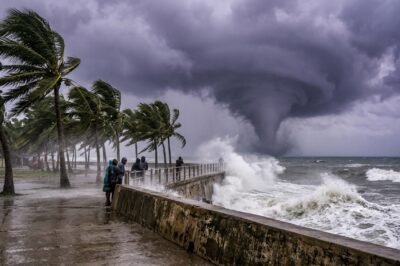
The India Meteorological Department (IMD) has issued a critical warning as a deep depression over the Bay of Bengal shows signs of rapid intensification, likely evolving into the first pre-monsoon cyclonic storm of the season, named Cyclone Remal. This atmospheric development marks a significant shift in the regional weather pattern, posing a direct threat to the coastal belts of West Bengal and neighboring Bangladesh. For residents, businesses, and maritime stakeholders, the evolution of this system from a low-pressure area to a deep depression and now a potential cyclone represents a period of extreme vulnerability. The warm sea surface temperatures in the Bay of Bengal, currently hovering around 30 to 31 degrees Celsius, are providing the requisite thermal energy to fuel this storm’s transition into a severe cyclonic system. As the meteorologists monitor the storm’s trajectory, the urgency of the situation is underscored by the potential for high-speed winds, torrential downpours, and devastating storm surges that could redefine the coastal landscape. This situation demands not just immediate tactical preparedness but also a broader understanding of the meteorological and economic forces at play as the subcontinent prepares for one of nature’s most formidable displays of power.
Understanding the Meteorological Progression: From Depression to Cyclone
The genesis of what is now being identified as Cyclone Remal began as a localized low-pressure system in the central-east Bay of Bengal. Within a matter of 48 hours, the system consolidated into a depression and subsequently into a deep depression, moving northward with increasing convective organization. The IMD’s specialized tracking models indicate that the system is benefiting from low vertical wind shear and significant moisture incursion, which are the primary drivers for cyclogenesis. As the system moves toward the North Bay of Bengal, it is expected to attain wind speeds ranging from 100 to 120 kmph, gusting up to 135 kmph, which classifies it as a severe cyclonic storm.
Meteorologists emphasize that the ‘Remal’ system is unique due to its timing. Occurring just before the onset of the Southwest Monsoon, such cyclones often exhibit erratic behavior. The deep depression is currently located several hundred kilometers south-southwest of Khepupara and Sagar Island, but its proximity to the coast is narrowing rapidly. Historical data suggests that pre-monsoon cyclones in this region can have a devastating impact on the hydrological balance of the deltaic regions, often pushing saline water deep into freshwater systems, thereby affecting the ecology and local livelihoods for years to come.
Anticipated Landfall and Geographic Vulnerability
The projected path of Cyclone Remal suggests a landfall between the Sagar Island in West Bengal and the Khepupara region in Bangladesh. This specific corridor is characterized by the vast Sundarbans mangrove forest, which serves as a natural buffer but remains highly susceptible to storm surges. The IMD has projected a storm surge of approximately 1.5 to 2 meters above the astronomical tide, which could inundate low-lying areas in the North and South 24 Parganas districts. This geographic vulnerability is compounded by the high population density in these regions, where many families rely on mud-and-thatch housing that offers little resistance to gale-force winds.
Local administrations have already begun the massive task of evacuating thousands of people from these vulnerable coastal pockets to multi-purpose cyclone shelters. The challenge remains the logistical scale of the operation, given the intricate network of rivers and estuaries that define the Bengal delta. Authorities are particularly concerned about the ‘high-tide’ synchronization; if the cyclone makes landfall during a high tide, the flooding impact could be exponentially worse, leading to breaches in embankments that have already been weakened by previous storms like Amphan and Yaas.
Financial and Supply Chain Disruptions: A Macroeconomic View
From a financial perspective, the impending arrival of Cyclone Remal sends ripples through several sectors. The most immediate impact is observed in the logistics and maritime industry. Major ports such as the Syama Prasad Mookerjee Port in Kolkata and the Haldia Dock Complex have suspended operations and moved vessels to safer anchorages. This halt in operations disrupts the supply chain for essential commodities, including petroleum products and dry bulk cargo, which are critical for the industrial heartland of Eastern India. Insurance companies are also bracing for a surge in claims across property, marine, and agricultural portfolios, potentially impacting their quarterly loss ratios.
The agricultural sector, particularly the Kharif crop cycle, is at significant risk. Thousands of hectares of paddy, jute, and vegetable crops in West Bengal and Odisha are currently in a sensitive growth stage. Excess rainfall and saline flooding could lead to total crop failure in affected blocks, driving up food inflation in local markets. Furthermore, the power and telecommunication sectors face massive capital expenditure risks. Cyclone-force winds are notorious for uprooting transmission towers and snapping fiber-optic cables, leading to prolonged blackouts that stall industrial production and affect the burgeoning digital economy in the region.
Disaster Management and State Preparedness Protocols
The National Disaster Response Force (NDRF) and the State Disaster Response Force (SDRF) have pre-positioned multiple teams across the coastal districts of West Bengal and Odisha. These teams are equipped with tree cutters, inflatable boats, and medical supplies to handle post-landfall rescue operations. The Indian Navy and Coast Guard have also been put on high alert, with ships and aircraft ready for search and rescue missions. The state government has activated control rooms that operate 24/7, linking district magistrates with the central coordination hub in Kolkata.
Modern disaster management has evolved to include sophisticated early warning systems (EWS) that send bulk SMS alerts to fishermen and farmers. Current protocols include:
- Red Alerts: Issued for districts expecting wind speeds above 100 kmph.
- Harbor Warnings: Signals 8, 9, and 10 have been hoisted at major ports to signify severe weather.
- Evacuation Drills: Coordination with local Panchayats to ensure 100% evacuation of ‘Kutcha’ houses.
- Medical Stockpiling: Ensuring anti-venom, clean water, and dry rations are available in shelters.
The Role of Climate Change in Rapid Intensification
The intensification of the deep depression into Cyclone Remal serves as a stark reminder of the warming trends in the Indian Ocean. Scientific studies have consistently shown that the Bay of Bengal is becoming a hotspot for rapid cyclogenesis. The increasing heat content of the upper ocean layers allows storms to gather strength much faster than they did three decades ago. This ‘rapid intensification’ phenomenon leaves less time for emergency services to react, making the role of the IMD’s satellite-based tracking even more vital.
Furthermore, rising sea levels are making storm surges more lethal. A one-meter surge today penetrates much further inland than the same surge would have in the 1950s. This necessitates a rethink of urban planning and coastal infrastructure in cities like Kolkata and Dhaka. Infrastructure must now be designed not for the average storm, but for the ‘one-in-a-hundred-year’ event, which is becoming increasingly frequent. The integration of climate resilience into financial planning is no longer an option but a necessity for the sustainable growth of the region.
Future Implications and Post-Storm Recovery Strategies
As Cyclone Remal approaches, the focus is naturally on immediate safety, but the future implications for the region’s policy framework are profound. The aftermath of the storm will likely require a massive infusion of state and central funds for reconstruction. Beyond physical rebuilding, there is a pressing need for long-term ecological restoration of the Sundarbans, which act as the first line of defense. Strengthening the bio-shield through massive mangrove plantation drives is essential for mitigating the impact of future storms. Additionally, the move toward underground power cabling in coastal towns must be accelerated to prevent the total collapse of the grid during such events.
Ultimately, the resilience of the Bay of Bengal community will be tested once again. The recovery process must prioritize ‘building back better,’ ensuring that new structures are cyclone-resistant and that the local economy is diversified enough to withstand periodic natural shocks. For the financial markets, this event highlights the importance of ‘Weather Derivatives’ and ‘Catastrophe Bonds’ as tools to manage environmental risks. As we move forward, the data gathered from Cyclone Remal will serve as a critical input for future meteorological models, helping scientists and policymakers refine their strategies in an era of climate uncertainty.





































Leave a Reply