
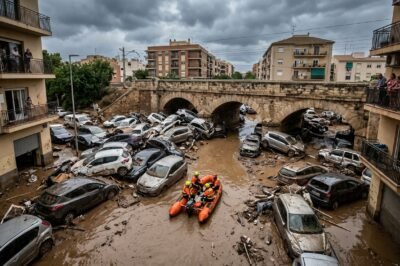
The heavens opened over eastern Spain with a ferocity rarely witnessed in modern history, transforming picturesque Mediterranean streets into raging torrents of chocolate-colored water and debris. In a matter of hours, the region of Valencia and its surrounding provinces were engulfed by a catastrophic meteorological event known locally as a DANA, leaving a trail of destruction that has claimed at least 51 lives, with many more individuals still reported missing. The sheer scale of the disaster has stunned the nation, as emergency services struggle to reach isolated communities where citizens were forced to climb onto the roofs of their homes and cars to escape the rising tide. This is not merely a localized weather incident; it is a profound humanitarian crisis that highlights the increasing volatility of the Mediterranean climate and the extreme vulnerability of modern infrastructure to sudden, high-magnitude hydraulic events. As the sun rises over a landscape of mud and twisted metal, the focus shifts from immediate survival to a grueling process of recovery and a search for answers regarding early warning systems and urban preparedness in an era of climate uncertainty.
The Mechanics of a Meteorological Catastrophe: Understanding the DANA
The atmospheric catalyst for this devastation is a phenomenon known as ‘Depresión Aislada en Niveles Altos’ (DANA), often referred to in English as a ‘cold drop.’ This occurs when a pocket of cold air at high altitudes breaks off from the polar jet stream and stalls over the warm waters of the Mediterranean. The temperature differential between the frigid upper-level air and the unusually warm sea surface creates intense atmospheric instability. Moist, warm air is rapidly forced upward, condensing into massive cumulonimbus clouds that discharge extraordinary volumes of precipitation in a highly concentrated area. In this instance, the weather station in Chiva, west of Valencia, recorded a staggering 491mm of rain in just eight hours—nearly a full year’s worth of precipitation compressed into a single afternoon.
Meteorologists note that while DANA events are a seasonal occurrence in the Spanish autumn, the intensity of this particular storm was significantly amplified by the record-high temperatures of the Mediterranean Sea. Warmer water acts as a high-octane fuel for these storms, providing more moisture and energy to the system. The result was a ‘stationary’ storm cell that remained parked over the Valencian interior, funneling water into the riverbeds and ravines that lead toward the coast. These dry creek beds, or ‘ramblas,’ which are often bone-dry for most of the year, became lethal corridors for flash floods that arrived with little to no warning for those downstream, sweeping away bridges and motorways before residents could even react.
Human Impact and the Search for Survivors: A Region in Grief
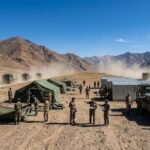
The human cost of the flooding is nothing short of tragic. With at least 51 confirmed fatalities, the death toll is expected to rise as search and rescue teams gain access to previously cut-off zones. The Military Emergencies Unit (UME), a specialized branch of the Spanish armed forces, has deployed over 1,000 personnel to the worst-hit areas to assist local firefighters and police. Rescue operations have been hindered by the complete collapse of several secondary roads and the destruction of bridges, making some towns accessible only by helicopter. In the town of Letur, in the neighboring province of Albacete, several people remain missing after a torrent of water ripped through the historic center, dragging vehicles and residents along with it.
Survivors have shared harrowing accounts of the speed at which the water rose. Many victims were caught in their vehicles on the A-3 and AP-7 motorways, which serve as the primary arteries for the region. As the water levels surged, hundreds of drivers were stranded, with some forced to spend the night on top of their trucks or clinging to highway barriers. The psychological impact on the community is profound; Valencia is a region defined by its connection to the land and its agricultural heritage, and seeing entire neighborhoods submerged in silt and debris has left the population in a state of collective shock. Support centers have been established to assist those who have lost their homes, but the sheer volume of the displaced is straining regional resources.
Infrastructure Failure and Economic Ripple Effects
The material damage caused by the floods is estimated to run into the hundreds of millions, if not billions, of euros. The suspension of the high-speed rail link between Madrid and Valencia is perhaps the most visible sign of the infrastructure collapse. Rail operator Adif has indicated that the tracks have suffered significant structural damage, and services are unlikely to resume for several days, if not weeks. This disruption affects thousands of commuters and tourists, severing a vital economic artery. Furthermore, the Port of Valencia, one of the busiest in Europe, was forced to halt operations temporarily due to the extreme weather conditions, creating a backlog in maritime logistics that will be felt across the continent.
Beyond transportation, the agricultural sector has taken a massive hit. The Valencian region is the heart of Spain’s citrus production, accounting for a significant portion of the global orange and lemon supply. Thousands of hectares of orchards are currently underwater, and the force of the floods has likely uprooted trees and destroyed irrigation systems that took decades to build. For the local economy, which relies heavily on exports, the timing is particularly devastating as the harvest season was just beginning. Preliminary assessments suggest that the loss of crops and the long-term damage to the soil due to siltation and contamination will lead to increased prices for consumers and a potential recession for the regional agricultural industry.
The Climate Nexus: Mediterranean Warming and Atmospheric Volatility
While flash floods are not new to the Iberian Peninsula, the frequency and severity of these events are increasingly being linked to global climate change. Scientific analysis suggests that for every degree of atmospheric warming, the air can hold approximately 7% more moisture. When this is combined with a Mediterranean Sea that has seen surface temperatures consistently 2 to 3 degrees Celsius above historical averages, the recipe for disaster is complete. This storm is a textbook example of how climate change does not just cause gradual warming, but rather increases the probability of ‘extreme events’ that break historical records.
Environmental experts are now calling for a fundamental rethink of urban planning in Spain. Many of the areas that suffered the worst flooding were built on floodplains or near ramblas that have been constricted by urban development. The ‘concrete-heavy’ approach to coastal development over the last 50 years has reduced the natural capacity of the land to absorb rainfall, leading to faster runoff and higher peak flows during storms. There is an urgent need to restore natural water courses and create ‘sponge cities’ that can manage high volumes of water without catastrophic failures. The events in Valencia serve as a stark warning that the infrastructure of the 20th century is no longer adequate for the climate realities of the 21st.
The Political Response and Early Warning Critiques
As the rescue phase transitions into recovery, a political storm is brewing over the efficacy of the early warning systems. The regional government of Valencia, led by Carlos Mazón, has faced criticism for the timing of the emergency alerts sent to citizens’ mobile phones. Reports indicate that the ‘ES-Alert’ system was only activated late on Tuesday evening, by which time many areas were already submerged. Residents in some municipalities have complained that they received the alert while they were already neck-deep in water or trapped in their cars. This has sparked a heated debate about the coordination between the national weather agency (AEMET) and regional civil protection departments.
Prime Minister Pedro Sánchez has declared a state of official mourning and promised that the central government will provide all necessary resources for reconstruction. However, the tragedy has also highlighted the friction between different levels of administration in Spain’s decentralized system. The opposition has begun to question whether budget cuts to emergency services and the dissolution of the Valencian Emergency Unit by the current regional administration played a role in the sluggish response. While the immediate priority remains finding the missing, the inevitable public inquiry will likely focus on how a modern, developed nation like Spain could suffer such a high loss of life from a weather event that was, to some extent, forecasted.
Conclusion: Future Implications and the Path to Resilience
The 2024 Valencia floods will go down in history as one of the deadliest natural disasters to hit Spain in decades, serving as a somber reminder of the raw power of nature. The path to recovery will be long and arduous, requiring a coordinated effort from the local, national, and European levels. Beyond the immediate cleanup and rebuilding of bridges and homes, Spain faces a deeper challenge: adapting its society to a more volatile climate. This means investing in more sophisticated real-time monitoring systems, revising land-use laws to prevent construction in high-risk zones, and educating the public on how to respond to flash flood warnings.
Ultimately, the resilience of Valencia will be measured not just by how quickly it can clear the mud from its streets, but by how it integrates the lessons of this tragedy into its future. The global community must also take heed; the Mediterranean is a climate change hotspot, and what happened in Spain this week is a harbinger of what other coastal regions can expect if the root causes of global warming are not addressed. For now, the focus remains on the families who have lost loved ones and the thousands of volunteers working tirelessly to restore a sense of normalcy to a region that has been changed forever by a single, devastating day of rain.

































Leave a Reply