
In Shorts
- A grain of sand traveling at light-speed would carry kinetic energy equivalent to a 100-million-ton TNT explosion.
- The impact would create a cataclysmic fireball and a crater over a kilometer wide, devastating a vast area.
- This hypothetical scenario underscores the immense destructive power locked within even the smallest objects when relativistic physics are applied.
AlwaysFirst Science Desk – We often look to the sky and fear massive asteroids, but what if the ultimate cosmic threat was something you could brush off your beach towel? Scientists exploring the outer limits of physics have unveiled a staggering hypothetical scenario: the cataclysmic consequences of a single grain of sand striking the Earth at the speed of light.
The sheer destructive power in this scenario doesn’t come from the sand’s mass, but from its impossible velocity. According to Einstein’s theory of relativity, as an object approaches the speed of light, its kinetic energy increases exponentially. A microscopic particle, which would normally be harmless, is transformed into the most potent projectile in the universe.
The numbers are almost incomprehensible. The kinetic energy carried by that tiny speck of silica would be monumental, releasing an explosive yield equivalent to 100 million tons of TNT. To put that in perspective, that is far more powerful than the nuclear bomb dropped on Hiroshima and rivals the largest thermonuclear devices ever detonated.
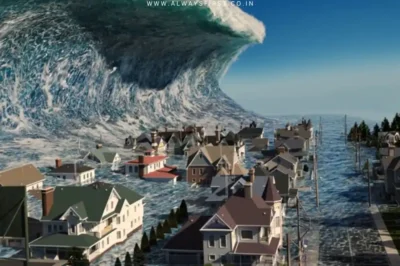
Upon hitting our atmosphere, the grain of sand wouldn’t just fall; it would detonate. The immediate effect would be a blinding, city-vaporizing fireball, followed by a devastating shockwave that would obliterate everything for dozens of kilometers. The impact would scar the planet, leaving behind a crater well over a kilometer wide and triggering localized seismic events.
Of course, physicists are quick to point out the reassuring caveat: this is a purely theoretical exercise. The laws of physics, as we understand them, prevent any object with mass from actually reaching the speed of light. The energy required would be infinite. However, this mind-bending thought experiment serves a crucial purpose. It vividly illustrates the fundamental principles of relativistic physics and reminds us that in the cosmos, even the most insignificant objects can become weapons of unimaginable power when the universe’s ultimate speed limit is involved.






































Leave a Reply