
Key Highlights
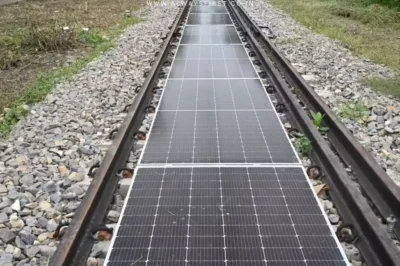
- India has launched a first-of-its-kind pilot project installing solar panels directly in the space between railway tracks at Varanasi’s Ramnagar station.
- The initiative is a collaboration between Indian Railways and the start-up SunRoot Energy, aiming to utilize otherwise unused land for renewable energy generation.
- This innovation could significantly reduce the railway’s diesel and electricity consumption, paving the way for a greener national transport system.
VARANASI – In a pioneering step that merges green technology with transport infrastructure, India has etched its name in the history books by successfully installing the world’s first solar panel system within the railway tracks themselves. The groundbreaking pilot project, located at the Ramnagar station in Varanasi, showcases an innovative solution to land scarcity while championing renewable energy.
The visual of the installation is striking: rows of robust solar panels are seamlessly integrated into the ballast and space between the railway tracks, unlike conventional ground-mounted or rooftop systems. This unique “between-the-tracks” design is the brainchild of a collaboration between Indian Railways and an Indian start-up, SunRoot Energy.
The core objective of this project is to utilize the vast, unused land available along the extensive Indian railway network—the fourth largest in the world. By converting the vacant space between and alongside tracks into mini power plants, the national transporter can generate a substantial amount of clean electricity right where it’s needed the most.
“This isn’t just about generating power; it’s about reimagining infrastructure,” an official familiar with the project noted. “We have thousands of kilometers of tracks. This model allows us to tap into that potential without acquiring new land, making it a highly efficient and sustainable model.”
The solar energy generated from these panels is designed to directly contribute to the railway’s operations, potentially helping to power signaling systems, station premises, and even train operations on certain routes. This direct application could lead to a significant reduction in the network’s reliance on fossil fuels, slashing its carbon dioxide emissions and operational costs simultaneously.
While still in its pilot phase, the success of the Varanasi project could signal a new era for Indian Railways and its ambitious goal of becoming a ‘Net Zero Carbon Emitter’ by 2030. If proven successful in terms of durability, safety, and efficiency, this technology could be replicated across the country’s vast rail network, solidifying India’s position as a global leader in innovative green transportation solutions.




































Leave a Reply