
In Shorts
- The solar system’s true edge isn’t a planet but the “heliopause,” a boundary where the Sun’s influence wanes against the pressure of interstellar space.
- NASA’s upcoming IMAP mission will create the first detailed maps of this invisible frontier, tracking particles from its edge.
- Understanding this boundary is crucial as it acts as a giant protective shield, deflecting harmful cosmic radiation.
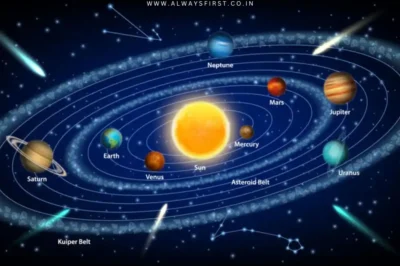
For centuries, we’ve imagined the solar system ending with the icy realm of Pluto and the distant Kuiper Belt. But modern astronomy reveals a far more dramatic and invisible boundary—the heliopause. This is the final frontier where the Sun’s dominion truly ends, and a new NASA mission is preparing to draw its map.
The heliopause is not a solid wall but a dynamic, shifting interface. It’s created by the solar wind—a constant stream of charged particles rushing from the Sun—colliding with the interstellar wind, the thin gas and dust filling the space between stars. Think of it as the cosmic equivalent of a beach shoreline, where the “water” of our solar system meets the “land” of the galactic ocean. The precise location of this shoreline is not fixed; it bulges and contracts with the Sun’s 11-year activity cycle.
While the Voyager 1 and 2 spacecraft have famously crossed this boundary, they provided only two data points—like two explorers reporting a single grain of sand each from a vast beach. To understand the entire coastline, we need a cartographer in orbit.
That cartographer is NASA’s Interstellar Mapping and Probe (IMAP) mission, scheduled for a 2025 launch. The IMAP spacecraft will not travel to the edge itself. Instead, it will be stationed at a stable point about a million miles from Earth, where it will act as a remote observatory. Its powerful instruments are designed to detect and analyze neutral particles that have slipped across the heliopause boundary and are racing back toward the inner solar system.
“By collecting these cosmic messengers, IMAP will effectively allow us to see the unseen,” a mission scientist explained in a recent statement. “We will be able to trace their paths back to the heliopause, building a three-dimensional map of its structure for the very first time.”
This endeavor is about more than just cosmic cartography. The heliosphere, the vast bubble dominated by the solar wind that stretches far beyond the planets, is our solar system’s first line of defense. It shields every planet, including Earth, from a significant portion of harmful galactic cosmic radiation. Mapping its outer boundary is key to understanding how this protective shield works, how it changes over time, and what it means for the long-term habitability of our world and the future of deep-space exploration.
The mission promises to answer a fundamental question: Where does our home in the cosmos truly end? Soon, thanks to IMAP, the final, invisible wall of the solar system may finally come into focus.





































Leave a Reply