
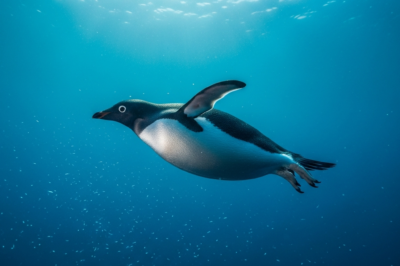
The vast, frozen wilderness of Antarctica has long been a sentinel for the health of our planet. In a groundbreaking study that has captured the attention of marine biologists and environmentalists globally, researchers have meticulously tracked more than 6,000 penguin dives beneath the treacherous Antarctic sea ice. This massive data set, recently highlighted by reports from The Times of India, uncovers a startling reality: the prey these flightless birds depend on is becoming increasingly elusive and scarce. As the climate crisis continues to reshape the polar regions, the survival of iconic species like the Adélie and Emperor penguins hangs in the balance. This investigation provides a rare, deep-water perspective on how shifting ice conditions and warming oceans are disrupting the delicate dance between predator and prey in one of the most extreme environments on Earth. Understanding these patterns is not merely an academic exercise; it is a critical necessity for predicting the future of biodiversity in the Southern Ocean.
The Technological Marvel: How Researchers Tracked 6,000 Dives
To capture the granular details of penguin behavior beneath several meters of solid ice, scientists deployed sophisticated bio-logging devices. These miniature, waterproof units are equipped with high-resolution accelerometers, depth sensors, and in some cases, specialized cameras that record the bird’s-eye view of the hunt. By attaching these non-invasive sensors to the penguins, researchers were able to monitor their movements in three dimensions, documenting every twist, turn, and lunge as the birds pursued Antarctic krill and silverfish. The sheer volume of data—exceeding 6,000 individual dives—represents one of the most comprehensive underwater tracking efforts ever conducted in the Antarctic. This technology allows scientists to see what happens in the dark, frigid depths where human divers cannot easily go, revealing the energetic costs associated with foraging in an increasingly unpredictable environment. Each dive provides a data point on the density of prey, the duration of the hunt, and the success rate of the predator, creating a high-definition map of the marine food web.
Unveiling the Hunting Patterns: A Struggle for Sustenance
The findings from these thousands of dives suggest that penguins are having to work significantly harder for their meals. Historically, the underside of sea ice served as a rich foraging ground, where algae would grow and attract swarms of krill. However, the study indicates that these localized hotspots are disappearing. Penguins are now forced to dive deeper and stay underwater longer, pushing their physiological limits. The data reveals that the frequency of ‘empty’ dives—where a penguin returns to the surface without a successful catch—is on the rise. This increased energy expenditure is particularly dangerous during the breeding season, when parent penguins must not only sustain themselves but also bring back enough food to nourish their growing chicks. If the caloric cost of hunting exceeds the nutritional gain, the entire colony’s reproductive success is threatened. The study highlights a troubling trend where the efficiency of foraging is plummeting, suggesting a mismatch between the birds’ biological timing and the availability of their primary food sources.
The Prey Disappearance Paradox: Where Is the Krill?
Antarctic krill (Euphausia superba) are the cornerstone of the Antarctic ecosystem, serving as the primary link between microscopic algae and larger predators like penguins, seals, and whales. The recent tracking data suggests that krill populations are shifting or declining in areas where they were once abundant. Several factors contribute to this prey disappearance paradox. First, the reduction in winter sea ice duration means less habitat for juvenile krill to hide from predators and find food. Second, the warming of the Southern Ocean is affecting the currents that transport krill larvae to productive nursery grounds. Furthermore, there is increasing competition from industrial fishing fleets, which target krill for use in omega-3 supplements and aquaculture feed. When combined with the observations from the penguin dives, it becomes clear that the predators are the ‘canaries in the coal mine,’ signaling that the base of the food chain is under immense stress. The research suggests that the prey may not just be lower in numbers, but also moving to deeper, less accessible waters to find colder temperatures, making it even harder for surface-breathing divers like penguins to reach them.
The Role of Sea Ice as a Foraging Shield and Shelter
Sea ice is not just a platform for penguins to rest on; it is a complex habitat that dictates the dynamics of the underwater world. The study found that sea ice acts as a critical regulator of light and protection. Beneath the ice, the dim environment allows penguins to use their highly adapted vision to spot the silhouettes of prey against the surface. However, as the ice thins and breaks up prematurely due to rising global temperatures, the light levels increase, potentially allowing prey to see the approaching predators more easily or forcing the prey to migrate to deeper, darker zones. Moreover, the loss of stable sea ice leads to increased turbulence and mixing of the water column, which can disperse the dense swarms of krill that penguins rely on for efficient feeding. The tracking data showed a clear correlation between ice stability and foraging success, with penguins performing more successful dives in regions where the ice remained intact. The disintegration of this ‘frozen ceiling’ is fundamentally altering the spatial relationship between penguins and their food.
Broader Ecological Consequences for the Antarctic Food Web
The implications of failing penguin hunts extend far beyond the species itself. The Southern Ocean operates on a tightly wound ecological loop. If penguins, which are among the most numerous and efficient predators in the region, are struggling, it indicates a systemic failure. Other species that rely on similar prey, such as crabeater seals and baleen whales, are likely facing comparable challenges. This study provides empirical evidence of a ‘trophic cascade’ in the making, where changes at the top (predator success) reflect instabilities at the bottom (primary productivity). Furthermore, the nutrient cycling in the Antarctic depends on the movement of these animals; penguins transport nutrients from the sea to the land via their guano, which supports unique terrestrial microbial and moss communities. A decline in foraging success leads to smaller populations, which in turn diminishes the nutrient flow that sustains life on the frozen continent. The 6,000 dives tracked by scientists are a warning that the rhythm of life in the Antarctic is being disrupted at a fundamental level.
Global Implications and the Path Toward Conservation
The struggle of Antarctic penguins is a global issue. The Southern Ocean plays a vital role in regulating the Earth’s climate and carbon cycles. The health of its inhabitants is a direct reflection of the global community’s success or failure in addressing carbon emissions. This study underscores the urgent need for expanded Marine Protected Areas (MPAs) in the Antarctic, where industrial fishing is restricted, allowing the ecosystem a chance to recover and adapt to warming temperatures. Conservationists argue that by protecting the krill, we are protecting the penguins and the entire Antarctic heritage. Future research must continue to use bio-logging technology to monitor these changes in real-time, providing policymakers with the data needed to enact stringent environmental protections. As we look at the data from those 6,000 dives, the message is clear: the window of opportunity to safeguard the future of Antarctic wildlife is closing, and the time for decisive international action is now.
Conclusion: The Silent Cry of the Southern Ocean
In conclusion, the meticulous tracking of over 6,000 penguin dives has provided a sobering look into the future of our planet’s southernmost reaches. The discovery that prey is becoming harder to find beneath the Antarctic sea ice is a testament to the rapid and profound changes being wrought by climate change. These penguins are resilient creatures, evolved to survive in the harshest conditions on Earth, but even they have a breaking point. The data serves as a call to action for the global community to recognize the interconnectedness of our world. What happens beneath the ice in the Antarctic does not stay there; it is a harbinger of the environmental challenges that will eventually reach every corner of the globe. Protecting the Antarctic ecosystem is not just about saving penguins; it is about preserving the biological integrity of our planet for generations to come. The silent struggle of the diving penguin is a story that we must listen to before the ice, and the life it supports, disappears forever.






































Leave a Reply