
In Shorts
- Nearly 20 percent of the world’s oil supply moves through the Strait of Hormuz each day.
- Conflict in the region has already disrupted tanker traffic and pushed oil prices higher.
- Asian economies including India, China, Japan and South Korea are most vulnerable to supply shocks.
The Strait of Hormuz, a narrow waterway connecting the Persian Gulf with the Gulf of Oman, has once again become the focal point of global energy markets. Escalating tensions in the ongoing US–Iran conflict have raised concerns about the security of this critical shipping route and the impact it could have on global oil supplies.
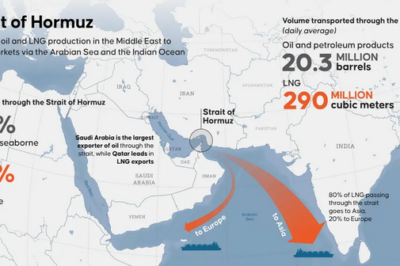
The strategic passage is considered the world’s most important oil chokepoint. Roughly 20 million barrels of oil pass through the strait every day, accounting for about one fifth of the world’s total oil consumption. Any disruption in the route can quickly ripple through international markets and send energy prices soaring.
A Critical Energy Lifeline
Oil from major producers including Saudi Arabia, Iraq, Kuwait, the United Arab Emirates and Iran travels through the Strait of Hormuz before reaching global markets. A large share of this supply is destined for Asian economies, making countries such as India, China, Japan and South Korea particularly dependent on the passage.
Recent disruptions linked to the conflict have slowed tanker traffic significantly. In some instances, vessels have remained anchored outside the strait due to security risks, reducing the volume of oil moving through the route.
Oil Prices React Quickly
Energy markets tend to respond immediately to instability in the region. Analysts say even the possibility of a blockade can trigger price volatility. Since the recent escalation of hostilities, global oil prices have surged sharply as traders factor in the risk of supply shortages.
Experts warn that if shipping were halted for a prolonged period, global supply chains would struggle to compensate for the lost oil. Spare production capacity elsewhere in the world is limited, meaning refineries would have to rely on stockpiles to maintain fuel production.
Asia Faces the Biggest Impact
Asian economies are especially vulnerable because a significant portion of their crude imports originates in the Gulf region. Countries such as India and China depend heavily on oil transported through the Strait of Hormuz, making energy security a key concern during geopolitical crises.
A prolonged closure could lead to higher fuel costs, inflationary pressure and slower economic growth across the region. Governments may also be forced to release strategic reserves to stabilize domestic energy supplies.
A Global Economic Risk
Beyond energy markets, disruption in the strait could trigger wider economic consequences. Oil price spikes typically increase transportation costs, raise the price of goods and contribute to inflation worldwide. Economists warn that a prolonged shutdown could even push the global economy toward recession.
For now, policymakers and energy markets continue to monitor developments closely. The Strait of Hormuz remains a critical artery for the global economy, and its stability is essential to maintaining the flow of energy across the world.




































Leave a Reply