
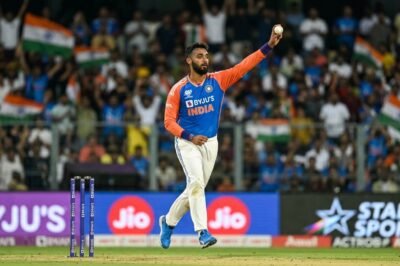
The landscape of Indian cricket is often defined by its incredible depth and the high-stakes nature of its selection cycles, yet certain individuals possess a unique x-factor that makes them virtually irreplaceable in specific tactical frameworks. Varun Chakaravarthy, the enigmatic mystery spinner who has undergone a remarkable career renaissance, was recently met with a sobering setback that has sent ripples through the cricketing community. Having finally reclaimed his spot in the national side through sheer persistence and a refined bowling arsenal, Chakaravarthy’s momentum has been abruptly halted by a side strain. This injury, occurring just as India prepares for a crucial T20I series against Afghanistan, is particularly poignant given his recent form. On the tour of South Africa, he was nothing short of legendary, showcasing a masterclass in wrist-spin that baffled some of the world’s most aggressive power-hitters. The irony of professional sports is often found in such timing; at the very peak of his physical and technical prowess, a microscopic tear in the muscle fibers of his side has forced a detour. As he departs for the Center of Excellence (CoE) in Bengaluru, the focus shifts from his mesmerizing deliveries to a rigorous rehabilitation protocol, leaving the Indian team management to solve a complex puzzle in his absence.
The Anatomy of the Injury: Understanding the Side Strain
A side strain is an injury that has become increasingly common among modern cricketers, yet it remains one of the most frustrating ailments due to its high recurrence rate and the critical role the affected muscles play in the bowling action. Specifically, a side strain involves the internal oblique, external oblique, or the transverse abdominis muscles, which are located on the side of the torso. For a bowler like Varun Chakaravarthy, who utilizes a unique, high-torque delivery mechanism, these muscles are under immense stress. The lateral flexion and sudden rotation required to impart the ‘mystery’ on the ball put a premium on core stability and muscular endurance. When these muscles fail, even slightly, the entire kinetic chain is disrupted, making it impossible to maintain the precision required at the international level.
The recovery process for a side strain is notoriously delicate. Unlike a simple bruise, a strain involves the tearing of muscle fibers, which necessitates a period of complete rest followed by a phased return to activity. At the Center of Excellence, Chakaravarthy will likely undergo a multi-stage rehabilitation program. This begins with acute management to reduce inflammation, followed by isometric exercises to maintain muscle tone without aggravating the tear. As he progresses, the focus will shift to functional movements that mimic the bowling stride. The challenge for the medical staff is ensuring that the scar tissue formed during healing is both strong and flexible enough to withstand the rigors of competitive T20 cricket, where every ball is delivered with maximum intensity.
A Career in Flux: From Exclusion to Key Player
To understand the weight of this injury, one must look back at Varun Chakaravarthy’s journey over the last few years. After a difficult 2021 T20 World Cup where he was scrutinized for his performance on the big stage, Chakaravarthy found himself in the international wilderness. However, rather than fading away, he returned to the domestic circuit and the Indian Premier League (IPL) with a renewed sense of purpose. He worked tirelessly on his fitness and expanded his variations, ensuring that he was no longer just a ‘one-trick pony.’ His performances for the Kolkata Knight Riders were instrumental in their recent successes, proving that he could handle the pressure of the death overs and provide breakthroughs in the middle phases of the game.
His return to the Indian blue jersey was a triumph of resilience. During the recent series in South Africa, Chakaravarthy was the standout performer, taking 12 wickets in just four matches, including a sensational five-wicket haul that almost turned a losing cause into a victory. His ability to bowl at different stages of the innings—whether in the powerplay or at the death—gave the Indian captain immense flexibility. This injury is not just a physical setback but a psychological hurdle, as he was finally cementing his place as India’s premier T20 spinner. The loss of his ‘mystery’ factor against an Afghanistan side that is traditionally strong against spin but susceptible to high-quality wrist-spin is a significant missed opportunity for both the player and the team.
Statistical Dominance: Why Chakaravarthy’s Absence Hurts India
The numbers behind Varun Chakaravarthy’s recent run are staggering and highlight exactly what India will be missing against Afghanistan. In the South Africa series, he maintained an economy rate that was remarkably low given the small grounds and aggressive batting lineups he faced. His strike rate—the number of balls bowled per wicket—was among the best for any Indian spinner in a bilateral series. This efficiency is what makes him such a valuable asset; he doesn’t just dry up the runs, he actively dismantles the opposition’s middle order. Without him, India loses a bowler who can consistently deliver four overs of high-quality, wicket-taking spin, which often acts as the bridge between the opening spells and the final overs.
Furthermore, Chakaravarthy’s statistics against right-handed batters have been particularly impressive. His ability to turn the ball both ways with a near-identical action makes it incredibly difficult for batters to ‘set’ themselves against him. In the context of the Afghanistan series, where players like Rahmanullah Gurbaz and Ibrahim Zadran are known for their ability to take down spinners, Chakaravarthy’s control and variation would have been the perfect neutralizing force. The data suggests that India’s win percentage in T20Is increases significantly when they have a wicket-taking spinner in the middle overs, a role that Chakaravarthy had perfected over the last six months.
Tactical Reshuffle: Who Fills the Mystery Spinner Void?
With Chakaravarthy sidelined, the Indian selection committee and the team management must look at their contingency plans. The primary candidate to fill the void is Ravi Bishnoi, another young wrist-spinner who has been in and out of the side. Bishnoi offers a different kind of threat; while Chakaravarthy relies on subtle variations and height, Bishnoi is known for his quick, skidding googlies and aggressive intent. However, the ‘mystery’ element that Chakaravarthy brings is unique, and replacing it is not a straightforward task. The team might also consider bringing in a more experienced hand like Kuldeep Yadav or Axar Patel to provide balance, depending on the pitch conditions in the upcoming venues.
The tactical shift will also involve how the captain, Suryakumar Yadav, rotates his bowlers. Chakaravarthy was often used as a ‘fireman,’ brought in whenever a partnership was blossoming. Without that specialized weapon, the burden will fall more heavily on the pace bowlers and the remaining spinners to create pressure. This series against Afghanistan is a vital testing ground for India’s bench strength. It provides an opportunity for other spinners to step up and prove their mettle, but it also exposes the vulnerability of a bowling attack that has become somewhat reliant on the psychological edge that a mystery spinner provides. The management will be closely watching how the replacement bowlers handle the pressure of Afghanistan’s fearless batting approach.
The Rehabilitation Roadmap: The Role of the Center of Excellence
The Center of Excellence (CoE), formerly known as the National Cricket Academy (NCA), has become the cornerstone of Indian cricket’s injury management system. For Varun Chakaravarthy, the CoE will be his home for the next few weeks as he undergoes a structured recovery program. The facility offers state-of-the-art sports science resources, including advanced physiotherapy, biomechanical analysis, and nutritional support. The goal at the CoE is not just to heal the injury but to identify the underlying causes—whether they be biomechanical inefficiencies or workload management issues—to prevent future occurrences.
Modern sports medicine at the CoE emphasizes a ‘return-to-play’ protocol that is rigorous and data-driven. Chakaravarthy will be monitored using wearable technology that tracks his heart rate, movement patterns, and the stress placed on his side during bowling drills. This data is compared against his baseline metrics to determine when he is ready to increase his intensity. The presence of specialized bowling coaches at the CoE also means he can work on minor adjustments to his action that might alleviate the stress on his torso. For a player of his caliber, this time away from the field is an opportunity to fine-tune his craft in a controlled environment, ensuring that when he does return, he is even more potent than before.
Future Outlook: Champions Trophy and Beyond
Looking ahead, the recovery of Varun Chakaravarthy is crucial for India’s long-term white-ball strategy. While the immediate focus is the Afghanistan series, the larger picture includes the upcoming Champions Trophy and the 2026 T20 World Cup. In the modern game, where T20 cricket is increasingly dominated by power-hitting, having a spinner who can control the game and take wickets is a luxury that no team can afford to lose. The Indian team management will be hoping that his stint at the CoE is short and successful, allowing him to regain his rhythm before the next major domestic or international assignment.
Ultimately, this injury serves as a reminder of the physical tolls of elite-level cricket. For Varun Chakaravarthy, the road back to the national side will be paved with hard work and patience. His story has always been one of overcoming adversity, and this latest challenge is likely just another chapter in his remarkable career. As fans, the hope is to see the mystery spinner back on the field, bamboozling batters with his unique skill set, and helping India maintain its dominance in the shortest format of the game. The medical team’s success in Bengaluru will be just as important as the players’ performance on the field in the weeks to come.





































Leave a Reply