
In Shorts
- Finance Minister Nirmala Sitharaman states that integrating petrol and diesel into GST requires unanimous consent from all states, which is currently absent.
- States are hesitant to agree because fuel taxes represent a colossal, independent source of revenue that they are unwilling to relinquish.
- The GST Council, a federal body comprising state and central ministers, is the sole authority that can make this decision, not the Central Government alone.
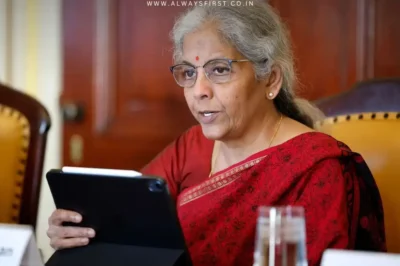
NEW DELHI – In a definitive statement that addresses one of the most common grievances of Indian consumers, Finance Minister Nirmala Sitharaman has clarified the central government’s position on bringing petrol and diesel under the Goods and Services Tax (GST). Contrary to popular belief, the decision does not rest solely with the Centre but is a matter of federal consensus that currently remains elusive.
The Finance Minister’s remarks came during a detailed interaction, where she was questioned on the persistent exclusion of fuel from the GST umbrella, a move many citizens believe would significantly bring down prices at the pump.
Sitharaman explained that the power to include these sensitive commodities under GST lies entirely with the GST Council. This constitutional body, headed by the Union Finance Minister and comprising representatives from all states and union territories, operates on a consensus-driven model.
“The GST Council must take that call,” Sitharaman stated, emphasizing the collective nature of the decision. “I’m not going to do it myself… it’s not me alone who’s going to decide.”
The Core Hurdle: States’ Revenue Fear
The primary reason for the stalemate, as outlined by the Finance Minister, is starkly financial. State governments currently levy their own Value-Added Tax (VAT) on petrol and diesel, which contributes a massive and predictable stream of income to their treasuries. This revenue is crucial for funding their own development projects and welfare schemes without relying on central allocations.
Bringing these products under GST would mean states would have to surrender their right to tax them independently. The revenue would then be pooled and redistributed according to the GST formula, a prospect that makes many states nervous about potential income loss.
“It is not that the Centre is getting away with a lot of money… the states are also having a lot of money on petrol and diesel,” Sitharaman noted, highlighting the shared interest in the current taxation structure.
This revelation underscores the complex political and economic trade-off at play. While a single national GST rate could simplify the tax structure and potentially lower prices for consumers, it requires states to voluntarily give up a key financial power—a concession they have so far been unwilling to make.
The ball, therefore, remains firmly in the court of the GST Council. For any change to occur, a consensus must emerge among India’s diverse states, balancing the promise of simplified taxation against the certainty of existing revenue streams. Until that political consensus is achieved, petrol and diesel will continue to fuel not just vehicles, but also a significant portion of state revenues.




































Leave a Reply