
In Shorts
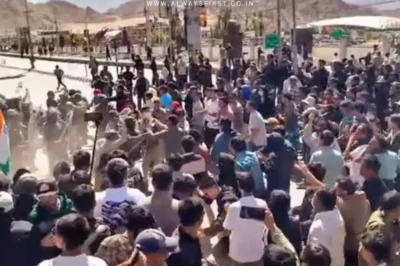
- Thousands in Ladakh are protesting, demanding full statehood and inclusion in the Sixth Schedule for tribal autonomy.
- The unrest stems from Ladakh’s transition to a Union Territory in 2019 without a legislative assembly, leaving locals feeling politically marginalized.
- Key concerns include fear of losing land rights, cultural identity, and jobs to outsiders, alongside urgent environmental worries about the fragile Himalayan ecosystem.
LEH, LADAKH – The thin, cold air of the high-altitude desert is thick with chants for autonomy. What began as a localized movement has snowballed into one of the largest and most sustained protests in recent memory for the region, bringing together a diverse coalition of political, social, and religious groups under a common banner.
The catalyst for this widespread unrest was the central government’s 2019 decision to reconstitute the former state of Jammu and Kashmir, which led to Ladakh being carved out as a separate Union Territory (UT). While initially welcomed by many for the promise of more direct development, the UT model, without its own legislative assembly, has left Ladakhis feeling politically disempowered. The region is now governed by a Lieutenant Governor appointed by New Delhi, a structure that protest leaders argue sidelines local voices in critical decision-making.
The Core Demands: Statehood and the Sixth Schedule
The protest movement has crystallized around two non-negotiable demands. The first is full statehood, which would restore a democratically elected legislature to Ladakh. The second, and arguably more critical demand, is the extension of the Sixth Schedule of the Indian Constitution to the region.
“The Sixth Schedule is not just a legal provision; it is a shield for our tribal identity,” explains a representative from the Leh Apex Body, a key organization leading the agitation. “It would empower us to protect our land, our resources, and our unique culture from unchecked external influence.” This demand highlights a deep-seated fear among the indigenous tribal populations about demographic changes and the potential loss of control over their ancestral lands.
Environmental Concerns Add Fuel to the Fire
Beyond political autonomy, a significant undercurrent of the protest is acute environmental anxiety. Ladakh’s ecosystem is exceptionally fragile, and residents fear that large-scale industrial and infrastructure projects, approved without local consent, could cause irreversible damage. The melting of glaciers, water scarcity, and the impact on wildlife are tangible concerns that unite the population.
A Stalemate with the Centre
Despite multiple rounds of talks between Ladakhi leaders and a high-powered committee appointed by the Ministry of Home Affairs, a resolution remains elusive. While the government has expressed willingness to discuss measures for job and land security, it has stopped short of committing to statehood or Sixth Schedule status. This has led to growing frustration on the ground, with protest leaders vowing to intensify their agitation until their core demands are met.
As the standoff continues, the world watches to see how the Indian government will address the aspirations of a people determined to have a definitive say in shaping their future in this strategically vital and ecologically sensitive part of the country.


































Leave a Reply