
In Shorts
- A four-day ceasefire is agreed between Israel and Hamas, facilitated by Qatari and U.S. mediation.
- The deal includes the release of 50 Israeli hostages in exchange for 150 Palestinian prisoners.
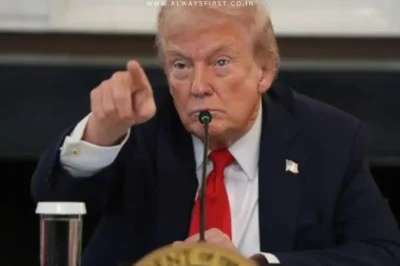
- The breakthrough has prompted renewed discussions about a Nobel Peace Prize nomination for former President Donald Trump, linked to the Abraham Accords.
AlwaysFirst | Global Affairs
A fragile hope has emerged in the Gaza Strip as Israel and Hamas have agreed to a four-day ceasefire, marking the first major pause in hostilities since the conflict began on October 7. The deal, painstakingly mediated by Qatar in coordination with the United States and Egypt, is expected to bring a critical window for humanitarian aid and initiate a phased hostage release.
Central to the agreement is a swap: militant group Hamas is set to free 50 Israeli women and children held captive, while Israel will release 150 Palestinian women and minors from its prisons. The truce also allows for the potential of an extended ceasefire, contingent on further negotiations and additional hostage releases.
While the immediate focus remains on the lifesaving impact of the pause in fighting, the political ramifications are already being felt thousands of miles away. The agreement has unexpectedly refueled a long-standing debate surrounding former U.S. President Donald Trump and his eligibility for the Nobel Peace Prize.
The connection stems from the Abraham Accords, the Trump-brokered normalization agreements between Israel and several Arab nations, including the United Arab Emirates and Bahrain. A member of the Norwegian Parliament, Christian Tybring-Gjedde, who nominated Trump for the prize in 2020 for his role in the Accords, has now publicly stated that this new truce strengthens Trump’s case.
“The agreement between Israel and Hamas, which appears to be a result of the Abraham Accords, demonstrates the importance of this initiative for peace in the Middle East,” Tybring-Gjedde was quoted as saying. He argues that the Accords created a new diplomatic framework that enables such breakthroughs, making regional cooperation against groups like Hamas more feasible.
However, the notion remains deeply divisive. Critics are quick to point out that the Accords did not address the core Israeli-Palestinian conflict and that Trump’s tenure was also marked by a strongly pro-Israel stance that many argue marginalized Palestinian leadership. The Nobel Committee’s decisions are famously unpredictable and often seek to recognize efforts that are less politically contentious.
For now, the people of Gaza are witnessing a tentative calm, and families of hostages are clinging to the hope of reunification. Yet, as the world watches the truce unfold, a parallel narrative is brewing—one where a diplomatic achievement in the Middle East is being instantly leveraged into a political trophy in the West. Whether this ceasefire truly puts Donald Trump on a faster track to a Nobel remains one of the most intriguing, and controversial, questions emerging from the smoke of war.
































Leave a Reply