
In Shorts
- A former CIA officer asserts the U.S. financially supported Pakistan’s ISI with millions of dollars.
- He bluntly stated that Pakistan stands no chance of winning a conventional war against India.
- The official controversially labeled former Pakistani President Pervez Musharraf as “Washington’s man.”
WASHINGTON D.C. – In a disclosure that casts a long shadow over the complex web of U.S.-Pakistan relations, a former Central Intelligence Agency (CIA) officer has made a series of explosive claims, alleging significant financial patronage and a stark power imbalance in South Asia.
The revelations came from Reuel Marc Gerecht, a former CIA case officer and a senior fellow at the Foundation for Defense of Democracies. Gerecht, known for his deep expertise in the region, stated that for years, the United States funneled millions of dollars to Pakistan’s primary intelligence agency, the Inter-Services Intelligence (ISI). This financial relationship, he suggests, was a cornerstone of a fraught and often transactional alliance.
Perhaps the most striking element of Gerecht’s assessment was his blunt military analysis. When asked about the possibility of a full-scale conflict between India and Pakistan, the ex-officer left little room for ambiguity. “Let’s be clear,” he was quoted as saying, “Pakistan cannot win a war against India.” This statement underscores a widely held, though rarely so publicly stated, view of the conventional military disparity between the two nuclear-armed neighbors.
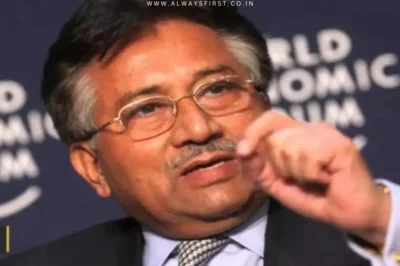
Delving deeper into the political dynamics, Gerecht made a particularly controversial characterization of the late Pakistani President, General Pervez Musharraf. Following the 9/11 attacks, Musharraf became a key U.S. ally in the “War on Terror.” Gerecht, however, framed this alignment in stark terms, claiming that Musharraf was effectively “Washington’s man” during his tenure. This assertion paints a picture of a leader whose policies were heavily influenced by American strategic interests.
These comments, while coming from a single source and not an official government position, are likely to reignite debate over the nature of American foreign policy in South Asia. They highlight the intricate, and at times contradictory, partnerships the U.S. maintains, balancing counter-terrorism objectives with regional stability. For observers in Delhi and Islamabad, Gerecht’s words serve as a stark reminder of the enduring tensions and the powerful external forces that have shaped the subcontinent’s modern history.


































Leave a Reply