
In Shorts:
- Prime Ministers Modi and Albanese held a pivotal bilateral meeting in New Delhi ahead of the G20 Summit.
- Both leaders celebrated the “very strong” state of the India-Australia Comprehensive Strategic Partnership.
- Discussions covered defense, trade, clean energy, and regional stability in the Indo-Pacific.
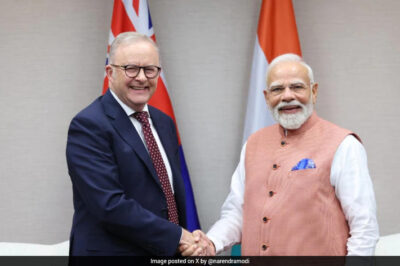
NEW DELHI – In a move that underscores the deepening diplomatic synergy between two key Indo-Pacific democracies, Prime Minister Narendra Modi welcomed his Australian counterpart, Anthony Albanese, for a significant bilateral meeting in the Indian capital on Friday. The high-level talks, strategically held on the eve of the G20 Leaders’ Summit, served to reinforce what both leaders described as a “very strong” and rapidly evolving partnership.
The meeting, characterized by warm exchanges and a forward-looking agenda, highlighted the multifaceted nature of the India-Australia Comprehensive Strategic Partnership. Officials from both sides indicated that the discussions were comprehensive, touching upon critical areas of mutual interest and global concern.
“The talks with my dear friend, Prime Minister @AlboMP, were extensive and productive,” Prime Minister Modi stated in a social media post following the meeting. “We place great value on our Comprehensive Strategic Partnership with Australia, and are committed to deepening it across all dimensions.”
Central to the dialogue was the shared commitment to a free, open, and inclusive Indo-Pacific region—a vision increasingly vital amid shifting global dynamics. The leaders reviewed the progress of key pillars of their partnership, including defense and security cooperation through forums like the Quad (which also includes the US and Japan), and the significant strides in economic engagement.
The economic corridor was a particular point of focus, with both leaders acknowledging the immense potential for growth in trade, investment, and clean energy technologies. The recent Economic Cooperation and Trade Agreement (ECTA) has already provided a substantial boost to bilateral trade, and discussions are ongoing to expand this into a more comprehensive pact.
Prime Minister Albanese’s visit, his first to India since the Quad summit earlier this year, signals a continued high-level political investment in the relationship from Canberra. The Australian leader echoed his Indian counterpart’s sentiments, emphasizing the strength of their nations’ ties and a collective ambition to address global challenges, from climate change to sustainable development.
As world leaders converge in New Delhi for the G20, this bilateral meeting between India and Australia stands out as a testament to the power of middle-power diplomacy. It reinforces a strategic axis that is poised to play a crucial role in shaping the geopolitical and economic landscape of the Indo-Pacific in the years to come.






































Leave a Reply