
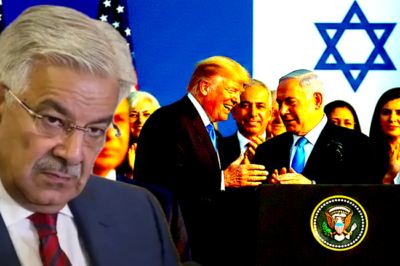
In Shorts
- Pakistan’s defence minister publicly urged the US and Turkey to abduct Israel’s prime minister.
- Khawaja Asif described Netanyahu as “the worst criminal of humanity.”
- Comments have sparked backlash amidst ongoing tensions over the Gaza conflict.
Pakistan’s Defence Minister Khawaja Asif has triggered a diplomatic storm after making a provocative appeal for the United States and Turkey to abduct Israeli Prime Minister Benjamin Netanyahu. Speaking in a televised interview on Thursday, Asif did not hold back, branding Netanyahu as “the worst criminal of humanity” in connection to the prolonged conflict in Gaza.
“We have not seen a greater criminal in history,” Asif declared, asserting that the scale of suffering faced by Palestinians overshadows all past atrocities. In an attempt to justify his stance, he referenced the reported capture of Venezuelan President Nicolas Maduro by US forces, suggesting that if such actions were possible, Netanyahu should similarly be brought to justice. He also said that Pakistanis are praying for such an intervention and even hinted that Turkey could take action if the United States does not. Asif’s comments reflect deep frustration among some Pakistani political figures over the ongoing Middle East crisis, but the suggestion to kidnap a sitting head of government has drawn swift criticism internationally. Legal experts and diplomats have cautioned that any attempt to seize a foreign leader would violate international law and risk escalating regional tensions.
The remarks come at a time when global focus remains fixed on efforts to stabilize the volatile Israel-Gaza front. With several peace initiatives underway and world leaders attempting diplomatic engagement in the region, statements like these threaten to further polarize already charged geopolitical fault lines. Officials in Washington and Ankara have not formally responded to Asif’s suggestion, but analysts say the backlash is likely to extend beyond political circles, stirring debate in media and diplomatic forums worldwide. Critics argue that such rhetoric undermines constructive dialogue and could weaken international cooperation on humanitarian issues. As the controversy grows, observers warn that nationalist sentiments and incendiary statements from government leaders can have unforeseen consequences for regional diplomacy and global peace efforts.






































Leave a Reply