
• Pakistan officially accepts invitation to join Trump’s Board of Peace for Gaza peace efforts.
• Islamabad hopes initiative will support a permanent ceasefire, aid flow and reconstruction.
• Permanent membership could require a $1 billion payment, but Pakistan’s position on this is unclear.
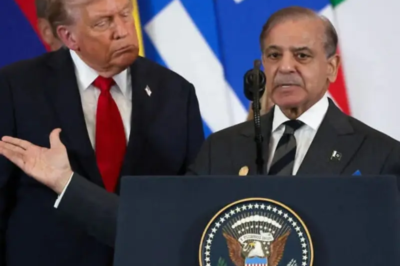
Pakistan announced on Wednesday that it has accepted an invitation from U.S. President Donald Trump to become part of the newly formed “Board of Peace,” an international initiative designed to help secure a permanent ceasefire in Gaza, expand humanitarian assistance and support post-war reconstruction.
In a statement issued by the Ministry of Foreign Affairs, Islamabad said Prime Minister Shehbaz Sharif agreed to participate in the board, expressing hope the framework would contribute to tangible progress on ending the conflict in the Gaza Strip. Pakistan reiterated its longstanding support for Palestinian rights, including the realization of an independent state under a credible, time-bound political process.
Foreign Office officials framed the decision as part of Pakistan’s broader efforts to back peace and stability under the United Nations Security Council Resolution 2803, which calls for concrete measures to address the human toll and devastation caused by the conflict. Islamabad said it looks forward to playing a constructive role as part of the board’s work.
Trump’s Board of Peace, first proposed last year as part of his Gaza peace plan, has drawn participation from a range of nations, including the United Arab Emirates, Hungary and Israel, among others. The initiative has been described by Washington as a body to facilitate conflict resolution and reconstruction, initially focused on Gaza but with broader ambitions.
The format and funding model of the board have sparked debate among global diplomats. A draft charter seen by international media outlines that countries may join for a standard three-year term, but those willing to contribute $1 billion in cash could secure a permanent seat and extended influence within the forum. Critics argue this structure resembles a pay-for-status model with potential to sideline traditional multilateral institutions such as the United Nations.
At this stage, it is not clear whether Pakistan intends to pursue permanent membership through the $1 billion contribution or will participate under the standard term arrangement. Islamabad’s public statements have emphasised the peace objectives rather than financial commitments.
The board’s launch and expansion have generated a mix of reactions from world capitals. Supporters see it as a fresh approach to entrenched conflicts, while some critics worry it could duplicate or weaken existing international peace mechanisms. As the initiative evolves, Pakistan’s involvement signals its willingness to engage in high-visibility diplomatic efforts, even as debate continues over the long-term implications of Trump’s peace architecture.
































Leave a Reply