
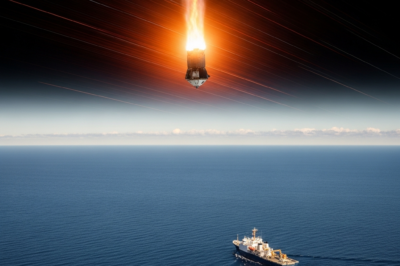
The journey back to Earth is often more perilous than the voyage into the stars. As NASA’s Artemis II mission reaches a critical juncture, the crew members are intensifying their preparations for the high-stakes atmospheric re-entry and subsequent splashdown in the Pacific Ocean. This pivotal phase represents the culmination of years of rigorous training and technical engineering designed to ensure the safety of the first humans to visit the lunar vicinity in over half a century.
The Physics of Re-entry: Surviving Extreme Heat and Speed
Returning from the Moon is not a simple descent; it involves hitting the Earth’s atmosphere at speeds exceeding 25,000 miles per hour. The Orion spacecraft’s heat shield will be tasked with enduring temperatures reaching nearly 5,000 degrees Fahrenheit—about half as hot as the surface of the sun. The astronauts must endure intense G-forces as the atmosphere acts as a natural brake, slowing the capsule from orbital velocities to a speed manageable for parachute deployment. Engineers are closely monitoring thermal protection systems to ensure that the integrity of the crew module remains uncompromised during this fiery transit.
Coordinated Recovery: The Pacific Ocean Splashdown
Once the spacecraft successfully navigates the atmospheric friction, a sequence of eleven parachutes will deploy to slow the Orion capsule further. The final target is a precise location in the Pacific Ocean, where a dedicated recovery team, including the U.S. Navy and NASA specialists, will be waiting. This process involves dry runs of recovery procedures, ensuring that the astronauts can be safely extracted from the capsule and transported to medical facilities for post-flight evaluations. The coordination between ground control and the recovery fleet is a masterclass in logistics and maritime precision.
The successful return of the Artemis II crew will pave the way for Artemis III, which aims to land the first woman and the first person of color on the lunar surface. As the world watches, these final steps of the mission underscore the bravery of the astronauts and the incredible technological strides of modern space exploration.






































Leave a Reply