
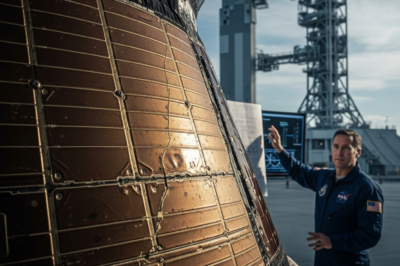
The Unexpected Charring of Artemis I
During the successful uncrewed Artemis I mission, NASA engineers observed something unexpected upon the Orion capsule’s return to Earth. The heat shield, designed to protect the craft from temperatures reaching 5,000 degrees Fahrenheit, experienced localized erosion known as spalling. Instead of the ablative material wearing away gradually as planned, small chunks of the charred material broke off during reentry. This discovery sparked immediate investigation into whether the shield could safely support a human crew during the upcoming Artemis II mission.
Engineering Solutions and Safety Margins
Despite the visual evidence of erosion, NASA officials have clarified that the safety of the astronauts is not in jeopardy. Comprehensive data analysis revealed that the core structure of the heat shield maintained its integrity and the temperature inside the cabin remained well within safe limits for human life. NASA confidence stems from extensive ground testing and the realization that the shield has significant margin—meaning it is built much thicker than strictly necessary. Engineers are currently refining the manufacturing process of the Avcoat material and adjusting reentry trajectories to further minimize risk, ensuring that the Artemis II crew will be protected throughout their journey around the Moon and back.
The Artemis II mission represents a pivotal moment in modern space exploration, serving as the first crewed test of the Space Launch System and Orion. By addressing the heat shield behavior now, NASA is applying critical lessons learned from Artemis I to ensure the long-term success of the Moon-to-Mars program.





































Leave a Reply