
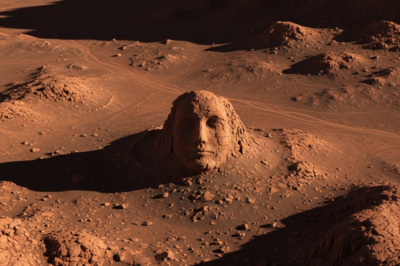
The Cydonia region of Mars has long been the subject of conspiracy theories and science fiction, thanks to a 1976 photograph captured by the Viking 1 orbiter. That grainy, low-resolution image appeared to show a massive humanoid face carved into the Martian surface. However, a stunning new image release has once again proven that what we see depends entirely on the tools we use. By comparing the vintage data with modern, high-resolution imagery, scientists are highlighting the incredible evolution of space photography and the end of one of the Red Planet’s greatest myths.
The Evolution of Space Imaging Since 1976
In 1976, the Viking 1 spacecraft was operating with cutting-edge technology for its time, but its sensors were limited by low resolution and significant data noise. The ‘Face on Mars’ was actually the result of a lucky combination of low sun angle and pixelated shadows that tricked the human brain. Today, orbiting platforms like the Mars Reconnaissance Orbiter (MRO) and the European Space Agency’s Mars Express use sophisticated sensors that capture details down to the meter. The new images show that the ‘face’ is nothing more than a weathered mesa, or flat-topped hill, common in the Martian desert.
Understanding Pareidolia and Geological Formations
The phenomenon that led people to see a face in the rocks is known as pareidolia—the tendency for the human brain to perceive meaningful images in random patterns. Science has now replaced the myth of an ancient civilization with the reality of complex geological processes. High-definition scans reveal craters, ridges, and erosion patterns on the mesa that were completely invisible to the Viking 1 cameras. This transition from mystery to clarity is a testament to the power of modern Science & Technology in exploring our solar system.
Ultimately, these new images don’t just debunk an old myth; they celebrate the progress of human ingenuity. As we prepare for future manned missions to Mars, having an accurate, high-definition map of the surface is far more valuable than any urban legend could ever be.







































Leave a Reply