
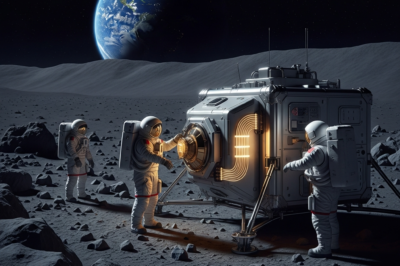
As NASA pushes forward with its Artemis program, the ambition to establish a long-term human presence on the lunar surface has brought a critical challenge to the forefront: energy. While solar power has traditionally fueled space missions, the unique environment of the Moon demands a more robust solution. This is where nuclear fission comes into play. NASA, in partnership with the Department of Energy, is actively developing fission surface power systems to ensure that future astronauts have a reliable source of electricity to survive and thrive on the lunar landscape.
Solving the Lunar Night Challenge
One of the primary reasons NASA is pivoting toward nuclear energy is the extreme environment of the Moon itself. A single lunar night lasts approximately 14 Earth days, during which temperatures plummet and solar panels become useless. Without a consistent power source, life support systems, heaters, and scientific equipment would fail. A nuclear reactor, specifically a fission system, provides a continuous flow of electricity regardless of sunlight or weather conditions. By utilizing a small, lightweight fission reactor, NASA can guarantee 40 kilowatts of power—enough to run several households—consistently for at least a decade.
Building a Sustainable Gateway to Mars
The lunar nuclear project is more than just a power solution for the Moon; it is a critical stepping stone for Mars exploration. NASA views the Moon as a testbed for technologies that will eventually be used on the Red Planet. Because Mars has a much thinner atmosphere and more frequent dust storms than Earth, solar power is similarly unreliable. By perfecting compact nuclear reactors on the Moon, scientists can refine the safety and efficiency of deep-space energy systems. These reactors will eventually power the habitats and fuel production facilities necessary for the first human footprints on Mars.
Ultimately, the move toward nuclear energy on the lunar surface represents a paradigm shift in space exploration. It signals a move away from short-term missions toward sustainable, long-term colonization that will redefine humanity’s reach into the solar system.






































Leave a Reply