
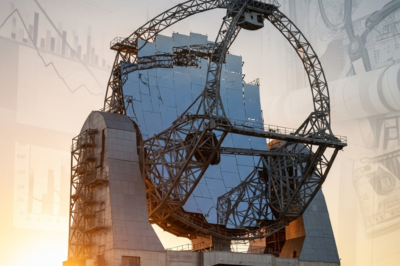
The Dawn of a New Era in Deep Space Exploration
The quest for life beyond Earth has transitioned from the realm of science fiction to the rigorous domains of astrophysics and astrobiology. At the heart of this transition lies the Giant Magellan Telescope (GMT), a next-generation ground-based observatory designed to peer deeper into the cosmos than ever before. Recent reports, including a significant highlight by The Indian Express, suggest that while the GMT possesses the technical capability to identify potentially habitable worlds, its future is currently hanging by a thread due to a monumental funding crisis. This astronomical project, situated in the high-altitude Atacama Desert of Chile, is not just a collection of mirrors and sensors; it is the physical embodiment of human curiosity. However, as global economies fluctuate and national priorities shift, the bridge between our current understanding of the universe and the discovery of a ‘Second Earth’ is becoming increasingly fragile. The GMT is part of a new class of Extremely Large Telescopes (ELTs) that promise to revolutionize our perspective on the Big Bang, dark matter, and the chemical signatures of life on distant exoplanets. Without the necessary financial infusion, this window into the soul of the universe may remain shuttered for decades to come.
The Engineering Marvel Behind the Giant Magellan Telescope
The Giant Magellan Telescope is a masterclass in optical engineering and precision physics. Its primary light-collecting surface consists of seven of the world’s largest mirrors, each measuring 8.4 meters (27.6 feet) in diameter. When combined, these mirrors create a single optical surface 24.5 meters across, providing a total collecting area of about 368 square meters. To put this into perspective, the GMT will have a resolving power ten times greater than that of the Hubble Space Telescope and four times greater than the James Webb Space Telescope (JWST) in certain infrared wavelengths. The process of casting these mirrors is an arduous task performed at the University of Arizona’s Richard F. Caris Mirror Lab. Each mirror takes years to cast, cool, and polish to a precision of one-twentieth the wavelength of light. The sheer scale of the project requires a massive support structure capable of tracking stars with millisecond precision while rotating thousands of tons of glass and steel. This facility is located at the Las Campanas Observatory in Chile, a site chosen for its exceptionally clear skies and minimal atmospheric turbulence. The GMT’s design also incorporates advanced adaptive optics, which use secondary mirrors that can deform thousands of times per second to cancel out the ‘twinkling’ effect caused by the Earth’s atmosphere. This technology ensures that the images captured are as sharp as if the telescope were floating in the vacuum of space.
Hunting for Biosignatures: The Search for Habitable Worlds
The primary scientific driver for the GMT is the study of exoplanets—planets orbiting stars outside our solar system. While current telescopes like TESS and the JWST have discovered thousands of exoplanets, they often struggle to characterize the atmospheres of small, rocky planets that reside in the ‘Goldilocks zone’ (the region around a star where liquid water can exist). The GMT aims to bridge this gap. By utilizing high-resolution spectrographs like the G-CLEF (GMT-Consortium Large Earth Finder), astronomers will be able to analyze the light passing through or reflecting off the atmospheres of these distant worlds. This analysis can reveal the presence of biosignatures: chemical fingerprints such as oxygen, methane, ozone, and carbon dioxide. The presence of these gases in specific ratios could provide the first definitive evidence of biological activity on another planet. Beyond just looking for life, the GMT will investigate the formation of the first galaxies, the nature of dark energy, and the physics of black holes. It will allow us to see the ‘Cosmic Dawn,’ the period when the first stars began to shine, effectively acting as a time machine that looks back billions of years. The level of detail provided by the GMT’s mirrors will enable scientists to see individual stars in distant galaxies, providing a granular look at the evolution of the universe that is currently impossible with existing technology.
The Funding Crisis: Why Big Science is Under Threat
Despite its revolutionary potential, the Giant Magellan Telescope is facing a precarious financial future. The project is an international collaboration involving institutions from the United States, Australia, Brazil, and South Korea, with India also showing significant interest in the broader ELT landscape. However, the bulk of the funding was expected to come from the U.S. National Science Foundation (NSF). Recent developments have seen the National Science Board (NSB) recommend a cap on the NSF’s contribution to extremely large telescopes at $1.6 billion. This creates a massive dilemma because the U.S. astronomical community is currently split between two major projects: the GMT and the Thirty Meter Telescope (TMT) planned for Hawaii. The combined cost of these two projects far exceeds the current budgetary allocations. If the government decides to fund only one, or neither, the U.S. risks losing its leadership in ground-based astronomy to the European Southern Observatory, which is currently constructing the European Extremely Large Telescope (E-ELT). The ‘Indian Express’ report emphasizes that the delay in funding is not just a fiscal issue but a temporal one. In the world of high-tech manufacturing, delays lead to the loss of specialized personnel, increased costs due to inflation, and the potential obsolescence of certain technological components before they are even deployed. The scientific community has been vocal, arguing that the ROI (Return on Investment) for such a project is immeasurable, as it drives innovation in optics, data science, and materials engineering that eventually trickles down to consumer technology.
Global Cooperation and India’s Strategic Interests
The Giant Magellan Telescope is more than just a U.S.-led project; it is a symbol of global scientific cooperation. For countries like India, which has a burgeoning space program and a growing community of astrophysicists, the GMT represents a frontier of knowledge. While India is a major partner in the Thirty Meter Telescope (TMT) project, the scientific outcomes of the GMT are closely watched by Indian researchers who utilize data from global observatories. The interconnectivity of modern science means that a setback for the GMT is a setback for the global astronomical community. The funding challenges highlight a broader trend in ‘Big Science’ where the scale and cost of projects have grown so large that no single nation can easily bear the burden alone. This has led to calls for more robust international frameworks for funding and managing mega-projects. For India, the lessons from the GMT’s funding struggles are vital as the nation seeks to expand its own ground-based and space-based observational capabilities. Participation in such international consortia allows Indian scientists to access world-class facilities and contribute to ground-breaking discoveries that put the nation at the forefront of global research. The geopolitical implications are also significant; astronomy has long been a field of ‘soft power,’ where nations demonstrate their technological prowess and commitment to the collective progress of humanity.
Technical Hurdles and the Future of Adaptive Optics
Building the GMT is not just about writing checks; it is about overcoming unprecedented technical hurdles. One of the most significant challenges is the development of the Adaptive Optics (AO) system. The Earth’s atmosphere is a turbulent sea of air that distorts light. To achieve the resolution necessary to see an exoplanet’s atmosphere, the GMT must use six ‘laser guide stars’ to measure atmospheric turbulence in real-time. This data is then sent to the secondary mirrors, which adjust their shape 1,000 times per second to correct the distortion. This level of precision requires sophisticated algorithms and massive computing power. Furthermore, the data generated by the GMT will be enormous. Managing, storing, and analyzing petabytes of astronomical data requires a specialized cyberinfrastructure. The funding shortfall threatens the development of these backend systems just as much as the physical mirrors. If the funding key is not turned soon, the project risks falling into a ‘valley of death,’ where the technology is proven but the resources to finalize and integrate the systems are absent. The future outlook remains a mix of cautious optimism and urgency. Proponents of the GMT are lobbying hard, emphasizing that the telescope is already over 40% complete, with several mirrors already cast and the excavation of the site in Chile finished. Abandoning the project now would result in the loss of billions of dollars in previous investment and a generational delay in our understanding of the universe.
Conclusion: The Philosophical and Scientific Stakes
The story of the Giant Magellan Telescope is a microcosm of the human condition—a bold reach for the stars hampered by the earthly constraints of finance and politics. The question posed by the recent headlines is simple: Can we afford to find habitable worlds? But the counter-question is perhaps more profound: Can we afford not to? The discovery of life elsewhere would be the most significant event in human history, fundamentally altering our religion, philosophy, and biology. The GMT is the key to unlocking that door. As we stand on the precipice of this discovery, the funding gap represents more than just a line item in a government budget; it represents the limits of our collective ambition. If the Giant Magellan Telescope is completed, it will likely serve as our primary eye on the universe for the next fifty years, providing answers to questions we haven’t even thought to ask yet. The international community, including stakeholders in the U.S. and partners worldwide, must find a way to bridge the funding gap. The stars are waiting, and the technology is ready; all that remains is the political and financial will to see the project through to its first light.







































Leave a Reply