
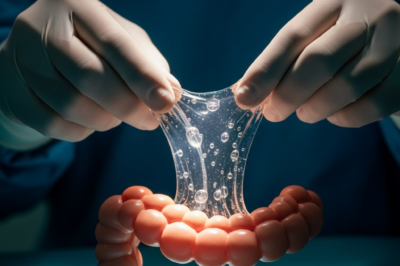
The Dawn of a New Era in Colorectal Cancer Treatment
Colorectal cancer stands as one of the most prevalent and daunting challenges in modern oncology, accounting for a significant portion of cancer-related morbidities worldwide. For years, the surgical removal of early-stage tumours has relied on a procedure known as Endoscopic Mucosal Resection (EMR). While effective, EMR is fraught with technical complexities, primarily the difficulty of maintaining a stable ‘cushion’ of fluid beneath the tumour to separate it from the muscular layers of the colon. This is where the researchers at the Indian Institute of Technology (IIT) Gandhinagar have stepped in, delivering a monumental breakthrough that promises to simplify these intricate procedures. By developing a specialized, injectable hydrogel, the team has addressed a critical gap in surgical technology, offering a solution that is not only more effective than current standards but also significantly safer for the patient. This innovation represents a perfect synergy of materials science and clinical medicine, positioning India at the forefront of global biomedical research.
The significance of this development cannot be overstated. In the current medical landscape, surgeons often use saline solutions or other synthetic agents to lift tumours during endoscopy. However, these liquids dissipate rapidly, requiring frequent re-injections and increasing the risk of procedural errors such as bowel perforation. The IIT Gandhinagar hydrogel, characterized by its unique viscoelastic properties, creates a long-lasting, stable elevation that allows surgeons to operate with unprecedented precision. As we delve deeper into the mechanics of this invention, it becomes clear that this is not just an incremental improvement but a paradigm shift in how we approach minimally invasive surgeries for gastrointestinal malignancies.
Understanding the Mechanics of Endoscopic Mucosal Resection (EMR)
To appreciate the impact of the IIT Gandhinagar breakthrough, one must first understand the mechanics of Endoscopic Mucosal Resection. EMR is a minimally invasive technique used to remove cancerous or other abnormal lesions from the digestive tract. During the procedure, an endoscope—a long, flexible tube equipped with a camera—is inserted through the natural orifices. When a tumour is identified in the colon, a lifting agent is injected into the submucosal layer (the layer beneath the tumour) to create a ‘bleb’ or a cushion. This elevation is vital; it creates a safety margin between the lesion and the deeper muscle wall, protecting the colon from accidental burning or perforation during the subsequent cutting process.
However, the primary challenge has always been the ‘fluidity’ of the cushion. Standard saline solutions, while biocompatible, are absorbed by the body within minutes. This rapid absorption leads to the collapse of the cushion, forcing the surgeon to stop and re-inject fluid multiple times. Such interruptions not only prolong the surgery—thereby increasing the time a patient is under anesthesia—but also increase the risk of ‘bleeding’ and ‘perforation’ as the surgical field becomes less stable. The IIT Gandhinagar team sought to create a substance that would stay in place, maintain its height, and provide a clear, firm base for the surgical tools.
The Science Behind the IIT Gandhinagar Hydrogel Innovation
The research, led by Professor Dhiraj Bhatia from the Department of Biological Engineering at IIT Gandhinagar, alongside a dedicated team of scholars, focused on creating a hydrogel with specific rheological properties. A hydrogel is a network of polymer chains that are hydrophilic, sometimes found as a colloidal gel in which water is the dispersion medium. The genius of the IIT Gandhinagar design lies in its ‘injectability’ and ‘self-healing’ nature. In its resting state, the gel is firm, but when subjected to the pressure of a syringe needle (shear stress), it liquefies, allowing it to flow smoothly through the narrow channels of an endoscope. Once it reaches the submucosal space and the pressure is removed, it instantly regains its gel-like consistency.
This ‘shear-thinning’ property is crucial. It ensures that the gel can be delivered precisely to the target site without clogging the equipment. Furthermore, the hydrogel is engineered to be highly biocompatible and biodegradable. It doesn’t just sit there forever; it stays long enough for the surgery—often maintaining the cushion for several hours—and then is naturally broken down and excreted by the body’s metabolic processes. The chemical composition was meticulously tuned to ensure it does not cause inflammation or adverse immune responses in the delicate intestinal tissue, a feat that requires deep knowledge of molecular interactions.
Comparative Analysis: Hydrogel vs. Traditional Lifting Agents
When compared to traditional lifting agents like saline or even some commercially available synthetic solutions, the IIT Gandhinagar hydrogel shows superior performance across several metrics. Saline cushions typically last for 5 to 10 minutes. In contrast, the newly developed hydrogel can maintain the submucosal lift for over 30 to 60 minutes, which is more than enough time for even complex tumour resections. This stability reduces the ‘re-injection rate’ to nearly zero, significantly streamlining the surgical workflow. From a surgeon’s perspective, this means a clearer view and a more predictable environment, which directly translates to lower complication rates.
Moreover, the hydrogel provides a better ‘margin of safety.’ Because it is more viscous than saline, it creates a more pronounced and firm elevation. This makes it easier for the snare or the electrosurgical knife to grab the tumour tissue without nicking the underlying muscularis propria. The reduction in accidental perforations is a major win for patient safety, as bowel perforations often lead to emergency open surgeries, sepsis, and prolonged hospital stays. By making the procedure safer, the hydrogel could also allow for more complex and larger tumours to be removed endoscopically, which previously would have required more invasive surgical interventions.
The Research Journey: From Laboratory to Ex Vivo Testing
The journey of this hydrogel started in the highly specialized labs of IIT Gandhinagar, where the team experimented with various polymer formulations. After achieving the desired physical properties, the gel underwent rigorous testing. Initial phases involved in vitro studies to ensure cellular compatibility. The researchers tested the gel on various cell lines to confirm that it was non-toxic and did not interfere with the natural functions of the intestinal cells. Following successful lab tests, the research moved to ‘ex vivo’ models—using tissues from animal sources (like porcine colons) that closely mimic human anatomy.
In these ex vivo trials, the hydrogel demonstrated exceptional lifting capabilities. The researchers were able to simulate the removal of lesions and found that the hydrogel stayed intact even under the heat generated by electrosurgical tools. This is a critical detail, as the heat from the surgery can sometimes degrade inferior materials. The successful completion of these trials, as reported in prestigious scientific journals, marks a transition point. The data generated provides a robust foundation for moving into clinical trials, where the hydrogel will eventually be tested in human subjects under strictly controlled medical environments.
Future Implications: Beyond Colon Tumours
While the immediate application of this hydrogel is in the field of colorectal cancer, the potential applications are much broader. The principles of creating a stable, injectable, and biocompatible cushion can be applied to other areas of the gastrointestinal tract, such as the esophagus or the stomach. It could also find uses in other minimally invasive surgeries where tissue separation is required, such as in certain gynecological or urological procedures. The success of this project also highlights the growing capability of Indian institutes to develop high-end medical devices and biomaterials, reducing the country’s dependence on expensive imported medical supplies.
Furthermore, the development of this hydrogel opens the door for ‘smart’ drug delivery. Researchers are already looking into the possibility of infusing the hydrogel with localized chemotherapy drugs or anti-inflammatory agents. Imagine a scenario where, after the tumour is removed, the hydrogel remains in place for a short period, slowly releasing medication to kill any remaining microscopic cancer cells and speed up the healing of the surgical site. This multi-functional approach could revolutionize the post-operative care of cancer patients, making the recovery process faster and more effective.
Conclusion: A Major Leap for Medical Science in India
The breakthrough by IIT Gandhinagar is a testament to the power of interdisciplinary research. By combining engineering with biology, these researchers have solved a practical problem that has plagued gastroenterologists for decades. The development of this hydrogel is a beacon of hope for patients facing colon cancer, offering a future where surgeries are shorter, safer, and more precise. As the medical community looks forward to the clinical validation of this technology, it is clear that the innovations coming out of Indian laboratories are set to make a global impact. This hydrogel is more than just a chemical formulation; it is a vital tool in the fight against cancer, showcasing how scientific ingenuity can directly improve human lives and health outcomes. The project serves as an inspiration for future researchers and a clear indicator that the next wave of medical revolutions might very well be ‘Made in India’.






































Leave a Reply