
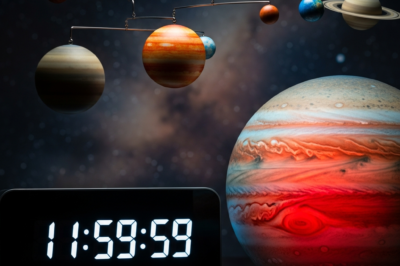
The Cosmic Scale of Time: A Journey Beyond Earthly Hours
When we wake up to the rising sun and retire at its setting, we are participating in a rhythmic cycle that has defined biological life on Earth for billions of years. To us, a day is a fixed constant—24 hours of rotation that governs our productivity, sleep, and the very concept of time. However, as we venture out into the vast expanse of our solar system, we quickly learn that the ‘standard’ day is anything but universal. In the grand choreography of the planets, some move with dizzying speed, while others linger in a slow, almost frozen rotation. The question of which planet holds the record for the longest day leads us to one of the most enigmatic and hostile environments in our cosmic neighborhood: Venus. This second planet from the Sun presents a temporal paradox that defies our intuition, where the sun rises in the west and a single day can outlast the journey the planet takes around its host star. Understanding the mechanics of the longest day in the solar system is not just a matter of planetary trivia; it is a deep dive into the history of planetary formation, the influence of colossal impacts, and the sheer power of atmospheric forces that can reshape the rotation of an entire world.
The Venusian Paradox: Where Days Outlast Years
To understand why Venus holds the crown for the longest day, we must first define what a ‘day’ actually is. In astronomy, there are two primary ways to measure a day: the sidereal day and the solar day. A sidereal day is the time it takes for a planet to complete one full rotation on its axis relative to the fixed stars. For Earth, this is approximately 23 hours and 56 minutes. For Venus, the sidereal day is a staggering 243 Earth days. This means that Venus takes longer to spin once on its axis than any other planet in our system. To put this in perspective, Venus completes an entire orbit around the Sun—its year—in just about 225 Earth days. This creates the mind-bending reality where a day on Venus is actually longer than its year. However, if you were standing on the surface of Venus (and could somehow survive the crushing pressure and searing heat), the time between one sunrise and the next—the solar day—would be about 117 Earth days. This is because Venus rotates in the opposite direction of its orbital motion, a phenomenon known as retrograde rotation. This slow, backward spin is one of the greatest mysteries of planetary science, and it sets Venus apart from almost every other major body in the solar system.
The Mystery of Retrograde Rotation: Why Does Venus Spin Backward?
Most planets in our solar system, including Earth, Mars, and the gas giants, rotate in a prograde motion, meaning they spin in the same direction as they orbit the Sun. Venus is the notable exception, along with Uranus (which spins on its side). If you were on Venus, the Sun would rise in the west and set in the east. But why does this happen? Scientists have proposed several theories to explain this anomaly. The most widely accepted theory involves the early, chaotic history of the solar system. It is believed that during the ‘Late Heavy Bombardment’ period, Venus may have been struck by a massive protoplanet. This colossal impact could have been powerful enough to essentially flip the planet upside down or completely arrest its original rotation and start it spinning in the opposite direction. Another theory suggests that Venus didn’t start out this way but was gradually slowed down by its incredibly thick and heavy atmosphere. The friction between the atmosphere and the planet’s surface, combined with tidal forces from the Sun, might have exerted enough torque to slow its rotation over billions of years. This ‘atmospheric tide’ theory suggests that the very air on Venus acts like a brake, dragging the planet into its current, sluggish state.
Comparing the Extremes: The Fastest and Slowest Rotators
To appreciate the extreme nature of the Venusian day, we must look at the opposite end of the spectrum. While Venus takes 243 Earth days to complete a single rotation, Jupiter, the largest planet in our solar system, completes a rotation in just under 10 hours. Jupiter’s rapid spin is so intense that the planet actually bulges at the equator, creating an oblate spheroid shape. This means that while Venus is the ‘tortoise’ of the solar system, Jupiter is the ‘sprinter.’ Following Jupiter, Saturn also boasts a fast day of about 10.7 hours. Even the ice giants, Uranus and Neptune, have relatively short days of 17 and 16 hours, respectively. Earth and Mars sit in the middle with their ~24-hour cycles. Mercury, the closest planet to the Sun, was once thought to be tidally locked, meaning one side always faced the Sun. However, we now know it has a 3:2 spin-orbit resonance, completing three rotations for every two orbits, resulting in a sidereal day of about 59 Earth days. Even so, Mercury’s slow spin is still significantly faster than that of Venus, making the ‘Morning Star’ the undisputed champion of the long day. The stark contrast between Jupiter’s 10-hour day and Venus’s 5,832-hour day highlights the incredible diversity of physical conditions present in our local cosmic environment.
The Impact of Slow Rotation on the Venusian Environment
The sluggish rotation of Venus has profound implications for its environment and geology. Because the planet rotates so slowly, it lacks a strong internal dynamo effect, which is necessary to generate a significant global magnetic field like Earth’s. Without a magnetic field to protect it, the Venusian atmosphere is constantly bombarded by the solar wind, though its sheer density provides some level of protection for the surface. Furthermore, the slow rotation contributes to the planet’s extreme climate. Venus is the hottest planet in the solar system, with surface temperatures reaching 467 degrees Celsius (872 degrees Fahrenheit), even though it is further from the Sun than Mercury. This is largely due to a runaway greenhouse effect caused by an atmosphere that is 96% carbon dioxide. Interestingly, while the planet itself rotates slowly, its upper atmosphere moves at incredible speeds. This phenomenon is called ‘super-rotation,’ where the clouds of Venus circle the planet every four Earth days. The winds in the upper atmosphere can reach speeds of 360 kilometers per hour (224 mph), while the ground-level winds are mere breezes. The disconnect between the slow-moving rocky body and the fast-moving atmosphere remains a key area of research for meteorologists and planetary scientists.
Measuring the Day: Scientific Challenges and Recent Discoveries
Determining the exact length of a day on Venus has proven to be surprisingly difficult. Unlike Mars or the Moon, where we can clearly see surface features and track their movement, Venus is perpetually shrouded in a thick layer of sulfuric acid clouds. For decades, scientists had to rely on radar imaging to ‘see’ through the clouds and track the motion of the solid surface. Data from NASA’s Magellan mission in the 1990s provided a baseline for the rotation rate, but subsequent observations by the European Space Agency’s Venus Express and JAXA’s Akatsuki mission showed that the rotation rate isn’t perfectly constant. In fact, the length of a Venusian day can fluctuate by several minutes. These variations are thought to be caused by the massive atmosphere exchanging momentum with the solid planet. A study published in 2021 using Earth-based radar found that the rotation period was 243.0226 Earth days, but even this figure is subject to slight changes. These micro-variations offer scientists a unique way to study the internal structure of Venus, including the size and state of its core, which is currently believed to be similar in size to Earth’s but potentially solid or in a different liquid state.
The Future of Exploration: Unlocking the Secrets of Venus
The mystery of the longest day in the solar system continues to drive a new era of exploration. After decades of focusing on Mars, the international community is turning its eyes back to Venus. NASA has recently greenlit two major missions, VERITAS (Venus Emissivity, Radio Science, InSAR, Topography, and Spectroscopy) and DAVINCI+ (Deep Atmosphere Venus Investigation of Noble gases, Chemistry, and Imaging). These missions aim to map the surface in unprecedented detail and sample the atmosphere to understand how Venus became the ‘hellscape’ it is today. By measuring the rotation more precisely and studying the interactions between the core and the atmosphere, scientists hope to determine once and for all if Venus ever had oceans or if it was always destined for its current state. Additionally, the European Space Agency’s EnVision mission will work in tandem with NASA to provide a holistic view of the planet’s activity from its core to its upper atmosphere. These missions will help us understand why Earth and Venus, which started as ‘twins’ in size and composition, evolved into such radically different worlds. The answer may lie in those very slow, 243-day rotations that define the Venusian experience.
Conclusion: The Philosophical and Scientific Significance of Venusian Time
The fact that the longest day in the solar system belongs to Venus is a powerful reminder of how unique and fragile Earth’s own temporal rhythm is. On Venus, time stretches out in a way that is almost incomprehensible to the human mind; a place where you could celebrate your birthday more often than you would see a sunset. Beyond the novelty, studying the rotation of Venus provides essential data for our understanding of exoplanets. As we discover thousands of worlds orbiting other stars, many of which are ‘Earth-sized’ and close to their stars, we must look to Venus to understand the possible outcomes of planetary evolution. Is slow rotation a death knell for habitability, or is it a common phase in the life of a rocky planet? By unraveling the secrets of the Venusian day, we are not just learning about a neighbor; we are learning about the fundamental laws that govern the motion, climate, and potential for life across the universe. Venus remains a testament to the fact that in space, time is not just a measurement, but a reflection of a planet’s violent history and its ongoing struggle with the forces of nature.






































Leave a Reply