
Introduction: A Region on the Precipice of Total War
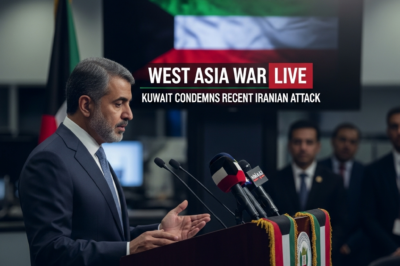
The geopolitical landscape of West Asia is currently witnessing its most volatile period in decades. Following a series of retaliatory strikes and counter-strikes involving major regional powers, the state of Kuwait has officially broken its characteristic diplomatic silence to issue a stern warning. According to reports from The Hindu and other major international outlets, Kuwaiti officials have labeled the latest Iranian military actions as a ‘dangerous escalation’ that threatens the foundational stability of the Middle East. This statement comes at a time when the conflict between Israel, Hezbollah, and Iran has moved from a shadow war into an overt, high-stakes military confrontation. The gravity of Kuwait’s statement cannot be overstated; as a nation that has historically prioritized mediation and neutrality within the Gulf Cooperation Council (GCC), its decision to explicitly condemn the escalation signals a deep-seated fear that the conflict is no longer containable. This article provides an exhaustive analysis of the current military situation, the diplomatic shifts occurring in the Gulf, and the potential global economic consequences of a full-scale regional war.
The Anatomy of the Escalation: Military Strikes and Countermeasures
The latest phase of the conflict was triggered by a sophisticated Iranian missile barrage aimed at strategic locations. This move was widely viewed as a direct response to the targeted eliminations of high-ranking Hezbollah and IRGC (Islamic Revolutionary Guard Corps) officials. Unlike previous skirmishes, the scale and precision of these attacks indicate a shift in Iranian doctrine—from reliance on proxies to direct kinetic engagement. Military analysts suggest that the use of hypersonic and medium-range ballistic missiles was intended to saturate and bypass established air defense systems. The Israeli response, bolstered by its ‘Iron Dome’ and ‘Arrow’ defense layers, alongside support from Western allies, prevented catastrophic civilian casualties, yet the psychological and strategic impact remains profound. The ‘dangerous escalation’ cited by Kuwait refers specifically to this direct state-on-state violence, which bypasses the usual buffer zones provided by non-state actors in Lebanon and Syria. The international community is now watching the ‘red lines’ drawn by both Jerusalem and Tehran, as any further miscalculation could lead to a localized conflict transforming into a continental conflagration.
Kuwait’s Diplomatic Shift: Why Neutrality is Fading
Kuwait has long been viewed as the ‘Switzerland of the Middle East,’ often serving as a bridge between the divergent interests of Saudi Arabia, Iran, and Iraq. However, the recent statement from the Kuwaiti Foreign Ministry indicates that the current level of aggression has made neutrality a luxury the region can no longer afford. Kuwait’s concern is twofold: first, the physical safety of its own borders and oil infrastructure, and second, the collapse of the fragile maritime security in the Persian Gulf. By aligning its rhetoric with those concerned about Iranian expansionism, Kuwait is signaling to the GCC that collective security must take precedence over individual diplomatic outreach. This shift reflects a broader trend among Gulf monarchies who, while wishing to avoid direct involvement, are increasingly alarmed by the possibility of Iranian missiles crossing their airspace or disrupting the vital shipping lanes that sustain their economies. The terminology used—’dangerous escalation’—is a deliberate choice designed to trigger international legal and diplomatic mechanisms intended to de-escalate hostilities before they reach the point of no return.
Economic Ramifications: The Looming Threat to Global Energy Markets
The conflict in West Asia is never purely a military or political affair; it is inherently tied to the global energy supply. The Strait of Hormuz, a narrow waterway through which approximately 20% of the world’s total oil consumption passes, is now under heightened threat. Analysts at major financial institutions have warned that any sustained conflict involving Iran could lead to a ‘risk premium’ on oil prices, potentially pushing Brent crude well above the $100-per-barrel mark. For nations like India, which imports a significant portion of its energy from the region, this escalation is an economic nightmare. The disruption of trade routes in the Red Sea by Houthi rebels has already increased shipping costs and insurance premiums; a full-scale war involving Iran would exacerbate these issues exponentially. Furthermore, the volatility in West Asia impacts global stock markets, as investors flee to ‘safe-haven’ assets like gold and US Treasuries. Kuwait, as a major oil producer, recognizes that while short-term price spikes might seem profitable, the long-term regional instability and the potential for infrastructure damage far outweigh any temporary gains.
The Role of Global Superpowers: US, Russia, and China
As the regional actors engage in combat, the shadow of global superpower rivalry looms large. The United States has reinforced its military presence in the Eastern Mediterranean and the Persian Gulf, deploying carrier strike groups as a deterrent against further Iranian aggression. However, the American administration is also under immense pressure to prevent a regional war that could draw US troops into another prolonged Middle Eastern conflict. Conversely, Russia and China have taken a more calculated approach. Moscow, deeply involved in Syria and maintaining a complex relationship with Tehran, views the escalation as a distraction for Western resources away from the European theater. China, as the largest purchaser of Iranian oil and a major trading partner for the GCC, is primarily concerned with regional stability and the uninterrupted flow of resources. The ‘diplomatic dance’ performed by these three powers will largely determine if the current crisis can be frozen through a ceasefire or if it will expand. Kuwait’s plea for de-escalation is effectively an appeal to these superpowers to exert their influence on their respective allies to prevent a catastrophic breakdown of order.
Humanitarian Consequences and the Refugee Crisis
Beyond the missiles and the oil prices lies the devastating human cost of the West Asia war. The conflict in Gaza and the intensified fighting in Southern Lebanon have already displaced hundreds of thousands of people. An escalation involving direct strikes on Iranian soil or a wider Israeli campaign would inevitably lead to a massive humanitarian catastrophe. Hospitals in Lebanon are already struggling under the weight of casualties, and the infrastructure in many parts of the region is near a state of collapse. If the conflict widens to include the Gulf states, even indirectly, the scale of displacement could rival the Syrian refugee crisis of the previous decade. Kuwait and other neighboring countries are wary of the social and economic pressures that a new wave of refugees would bring. The international community’s ability to provide aid is already stretched thin by multiple global crises, making the prevention of further escalation not just a strategic necessity, but a moral imperative. The ‘dangerous escalation’ Kuwait warns of is as much about the potential for human suffering as it is about military maneuvers.
Conclusion: The Path Forward in an Uncertain Landscape
The statement from Kuwait regarding the ‘dangerous escalation’ in the West Asia war serves as a clarion call for the international community. The transition from proxy warfare to direct state-level engagement between Iran and its adversaries marks a point of no return in regional dynamics. As we have explored, the implications span across military strategy, diplomatic alignments, global energy security, and humanitarian stability. The coming weeks will be critical; will the diplomatic efforts led by the UN and various regional mediators succeed in establishing a roadmap for de-escalation, or will the momentum of retaliation lead to a total regional war? For now, the world remains on edge, watching every missile launch and every diplomatic communique with bated breath. The stability of the 21st-century global order may very well depend on the ability of the actors in West Asia to heed warnings like those from Kuwait and step back from the abyss.





































Leave a Reply