
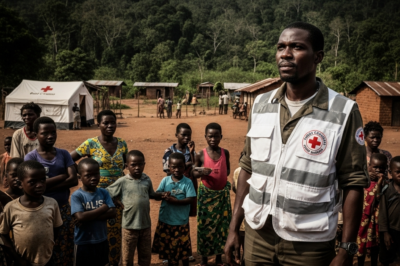
Introduction: A Growing Humanitarian Crisis in Central Africa
The Democratic Republic of Congo (DRC) is currently facing a public health emergency of unprecedented proportions. Recent reports from the International Federation of Red Cross and Red Crescent Societies (IFRC) have sent shockwaves through the global health community, indicating that the current Ebola epidemic is far from its peak and could persist for at least another year. This warning comes at a time when health workers are already stretched to their limits, battling not only a lethal virus but also a landscape marred by violent conflict, deep-seated community mistrust, and logistical nightmares. The Ebola virus, known for its high mortality rate and rapid transmission, has entrenched itself in the provinces of North Kivu and Ituri, regions that have been destabilized by decades of civil unrest. As the international community watches with bated breath, the Red Cross’s assessment serves as a sobering reminder that the path to eradication is fraught with obstacles that extend far beyond the clinical laboratory. Understanding the gravity of this situation requires a deep dive into the socio-political dynamics of the DRC, the nature of the virus itself, and the multifaceted strategy required to bring this nightmare to an end.
The Historical Context: A Recurring Nightmare for the DRC
Ebola is not a new adversary for the Democratic Republic of Congo. Since the virus was first identified in 1976 near the Ebola River, the nation has witnessed numerous outbreaks. However, the current iteration represents the tenth outbreak and is significantly more complex than those that preceded it. Historically, Ebola outbreaks in the DRC occurred in remote, sparsely populated forested areas, making containment relatively straightforward through isolation and contact tracing. The current outbreak is different because it is the first to occur in a densely populated conflict zone. The provinces of North Kivu and Ituri are home to millions of people and are characterized by high levels of internal displacement. This mobility allows the virus to hitchhike with travelers, spreading across borders and into urban centers where the potential for a massive surge in cases is much higher. Furthermore, the historical context of the DRC includes a long-standing suspicion of central government authority and foreign intervention, which has complicated the current response efforts. Previous successes in managing the virus provided a blueprint, but the unique challenges of the 2018-2019 crisis have rendered many traditional tactics insufficient.
Security Challenges: Fighting a Virus in a War Zone
One of the primary reasons the Red Cross predicts the epidemic will last another year is the sheer volatility of the security situation in eastern DRC. This region is a patchwork of territories controlled by various armed groups, including the Allied Democratic Forces (ADF) and local Mai-Mai militias. These groups frequently clash with government forces and UN peacekeepers, creating a ‘red zone’ where health workers cannot safely operate. In many instances, Ebola Treatment Centers (ETCs) have come under direct attack, forcing medical staff to flee and patients to go missing. When violence flares, the essential work of contact tracing and safe burials—crucial for breaking the chain of transmission—grinds to a halt. The Red Cross has emphasized that every time a security incident occurs, the virus gains a foothold, allowing undetected cases to multiply. This ‘stop-and-start’ rhythm of the response effort is a major driver of the projected longevity of the epidemic. Without a stable security environment, even the most advanced medical interventions are rendered toothless, as the reach of health teams is limited to sporadic windows of peace.
The Red Cross Perspective: Why the Peak is Still Ahead
The IFRC’s assessment that the epidemic has yet to peak is based on mathematical modeling and ground-level observations. Despite the deployment of an experimental vaccine and the introduction of new therapeutic drugs, the number of new cases continues to fluctuate at high levels. The Red Cross points to several indicators that suggest the worst is yet to come. First, there is a high rate of ‘community deaths,’ where individuals die of Ebola at home rather than in a treatment center. These deaths often involve traditional funeral practices that involve touching the deceased, leading to ‘superspreader’ events. Second, the geographical spread of the virus into new health zones suggests that containment efforts are being bypassed. The Red Cross volunteers, who are often the first responders on the scene, report that the virus is moving faster than the infrastructure to stop it. By predicting a year-long duration, the Red Cross is urging international donors and governments to shift from a short-term ’emergency’ mindset to a long-term ‘sustainable intervention’ strategy. This involves not just treating the sick, but rebuilding the trust of the local population and fortifying the entire health system.
Innovation in Medical Response: Vaccines and Therapeutics
Despite the grim outlook, there have been significant scientific advancements in the fight against Ebola. The rVSV-ZEBOV vaccine has been a game-changer, administered to hundreds of thousands of people in a ‘ring vaccination’ strategy. This approach involves vaccinating the contacts of a confirmed case, as well as the contacts of those contacts. Preliminary data suggests the vaccine is highly effective, but its success depends entirely on the ability of health workers to identify and reach these individuals—a task made difficult by conflict. Additionally, four experimental drugs were tested in a randomized controlled trial in the DRC, with two of them (mAB114 and REGN-EB3) showing remarkable success in increasing survival rates when administered early. These breakthroughs mean that Ebola is no longer a guaranteed death sentence. However, the Red Cross notes that the availability of medicine is only half the battle. The other half is ensuring that the community feels safe and motivated to seek care. If patients fear the treatment centers or the motives of the health workers, these life-saving innovations will remain underutilized while the virus continues to circulate.
Socio-Political Resistance and the Battle for Community Trust
Perhaps the greatest hurdle in the DRC is the ‘crisis of trust.’ Decades of conflict and perceived neglect by the international community and the central government have left many residents skeptical of the Ebola response. Rumors abound that the virus is a political ploy to disrupt local elections or a money-making scheme for NGOs. This mistrust has manifested in physical resistance, where communities have barricaded roads to prevent Red Cross teams from performing safe and dignified burials. To combat this, the Red Cross has pivoted toward a ‘community engagement’ model. This involves hiring local staff, working with traditional leaders, and involving families in the burial process to ensure that cultural rites are respected while safety protocols are maintained. The Red Cross argues that the epidemic will continue as long as the response is seen as an ‘outside’ imposition rather than a community-led effort. Building this trust is a slow, painstaking process that cannot be rushed, which contributes to the estimation that the crisis will persist for many months to come.
Conclusion: A Call for Global Solidarity and Resilience
The warning from the Red Cross that the Ebola epidemic in the Democratic Republic of Congo may last another year is a call to action for the global community. It highlights the intersection of public health and geopolitical stability, proving that a virus does not exist in a vacuum. To bring this outbreak to an end, the response must be as multifaceted as the challenges it faces. This means continued funding for medical research, increased security for aid workers, and, most importantly, a commitment to empowering the local communities of North Kivu and Ituri. The world cannot afford to turn its back on the DRC; a failure to contain Ebola there is a threat to global health security everywhere. As we look toward the next year, the focus must remain on resilience, empathy, and the unwavering belief that through collective effort, the peak can be passed and the epidemic finally extinguished. The road ahead is long, but the lessons learned in the trenches of the Congo will undoubtedly shape the future of global pandemic preparedness for decades to come.







































Leave a Reply