
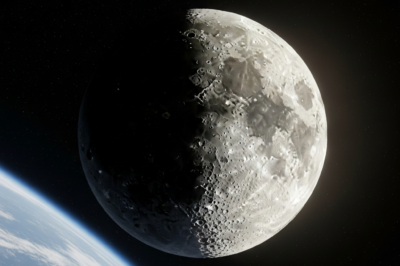
The night sky has long served as a cosmic theater, captivating humanity with its silent, rhythmic shifts. Among all celestial bodies, the Moon remains the most intimate companion to Earth, dictating tides, influencing ancient calendars, and inspiring countless generations of stargazers. On June 16, the lunar cycle presents a particularly compelling visual display as it progresses through the waxing gibbous phase. This specific date marks a transition point where the Moon is more than half illuminated but has not yet reached the peak brilliance of a Full Moon. For amateur astronomers, casual observers, and professional scientists alike, understanding the nuances of the June 16 moon phase offers a gateway into the complex mechanics of our solar system. This comprehensive guide delves into the specific visual characteristics of the Moon on this day, the scientific principles governing its phases, and the cultural significance of the upcoming June ‘Strawberry Moon’.
Understanding the Waxing Gibbous Phase of June 16
As we approach June 16, the Moon enters the later stages of its waxing gibbous phase. The term ‘waxing’ refers to the increasing illumination of the lunar surface as seen from Earth, while ‘gibbous’ is derived from the Latin word ‘gibbus’, meaning hump-backed. On this specific day, approximately 78% to 82% of the Moon’s visible disk will be illuminated by the Sun. This stage is a favorite for many astrophotographers because the sunlight hits the lunar surface at an angle that emphasizes the depth and texture of the craters and mountain ranges along the ‘terminator’—the dividing line between light and dark. Unlike the Full Moon, which can appear flat due to direct sunlight, the June 16 moon phase provides enough shadow to make the lunar topography pop. Observers can expect the Moon to rise in the late afternoon and remain visible high in the sky through much of the night, setting well after midnight. This visibility window makes it an ideal subject for evening observation sessions without the need for specialized midnight equipment.
The Astronomical Mechanics of the Lunar Cycle
To truly appreciate what the Moon looks like on June 16, one must understand the synodic month, which is the 29.5-day cycle the Moon takes to return to the same phase. This cycle is distinct from the sidereal month (27.3 days), which is the time it takes the Moon to complete one orbit around Earth relative to the stars. The discrepancy exists because as the Moon orbits the Earth, the Earth is also moving along its orbit around the Sun. On June 16, the Earth-Moon-Sun geometry is positioned such that we are viewing the Moon from a side-angle, allowing us to see more than the First Quarter’s half-moon but less than the Full Moon’s complete circle. The Moon’s illumination is entirely dependent on its position relative to the Sun; it does not produce its own light but reflects solar radiation. The specific percentage of illumination on June 16 is a result of the Moon’s elongation—the angular distance between the Sun and the Moon as viewed from Earth. As this angle increases, the visible illuminated portion grows, leading us toward the June Full Moon, which is set to occur just a few days later.
Why the June Moon is Unique: Approaching the Summer Solstice
The June 16 moon phase is uniquely influenced by its proximity to the Summer Solstice in the Northern Hemisphere. Because the Sun is at its highest point in the sky during the day, the Full Moon (and the near-full waxing gibbous) tends to sit much lower on the horizon during the night. This phenomenon, often referred to as a ‘low moon’, can lead to the ‘Moon Illusion’, where the celestial body appears significantly larger than usual when viewed near the horizon through the atmospheric haze. Furthermore, the June Moon is traditionally known in various cultures as the Strawberry Moon. While the name originates from indigenous North American tribes like the Algonquin, who used the lunar cycle to track the ripening of wild strawberries, the June 16 phase serves as the herald for this event. Scientists also note that because of the Moon’s low trajectory in June, its light must pass through more of the Earth’s atmosphere, which can frequently tint the Moon with a golden or reddish hue, adding a layer of atmospheric beauty to the June 16 observation.
Tools and Technology for Professional Lunar Observation
In the modern era, observing the moon phase today has been revolutionized by digital tools and sophisticated optics. For those looking at the June 16 moon, several mobile applications such as Stellarium, SkySafari, and The Moon: Calendar provide real-time data on the Moon’s altitude, azimuth, and exact illumination percentage. Professional observatories use these dates to calibrate instruments, as the waxing gibbous phase provides sufficient light for testing without the overwhelming brightness of a Full Moon. For the average enthusiast, a basic pair of 10×50 binoculars will reveal the spectacular lunar ‘seas’ or ‘maria’—dark basaltic plains formed by ancient volcanic eruptions—and prominent craters like Tycho and Copernicus. On June 16, the crater Tycho, with its extensive ray system, will be particularly prominent as the sun’s angle highlights the debris ejected during its formation millions of years ago. Utilizing high-end telescopes with CMOS cameras allows for ‘lucky imaging’, a technique that captures thousands of frames to bypass atmospheric turbulence, resulting in high-resolution lunar maps that rival professional satellite imagery.
Photography Tips: Capturing the 78% Illuminated Moon
Photographing the Moon on June 16 requires a strategic approach to balance exposure and detail. Because a waxing gibbous moon is surprisingly bright, many beginner photographers make the mistake of overexposing the image, resulting in a featureless white blob. To capture the craters visible on June 16, experts recommend using a tripod and a telephoto lens with at least a 300mm focal length. Setting the camera to a low ISO (100 or 200) is crucial to minimize noise, while a fast shutter speed (around 1/125th to 1/250th of a second) is necessary to freeze the Moon’s motion and counteract Earth’s rotation. The ‘Looney 11’ rule is a helpful guide for June 16: set your aperture to f/11 and match your shutter speed to the inverse of your ISO. Furthermore, shooting during the ‘Blue Hour’—just after sunset but before total darkness—allows the photographer to capture the Moon alongside the terrestrial landscape, creating a more dynamic and contextual composition than a simple black-sky shot.
The Psychological and Tidal Influence of the Moon Phases
Beyond its visual appeal, the phase of the Moon on June 16 has tangible effects on our planet. The gravitational pull of the Moon, combined with that of the Sun, creates the tides in our oceans. During the waxing gibbous phase, we experience ‘neap tides’ transitioning toward ‘spring tides’, meaning the difference between high and low tide begins to increase as the alignment of the Earth, Moon, and Sun tightens. Beyond the physical, the lunar cycle has long been studied for its supposed impact on human behavior, a field known as chronobiology. While scientific evidence for the ‘Lunar Effect’ on human psychology remains debated, many people report changes in sleep patterns or increased energy during the waxing gibbous phase as the ambient night light increases. The June 16 moon, providing significant evening illumination, naturally extends the ‘active’ hours for wildlife as well, influencing the hunting and mating patterns of nocturnal species. This interconnectedness between the lunar phase and life on Earth highlights why monitoring the moon phase today remains a relevant endeavor for biologists and environmentalists.
Conclusion: The Lasting Legacy of Lunar Watching
As we gaze upon the Moon on June 16, we are participating in a tradition as old as humanity itself. This waxing gibbous phase is more than just a slice of light in the sky; it is a complex intersection of physics, history, and natural beauty. By understanding the specific illumination, the importance of the terminator line, and the cultural context of the June season, we gain a deeper appreciation for our place in the cosmos. Whether you are using a professional telescope or simply looking up from your backyard, the June 16 moon serves as a reminder of the constant, predictable, yet ever-changing nature of the universe. As the Moon continues its journey toward the Full Strawberry Moon, take a moment to appreciate the clarity and detail offered by today’s phase—a perfect moment of celestial balance before the brilliance of the full lunar disk takes over the night sky.







































Leave a Reply