
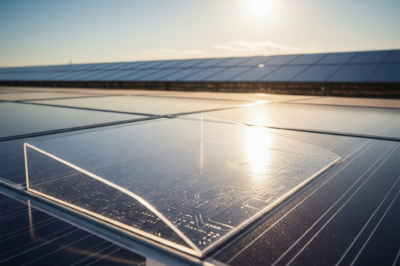
The Silent Threat to Renewable Energy: Understanding the Soiling Problem
For decades, the solar energy industry has faced a persistent and microscopic adversary: dust. In the quest for a carbon-neutral future, photovoltaic (PV) systems have been deployed across some of the most arid and sun-drenched regions of the planet, from the Mojave Desert to the vast expanses of the Sahara and the Middle East. However, these ideal locations for solar irradiance come with a significant catch. Dust, sand, and particulate matter accumulate on the surface of solar panels, creating a physical barrier that reflects and absorbs sunlight before it can reach the silicon cells. This phenomenon, known in the industry as ‘soiling,’ is not merely a cosmetic issue; it is a multi-billion-dollar efficiency drain. Research indicates that even a thin layer of dust can reduce energy output by as much as 25% to 35% in just a few weeks. In extreme cases, and without regular cleaning, solar farms can see their productivity halved. Traditionally, the solution has been manual labor and water—millions of gallons of it—to wash the panels. But in the very deserts where these farms thrive, water is a precious and scarce resource. Enter NASA’s Electrodynamic Dust Shield (EDS), a technology born from the rigors of lunar exploration that promises to revolutionize how we maintain solar infrastructure on Earth by using nothing more than a whisper of electricity to sweep panels clean.
The Physics of Obstruction: Why Dust is the Silent Killer of Solar Efficiency
To understand the magnitude of the NASA-backed solution, one must first appreciate the complex physics of solar soiling. When light hits a clean solar panel, it passes through the protective glass with minimal refraction, hitting the semiconductor material and generating electrons. However, when dust particles settle on the glass, they act as tiny opaque shields. These particles are often composed of minerals, organic matter, and industrial pollutants that vary in size from a few micrometers to several millimeters. In high-wind regions, these particles don’t just sit there; they can become chemically bonded to the surface through humidity and dew, a process called ‘cementation.’ This makes them incredibly difficult to remove with simple wind or gravity. Furthermore, the loss of efficiency is not linear. As dust accumulates, it creates hot spots where the temperature of the panel increases because the blocked cells cannot convert light into electricity, turning the energy into heat instead. This localized heating can permanently damage the PV module, shortening its lifespan and increasing maintenance costs. Globally, it is estimated that soiling reduces the world’s solar energy potential by at least 4%, a number that translates to billions of dollars in lost revenue and wasted potential for carbon reduction.
Space Heritage: From Apollo to Artemis – The Origin of the EDS
The technology now poised to save Earth’s solar farms was actually designed for an even harsher environment: the Moon. During the Apollo missions, NASA astronauts discovered that lunar dust (regolith) was one of the greatest challenges to space exploration. Unlike Earth dust, which is weathered by wind and water into rounded grains, lunar dust is jagged, glass-like, and highly abrasive. It clings to everything via static electricity and can shred seals, clog joints, and obscure camera lenses. Looking ahead to the Artemis missions and long-term lunar habitation, NASA needed a way to keep solar arrays and spacesuit visors clean without using consumables like water or air. The Kennedy Space Center’s Electrostatics and Surface Physics Laboratory developed the Electrodynamic Dust Shield (EDS). This technology uses a series of transparent electrodes embedded within or on the surface of a material. By applying a low-power, high-voltage alternating current to these electrodes, a traveling electric field wave is created. This wave physically lifts and pushes the dust particles off the surface, acting like an invisible broom. The transition of this technology from lunar visors to terrestrial solar panels represents a classic example of space-age innovation solving foundational problems on Earth.
Mechanism of Action: How the Electrodynamic Dust Shield Works
At the heart of the EDS is the principle of dielectrophoresis. The system consists of a thin, transparent layer of electrodes—often made of Indium Tin Oxide (ITO) or similar conductive materials—integrated into the solar panel’s protective glass. These electrodes are spaced at precise intervals, often just millimeters apart. When the system is activated, it generates a multi-phase electric signal. This signal creates a non-uniform electric field that exerts a force on both charged and neutral dust particles. Because even neutral particles can be polarized in an electric field, the EDS is effective against almost all types of particulate matter. The traveling wave created by the alternating phases moves across the panel, carrying the dust with it until it falls off the edge. One of the most remarkable aspects of this technology is its efficiency. It requires very little power to operate, as it only needs to move the mass of the dust itself, and the system can be programmed to run at specific intervals or only when sensors detect a drop in output. This ‘self-cleaning’ capability means that solar panels can maintain peak performance 24/7 without human intervention.
Water Conservation: A Sustainable Solution for Arid Regions
The environmental implications of the EDS technology are profound, particularly concerning water conservation. Currently, the most common method for cleaning large-scale solar farms involves fleets of trucks and thousands of gallons of demineralized water. In places like the Middle East or the Southwestern United States, this water must often be trucked in from miles away, adding a significant carbon footprint to a supposedly ‘green’ energy source. Some estimates suggest that cleaning the world’s current solar capacity requires nearly 10 billion gallons of water annually. For a 100-megawatt solar farm, the cleaning process might occur twice a month, consuming enough water to supply thousands of homes. By implementing NASA’s electric dust shield, the need for water is virtually eliminated. This not only preserves a vital resource but also reduces the operational costs (OPEX) for solar farm operators. Furthermore, because the EDS does not involve mechanical scrubbing or high-pressure water, it eliminates the risk of micro-cracks in the solar cells, which are often caused by the physical stress of manual cleaning and can lead to long-term degradation of the panel’s performance.
Integration and Commercialization: The Path Forward
While the technology is scientifically proven, the challenge now lies in mass-market integration and scalability. For EDS to become a standard feature in the solar industry, it must be cost-effective to manufacture. Current research is focusing on ways to print the electrode patterns directly onto the solar glass during the manufacturing process, potentially using screen printing or inkjet technologies. Another hurdle is ensuring the longevity of the transparent conductive layers under the harsh UV radiation and extreme temperature fluctuations experienced on Earth. Companies and researchers are exploring the use of silver nanowires and carbon nanotubes as alternatives to ITO, which can be brittle. Furthermore, the integration of power electronics needed to drive the EDS must be miniaturized and made weather-resistant. NASA’s collaboration with private sector entities, such as those mentioned in the Saur Energy reports, is critical for bridging the ‘valley of death’ between a lab-proven prototype and a commercially viable product. As the cost of PV modules continues to drop, the value proposition of a self-cleaning panel becomes even more attractive to investors looking to maximize the return on their clean energy assets.
Economic Viability and the Future of Sustainable Infrastructure
From an investment perspective, the adoption of NASA-backed dust shields could fundamentally change the Levelized Cost of Energy (LCOE) for solar power. By increasing the average annual energy yield by 10% to 15% through the elimination of soiling losses, the payback period for a solar installation can be significantly shortened. In the competitive world of energy auctions, where fractions of a cent per kilowatt-hour matter, this efficiency gain could make solar projects viable in even more marginal locations. Looking beyond individual panels, the concept of electrodynamic cleaning could be applied to other parts of the energy infrastructure, such as the mirrors used in Concentrated Solar Power (CSP) plants or even sensors and cameras for autonomous vehicles. As we move toward a world powered by intermittent renewable sources, the reliability and efficiency of every square meter of solar collection become paramount. The EDS technology represents a shift from reactive maintenance to proactive, automated management of energy assets.
Conclusion: A Greener Future Through Space-Age Innovation
The NASA-backed Electrodynamic Dust Shield is more than just a clever engineering feat; it is a vital component in the global strategy to combat climate change. By solving the ‘soiling problem’ without the use of water or intensive labor, it addresses two of the biggest hurdles to solar energy expansion in arid regions. This technology demonstrates the incredible value of space exploration, where the solutions to the most extreme challenges in the universe often provide the keys to sustainability on our home planet. As the world continues to accelerate its transition to renewable energy, the ability to keep our solar panels clean with a flick of an electric switch may well be the breakthrough that ensures solar power remains the cheapest and most efficient source of energy for generations to come.







































Leave a Reply