
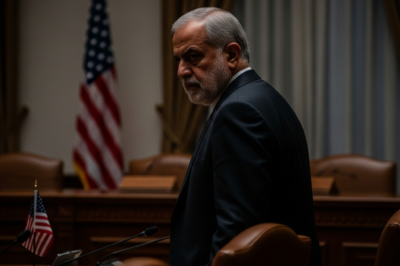
The geopolitical landscape of West Asia is currently witnessing a period of unprecedented volatility, marked by a complete breakdown in direct diplomatic communication between two of the most influential actors in the region: the Islamic Republic of Iran and the United States. Following a series of escalations that have brought the region to the brink of a broader conflict, the Iranian Foreign Ministry has officially stated that there are currently no grounds for negotiations with Washington. This announcement, delivered through official state channels, underscores the widening chasm between the two nations and signals a hardening of Tehran’s stance amidst ongoing conflicts in Gaza, Lebanon, and across the broader Middle Eastern theater. The refusal to engage in dialogue comes at a critical juncture when international intermediaries, including Oman and Qatar, have been working tirelessly to prevent a full-scale regional war. The statement, attributed to Foreign Ministry spokesperson Nasser Kanaani, highlights the deep-seated mistrust that has only intensified following the assassination of key figures within the ‘Axis of Resistance’ and the ongoing military operations in the Palestinian territories. As the world watches with bated breath, the absence of a direct hotline or a structured diplomatic framework between Tehran and Washington creates a dangerous vacuum where miscalculations could lead to catastrophic consequences for global security and economic stability.
The Official Stance from Tehran: Why Diplomacy is at a Standstill
The recent declaration from the Iranian Foreign Ministry is not merely a routine diplomatic rebuff but a calculated strategic positioning. According to Nasser Kanaani, the ‘Muscat process’—a backdoor diplomatic channel facilitated by the Sultanate of Oman—has been effectively suspended. This channel had previously served as a vital mechanism for indirect communication regarding the nuclear deal and prisoner swaps. However, Tehran now asserts that the current environment, characterized by what they term as ‘unlimited U.S. support for Israeli aggression,’ renders any form of negotiation moot. The Iranian leadership views the United States not as an impartial mediator or even a rational adversary, but as a direct party to the conflict in Gaza and Lebanon. From Tehran’s perspective, engaging in talks while U.S.-made munitions are being utilized in strikes against its allies is seen as a betrayal of its ideological and strategic commitments. Furthermore, the Iranian government is currently in a state of transition and internal recalibration following the election of President Masoud Pezeshkian. While Pezeshkian was initially seen as a figure who might favor pragmatic engagement to ease economic sanctions, the regional reality has forced his administration to align strictly with the more conservative security establishment and the Supreme Leader, Ayatollah Ali Khamenei. The ‘no-negotiation’ stance serves to project strength internally and to reassure regional allies that Iran remains steadfast in its resistance against Western influence.
Historical Friction and the Ghost of the JCPOA
To understand the current impasse, one must look back at the fractured history of U.S.-Iran relations, specifically the rise and fall of the Joint Comprehensive Plan of Action (JCPOA). The 2015 nuclear agreement was intended to be a cornerstone of regional stability, trading sanctions relief for strict limits on Iran’s nuclear program. However, the unilateral withdrawal of the United States from the deal in 2018 under the Trump administration remains a burning grievance for Tehran. This move, followed by the ‘Maximum Pressure’ campaign, decimated the Iranian economy and empowered hardliners who argued that the U.S. could never be trusted as a diplomatic partner. The Biden administration’s subsequent attempts to revive the deal were met with skepticism and were ultimately sidelined by the shifting priorities of the 2024 global landscape. Iran has since significantly advanced its uranium enrichment capabilities, moving closer to the threshold of a nuclear weapon—a development that remains a red line for Washington and its allies. The historical baggage of broken promises, coupled with the 2020 assassination of General Qasem Soleimani, has created a psychological and political barrier to entry for any new diplomatic initiative. For Iran, the memory of these events serves as a cautionary tale, suggesting that any concession made at the negotiating table could be overturned by the next change in U.S. domestic leadership.
The Geopolitical Chessboard: Israel, Hezbollah, and the Proxy Wars
The lack of U.S.-Iran negotiations is inextricably linked to the ‘hot wars’ currently ravaging the Levant. Iran’s regional strategy relies heavily on its network of non-state actors, known as the ‘Axis of Resistance,’ which includes Hezbollah in Lebanon, Hamas in Gaza, and the Houthis in Yemen. The recent assassinations of Hamas leader Ismail Haniyeh in Tehran and Hezbollah commanders in Beirut have pushed Iran into a corner where it feels compelled to respond to maintain its deterrence. The United States, meanwhile, has surged its military presence in the Eastern Mediterranean and the Persian Gulf to defend Israel and secure international shipping lanes. This direct military buildup is viewed by Tehran as an existential threat. The conflict in Gaza has become the primary lens through which all other regional issues are viewed. Iran has conditioned any easing of tensions on a permanent ceasefire in Gaza, a demand that Washington has struggled to facilitate due to the complex internal politics of Israel and the strategic goals of the Netanyahu government. As long as the kinetic conflict continues, the diplomatic channels will remain frozen. The role of Hezbollah is particularly critical; as the most powerful paramilitary force in the region, its potential for a full-scale war with Israel is the ‘Sword of Damocles’ hanging over West Asia. Without a U.S.-Iran dialogue, the mechanisms to prevent this specific escalation are dangerously limited.
Economic Sanctions and the Iranian Domestic Pressure
Beyond the military and diplomatic spheres, the economic dimension of the U.S.-Iran standoff is profound. Decades of sanctions have crippled Iran’s currency and limited its ability to export oil, leading to high inflation and civil unrest within the country. However, Tehran has become adept at ‘sanctions evasion’ and has increasingly turned toward the East, strengthening its economic ties with China and its military cooperation with Russia. This ‘pivot to the East’ has lessened the immediate leverage that U.S. sanctions might have had in forcing Iran back to the negotiating table. China, as the primary purchaser of Iranian oil, provides a vital economic lifeline, while Russia’s involvement in the Ukraine conflict has led to a strategic partnership where Iranian drones and missiles are traded for advanced Russian military technology. This burgeoning ‘Triple Alliance’ of sanctioned states creates a counter-weight to Western economic hegemony. Domestically, the Iranian government uses the ‘U.S. as the Great Satan’ narrative to divert public frustration away from government mismanagement and toward an external enemy. By refusing to negotiate, the Iranian leadership is also managing its internal security, ensuring that it does not appear weak to its most loyal revolutionary constituents during a time of economic hardship.
The Impact on Global Energy Markets and Maritime Security
The international community’s concern over the lack of U.S.-Iran communication is not merely humanitarian but deeply economic. The Strait of Hormuz, a narrow waterway controlled in part by Iran, is the transit point for nearly 20% of the world’s daily oil consumption. Any significant escalation in the Persian Gulf could lead to the closure of this vital artery, causing a global energy crisis and a massive spike in oil prices. Furthermore, the Houthi rebels in Yemen, supported by Iran, have already demonstrated their ability to disrupt global trade in the Red Sea. These maritime threats are a direct lever that Iran uses to remind the West of the costs associated with its current policy. In the absence of negotiations, there is no agreed-upon framework to manage maritime incidents or to prevent the harassment of commercial vessels. The ‘Shadow War’ at sea, involving drone strikes and vessel seizures, remains one of the most likely triggers for a larger conflict. For global markets, the uncertainty of U.S.-Iran relations adds a ‘risk premium’ to everything from fuel costs to shipping insurance, impacting consumers across the globe, including in developing economies like India, which relies heavily on Middle Eastern energy imports.
The Shadow of the 2024 U.S. Presidential Election
A significant factor in Iran’s current refusal to negotiate is the upcoming U.S. Presidential Election. Tehran is acutely aware that the political landscape in Washington could shift dramatically in a matter of months. There is little incentive for Iran to enter into a long-term agreement with the Biden-Harris administration if there is a perceived possibility that a subsequent administration might once again tear up the deal. The return of a ‘Maximum Pressure’ policy under a Republican administration is a scenario that Iranian strategists are preparing for. Conversely, some analysts believe Iran might be waiting to see if a Democratic victory provides a more stable foundation for a return to some form of the JCPOA. This ‘wait-and-see’ approach has paralyzed diplomatic efforts, as neither side wants to make significant concessions that might be invalidated by a change in domestic leadership. The rhetoric coming out of the U.S. campaign trail further complicates matters, with both sides of the American political aisle taking a hardline stance against Iran to avoid appearing weak on national security. This domestic political theatre in the United States directly translates into a lack of maneuverability for American diplomats on the world stage.
Conclusion: A Path Forward or a Permanent Stalemate?
In conclusion, the current statement from Iran regarding the cessation of negotiations with the United States reflects a grim reality of the modern international order. The combination of historical grievances, ongoing regional warfare, and domestic political constraints has created a perfect storm that prevents a diplomatic breakthrough. As long as the situation in Gaza remains unresolved and the ‘Axis of Resistance’ continues its kinetic engagement with Israeli and U.S. forces, the prospects for a peaceful resolution are slim. The international community must prepare for a prolonged period of strategic ambiguity and high-tension brinkmanship. While the absence of direct talks is alarming, it does not necessarily mean that war is inevitable; however, it does mean that the margin for error has never been thinner. The future of West Asia depends on whether the major players can eventually find a ‘face-saving’ mechanism to return to the table or if the region will continue to descend into a cycle of reactive violence that threatens to engulf the entire globe. For now, the silence between Washington and Tehran is the loudest sound in the Middle East, echoing the challenges of a world where diplomacy has taken a backseat to military posture and ideological defiance.





































Leave a Reply