
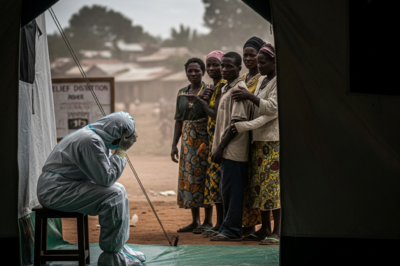
The Democratic Republic of Congo (DRC) is currently grappling with one of the most complex and lethal health emergencies in recent history. The latest figures from the Ministry of Health and international partners indicate that the death toll from the ongoing Ebola outbreak in the eastern provinces of North Kivu and Ituri has officially surpassed the 1,700 mark. This grim statistic is not just a number; it represents a profound humanitarian failure and a call to action for the global community. The outbreak, which was first declared in August 2018, has become the second-largest in history, trailing only the West African epidemic of 2014-2016. What makes this particular situation uniquely challenging is the confluence of high-density population centers, a long-standing armed conflict, and a deep-seated mistrust of governmental and international institutions among the local population. As health workers struggle to contain the virus, they are met with everything from physical violence to digital misinformation, creating a perfect storm for the virus to continue its deadly spread across the region and potentially beyond its borders. The crossing of the 1,700-death threshold serves as a haunting reminder of the virus’s persistence and the extreme difficulties faced by those on the front lines of the response. Experts warn that without a significant shift in strategy and a massive influx of sustained support, the situation could deteriorate further, threatening the stability of the entire Great Lakes region of Africa.
The Scale of the Crisis: Analyzing the 1,700 Death Toll Milestone
The milestone of 1,700 deaths marks a dark chapter in the nearly year-long battle against the Zaire strain of the Ebola virus in the eastern DRC. Since the outbreak was officially declared on August 1, 2018, the number of confirmed and probable cases has climbed steadily, now exceeding 2,500. The case fatality rate remains alarmingly high, hovering around 67%, which underscores the virulence of the pathogen and the delays many patients face in seeking or receiving professional medical care. Geographically, the virus has entrenched itself in North Kivu and Ituri, provinces that have been destabilized by decades of civil war and are home to millions of displaced persons. The recent spread to Goma, a major transit hub with over two million residents and an international airport, has elevated the risk level from national and regional to global. Each death recorded contributes to a growing pool of orphaned children, shattered families, and a healthcare system pushed to its absolute breaking point. The statistical progression of the outbreak shows periods of relative calm followed by sharp spikes in transmission, often coinciding with surges in regional violence that force health workers to suspend operations. This volatility makes it nearly impossible to predict when the epidemic might be brought under control, as every step forward is often met with two steps back due to external factors beyond the control of medical professionals.
The Intersection of Insecurity and Disease: A Region Under Siege
The primary factor distinguishing this Ebola outbreak from previous ones is the active conflict zone in which it is occurring. Eastern Congo is home to dozens of armed rebel groups, including the Allied Democratic Forces (ADF) and various Mai-Mai militias. These groups have not only complicated the logistics of the medical response but have actively targeted health workers and treatment facilities. There have been dozens of attacks on Ebola Treatment Centers (ETCs), resulting in the deaths of medical staff and the destruction of vital equipment and infrastructure. These security breaches force the World Health Organization (WHO) and other NGOs to withdraw their personnel temporarily, leaving the virus to spread unchecked through community transmission. Furthermore, the presence of armed groups limits the ability of surveillance teams to conduct contact tracing—the backbone of any successful Ebola containment strategy. When a single contact is missed, it can lead to a new chain of transmission that potentially sparks dozens more cases. The insecurity also creates a climate of fear; many residents are as afraid of the military and rebel groups as they are of the virus, leading them to hide symptoms or flee to areas where they cannot be monitored. This mobility is a major driver of the virus’s spread into new territories, including neighboring provinces and even across the border into Uganda.
Public Trust and the Battle Against Misinformation
Perhaps as dangerous as the virus itself is the epidemic of misinformation and







































Leave a Reply