
In Shorts
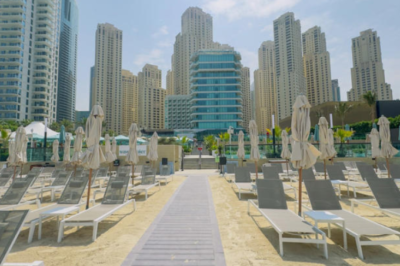
- Tourist hotspots in Dubai are witnessing unusually quiet scenes with empty beach loungers and pools.
- Regional tensions and travel disruptions have caused many visitors and residents to leave.
- The slowdown is beginning to affect the city’s tourism and hospitality industry.
Dubai, long celebrated as a global playground of luxury resorts, beach clubs, and high end hotels, is suddenly experiencing an unusual quiet. Recent images circulating online reveal rows of empty sun loungers and silent pool decks where crowds of tourists once gathered.
Several of the city’s popular waterfront areas and hotel resorts now appear far less busy than usual. Beaches that typically host large numbers of international visitors are showing fewer people, and restaurants and cafes in tourist zones are reporting significantly reduced foot traffic.
The sudden change is linked to escalating regional tensions that have disrupted travel across the Gulf. Missile and drone incidents connected to ongoing conflict in the region have triggered safety concerns, prompting many tourists to cut short their holidays and some residents to leave the city temporarily.
Reports indicate that roughly 1,700 projectiles were launched toward the United Arab Emirates over a two week period. While the majority were intercepted by defense systems, debris and explosions in certain areas created anxiety among visitors and locals alike.
The impact is especially visible in Dubai’s tourism sector. Beach clubs, seaside promenades, and hotel pools that normally buzz with activity are seeing fewer guests. Workers in hospitality say the change is striking, especially during a time of year that usually attracts international travelers.
Travel disruptions have added to the problem. Some airlines have suspended or limited flights after security concerns near major transport hubs. The uncertainty has also led several foreign businesses and expatriates to temporarily relocate staff, further reducing activity in the city.
Dubai’s economy relies heavily on tourism, which generates billions of dollars annually and supports thousands of jobs. Experts warn that prolonged instability could significantly affect the hospitality industry if visitor numbers continue to decline.
Despite the slowdown, many hotels and attractions remain open. Authorities are also encouraging local tourism and staycations to help maintain activity in the hospitality sector while international travel remains uncertain.
For now, the images of quiet beaches and empty resort pools serve as a stark contrast to Dubai’s usual reputation as one of the world’s most vibrant travel destinations. Whether the calm is temporary or a sign of deeper challenges for the tourism hub will depend largely on how the regional situation unfolds in the coming weeks.




































Leave a Reply