
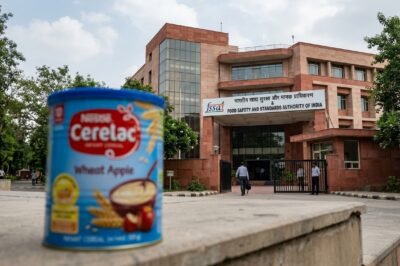
The landscape of the Indian Fast-Moving Consumer Goods (FMCG) sector was recently shaken by the news that the Food Safety and Standards Authority of India (FSSAI) has initiated formal legal proceedings against Nestle India. This move comes in the wake of mounting scrutiny regarding the nutritional composition of its popular infant cereal brand, Cerelac. For a brand that has positioned itself as a partner in parenting for decades, this regulatory intervention represents a significant challenge to its market dominance and brand equity. The news immediately resonated within the financial corridors, causing a marginal yet notable dip in Nestle India’s share price as investors weighed the potential for long-term reputational damage and regulatory penalties. This development isn’t just about a single product; it touches upon the fundamental trust between consumers and global food giants, the ethics of nutrition in developing markets, and the rigor of food safety enforcement in India. As the legal machinery begins to grind, the industry is watching closely to see how the world’s largest food company navigates these turbulent waters where public health interests and corporate profits frequently collide.
The controversy first gained international traction following a report by Public Eye, a Swiss investigative organization, which alleged that Nestle adds significant amounts of sugar to its baby food products sold in low- and middle-income countries, including India, while keeping similar products sugar-free in developed European markets. This revelation sparked outrage among health advocates and pediatricians, who argue that early exposure to added sugars can lead to a lifetime of health issues, including obesity, diabetes, and dental problems. The FSSAI, acting as the primary watchdog for food safety in India, took cognizance of these reports and initiated a probe to verify if the company had violated the Food Safety and Standards Act. The decision to move from a preliminary investigation to formal legal action suggests that the regulator has found sufficient grounds to challenge Nestle’s compliance with local standards or labeling requirements, marking a pivotal moment in the oversight of infant nutrition in the country.
The Core of the Controversy: Nutritional Disparity and Regulatory Frameworks
The primary allegation against Nestle India centers on the presence of added sugars in Cerelac, a product intended for infants as young as six months. According to the investigative findings, Cerelac variants in India were found to contain nearly 3 grams of added sugar per serving. In stark contrast, the same brand sold in Germany or the United Kingdom reportedly contains no added sugars. This perceived double standard has raised ethical questions about why children in developing nations are being exposed to higher sugar levels than their counterparts in the West. From a regulatory standpoint, the FSSAI’s legal action will likely examine whether Nestle accurately disclosed these sugar levels on its packaging and whether these levels exceed the permissible limits set by Indian food laws.Infant nutrition is governed by stringent guidelines under the Food Safety and Standards (Foods for Infant Nutrition) Regulations, and any deviation can result in severe penalties, including fines and the suspension of production licenses.
Furthermore, the FSSAI’s move reflects a broader trend of increased vigilance in the Indian food sector. Over the last few years, the regulator has been modernizing its testing protocols and tightening its standards for packaged foods. By taking legal action against a global leader like Nestle, the FSSAI is sending a clear message to the entire industry that no entity is above the law when it comes to the health of the nation’s youngest citizens. This case serves as a benchmark for how multinational corporations must align their global product formulations with local health priorities and regulatory mandates, rather than applying a one-size-fits-all approach or capitalizing on perceived regulatory gaps in emerging economies.
Nestle India’s Defense and Corporate Response
In response to the allegations and the subsequent legal move by the FSSAI, Nestle India has maintained that it complies with all local and international food standards. The company has publicly stated that it has reduced the amount of added sugars in its infant cereal portfolio by up to 30% over the past five years and continues to innovate to lower these levels further. Nestle argues that the sugars present in its products are within the limits prescribed by the FSSAI and that it is fully transparent about its ingredients. They contend that sugar is often used to provide energy or to enhance the palatability of cereals that contain grains and legumes, ensuring that infants receive necessary calories during critical growth phases.
However, the company’s defense faces a tough challenge in the court of public opinion. The contrast between European and Indian formulations remains a sticking point that is difficult to justify through purely scientific or nutritional arguments. Critics argue that if Nestle can produce sugar-free variants for European markets, there is no technical barrier to doing the same in India. The legal proceedings will likely force Nestle to provide detailed scientific evidence to support its formulation choices and to prove that its labeling was not misleading. This battle is not just about compliance; it is about reclaiming the narrative that the company prioritizes infant health over profit margins in all its operating territories.
Impact on Financial Markets and Investor Sentiment
The immediate reaction of the stock market to the news was a marginal decline in Nestle India’s share prices. While the drop was not catastrophic, it reflects a cautious stance by the investment community. Investors remember the 2015 Maggi ban, which saw Nestle India’s revenue plummet and its shares take a significant hit. The current legal action revives memories of that period of uncertainty. Market analysts suggest that while Nestle has a strong balance sheet and a loyal consumer base, a prolonged legal battle could lead to brand erosion and potential regulatory hurdles for new product launches. The FMCG sector is highly sensitive to consumer trust, and any negative findings by the FSSAI could lead to a shift in consumer preference toward competitors who market themselves as ‘healthier’ or ‘cleaner’ alternatives.
Institutional investors are also increasingly looking at Environmental, Social, and Governance (ESG) factors when making investment decisions. The allegation of selling products with high sugar content to infants in developing markets poses a significant social risk for Nestle. If the FSSAI’s legal action results in a conviction or a heavy fine, it could trigger a re-evaluation of Nestle’s ESG rating, potentially leading to divestment by funds that prioritize ethical business practices. The company’s ability to resolve this issue quickly and transparently will be crucial in maintaining its premium valuation in the Indian stock market.
Public Health Implications: Why Sugar Levels Matter
The health implications of added sugar in infant food cannot be overstated. Pediatricians emphasize that the first 1,000 days of a child’s life are critical for developing healthy eating habits. Introducing high levels of sucrose or other added sugars at this stage can ‘program’ a child’s palate to prefer sweet foods, leading to a higher risk of childhood obesity. According to World Health Organization (WHO) guidelines, added sugars should ideally be eliminated from the diets of children under the age of two. The FSSAI’s legal action is a step toward aligning Indian food products with these global health recommendations.
Moreover, India is currently facing a dual burden of malnutrition: while many children suffer from undernutrition, there is a rising trend of overweight and obese children in urban areas. High-sugar processed foods contribute significantly to this trend. By challenging Nestle, the FSSAI is indirectly addressing a public health crisis that could have long-term economic consequences for the country. Ensuring that infant formula and cereals are as healthy as possible is a fundamental duty of both the regulator and the manufacturer. The outcome of this case could lead to a mandatory reduction in sugar levels across all brands in the category, resulting in a healthier start for millions of Indian infants.
Future Implications for the FMCG Industry
The FSSAI’s legal action against Nestle India is a landmark event that will likely have a ripple effect across the entire FMCG industry. Companies will now have to be more diligent in their product formulations and more transparent in their labeling. We can expect to see more frequent audits and stricter enforcement of food safety standards. This case may also prompt the FSSAI to revisit and tighten existing regulations regarding sugar, salt, and fat content in all processed foods, not just infant nutrition.
Key shifts expected in the industry include:
- Increased transparency in ingredient sourcing and nutritional labeling.
- A move toward ‘clean label’ products with minimal additives and sweeteners.
- Greater scrutiny of global product disparities by domestic regulators.
- A shift in marketing strategies to emphasize health and wellness over convenience.
Ultimately, the resolution of this legal action will determine the future trajectory of Nestle’s operations in India and set a precedent for how global food brands operate in emerging markets. If the company is found to have breached trust or regulations, the road to recovery will be long. Conversely, if Nestle can prove its compliance and commit to better standards, it may emerge with its reputation intact, albeit under much stricter oversight. For the Indian consumer, the heightened scrutiny can only be a positive development, ensuring that the food they give their children meets the highest possible safety and health standards.
Conclusion: Navigating the Path to Consumer Trust
In conclusion, the FSSAI’s decision to initiate legal action against Nestle India is a significant moment for the Indian food industry. It highlights the growing importance of regulatory oversight in protecting public health and ensures that multinational corporations are held accountable for their products. While the marginal fall in shares suggests a wait-and-watch approach from investors, the long-term impact on Nestle’s brand equity will depend on the findings of the court and the company’s subsequent actions. This situation serves as a stark reminder that in the modern marketplace, transparency and ethical business practices are just as important as product quality and brand history. As India continues to evolve into a major global consumer market, the demand for high-quality, healthy, and ethically produced food will only grow. The FSSAI’s move is not just a legal challenge; it is a call to action for the entire industry to prioritize the well-being of consumers above all else. The coming months will reveal whether Nestle can once again overcome a regulatory storm or if this marks a fundamental shift in the power dynamics between corporate giants and national regulators.






































Leave a Reply