
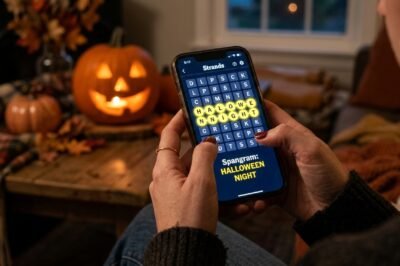
As the digital landscape continues to undergo a massive transformation, the New York Times Games suite has emerged not just as a casual pastime but as a significant driver of subscription-based revenue and daily user engagement across the globe. Today, on this Saturday, October 31, puzzle enthusiasts are greeted with the particularly intriguing Strands puzzle #972. This milestone iteration of the game underscores the enduring popularity of word-search mechanics blended with sophisticated thematic curation. For many users, the daily ritual of solving these puzzles provides a moment of cognitive focus and mental refreshment amidst the chaotic noise of the modern digital age. In this comprehensive deep dive, we explore the specific hints, the elusive spangram, and the overarching strategy required to conquer today’s grid. Beyond providing the simple solution, we examine the broader implications of how games like Strands serve as a psychological anchor for the Times, effectively anchoring its digital subscribers into a multi-year ecosystem. Whether you are a seasoned veteran of the Wordle era or a newcomer navigating the shifting letter grid of Strands for the first time, understanding the intricate architecture of these puzzles is essential to maintaining your streak and appreciating the editorial craftsmanship that goes into every single letter placement on the board.
The cultural phenomenon of the NYT Games app cannot be overstated in the context of current media trends. What started as a prestigious crossword department has blossomed into a gaming powerhouse that rivals dedicated mobile studios. Strands, the latest addition to the fold, challenges players to find themed words in a grid where letters can be connected in any direction—up, down, left, right, and diagonally—without reusing the same cell for a single word. The beauty of today’s Halloween-themed puzzle, #972, lies in its ability to evoke the festive spirit of the season while maintaining the rigorous difficulty curve that keeps intellectual curiosity alive. As we peel back the layers of today’s grid, we see how the editorial team uses seasonal linguistics to create a sense of community among solvers, as thousands of people simultaneously hunt for the same hidden patterns across the world.
The Architectural Brilliance and Strategic Logic of Strands
Strands distinguishes itself from its predecessors like Connections or Wordle by utilizing a flexible, non-linear search mechanic. In puzzle #972, the grid is designed with a high density of consonant clusters that initially appear daunting. To master this specific board, players must understand the concept of the ‘Spangram’—a theme-defining word that touches two opposite sides of the grid. Unlike the regular theme words, the Spangram provides the overarching context for the entire puzzle. Today’s strategic logic requires a deductive approach: by identifying shorter, high-frequency words first, solvers can eliminate ‘noise’ letters, eventually revealing the winding path of the Spangram. This process of elimination is a core component of the game’s cognitive appeal, mimicking the reward systems found in complex detective work or data analysis.
Furthermore, the ‘Hint’ system in Strands introduces an interesting economic layer to the gameplay. Players earn hints by finding words that are not part of the theme. This encourages exploration and rewards a broad vocabulary, even if those words do not technically ‘count’ toward the final win. On a day like October 31, where the theme is likely centered around Halloween folklore and traditions, the non-theme words often consist of common autumn terminology. This duality of searching—hunting for the theme while gathering ‘energy’ through non-theme words—creates a compelling gameplay loop that ensures players of all skill levels can eventually reach the solution without feeling frustrated or alienated by the difficulty.
Decoding the Theme: October 31st Special Analysis
Today’s theme is titled ‘Night Fright,’ a clever nod to the Halloween festivities. In Strands #972, the editorial team has curated a list of words that span the spectrum of spooky imagery. Analyzing the theme requires players to think beyond the obvious. While words like ‘GHOST’ or ‘WITCH’ are staples of the genre, the Times often incorporates more nuanced vocabulary to challenge the user base. In this specific grid, the arrangement of letters suggests a focus on the atmosphere of the holiday rather than just the costumes. We see a heavy emphasis on words that describe the visceral experience of a cold October night, blending the supernatural with the seasonal.
The thematic consistency of puzzle #972 is a testament to the NYT’s commitment to quality. Each word discovered feels like a puzzle piece falling into place, contributing to a larger narrative. For instance, finding the word ‘SKELETON’ might lead a player to look for ‘BONES’ or ‘MARROW’ nearby. This associative thinking is exactly what the developers intend to stimulate. By aligning the puzzle with the actual date, the game transcends being a mere software application and becomes a part of the user’s lived experience of the day. This temporal relevance is a key driver in the ‘viral’ nature of the game, as players share their results on social media platforms, fueling a collective conversation about the day’s specific challenges.
Strategic Hints for Conquering Strands #972
If you are currently staring at the grid and feeling stuck, consider the following tactical advice. First, look at the corners. In puzzle #972, the corners are occupied by letters that belong to relatively long words, which is a common trick used to hide the starting points of the Spangram. Second, pay attention to the letter ‘Q’ or ‘Z’ if they appear; in today’s Halloween theme, these often point toward words like ‘QUIVER’ or ‘WIZARD.’ However, for #972, the real challenge lies in the central cluster of vowels. There is a cluster of ‘O’ and ‘E’ letters that form the backbone of several overlapping words, requiring you to carefully trace the path so as not to ‘orphan’ any letters.
Another tip for today’s board involves the Spangram itself. Remember that the Spangram must touch two opposite sides. If you see a path of letters that stretches from the top to the bottom or left to right, trace it out even if it seems nonsensical at first. Often, the Spangram is a compound word or a common phrase. In the case of #972, the Spangram effectively bisects the board, acting as a wall between the ‘costume’ related words on the left and the ‘supernatural’ related words on the right. Breaking the board into these two halves mentally can make the remaining search significantly easier.
The Spangram and Full Word List for Oct 31
For those who are ready for the full reveal, the Spangram for today’s NYT Strands #972 is HALLOWEENNIGHT. This massive word snakes through the center of the grid, touching the left and right edges. It provides the necessary anchor for all other words. The thematic words included in today’s solution are: GHOSTS, PUMPKIN, COSTUME, VAMPIRE, LANTERN, SPOOKY, TREATS, and SHADOW. Each of these words contributes to the ‘Night Fright’ theme and fills the grid completely, leaving no letter unused.
Observing the placement of VAMPIRE and PUMPKIN, we see they occupy the lower quadrants of the grid, while GHOSTS and SHADOW are tucked away in the upper sections. This balanced distribution is typical of the #972 layout, ensuring that the player’s eye must travel across the entire digital canvas. The word COSTUME is particularly tricky today because it shares a ‘T’ and ‘U’ proximity with TREATS, which can lead to early-game confusion if one is not careful about which letter belongs to which sequence. Successfully identifying these words in the correct order is the mark of a true Strands master.
Market Implications: The Business of Daily Puzzles
From a financial and business perspective, the success of Strands #972 is a clear indicator of the New York Times’ successful pivot to a ‘bundle’ subscription model. By integrating high-quality, addictive games into their news subscription, they have significantly lowered their churn rate. Market analysts suggest that the ‘Games’ segment of the NYT is now a primary entry point for younger demographics who might not otherwise subscribe to a traditional news outlet. The engagement metrics for puzzles like Strands are staggering, often exceeding the time spent on the homepage itself. This shift has massive implications for the digital advertising and subscription economy, as it proves that ‘utility’ and ‘entertainment’ are the twin pillars of modern media survival.
Furthermore, the data collected from player behavior on puzzles like #972 provides the Times with invaluable insights into user habits. They can track when users are most active, which themes resonate most strongly, and where the difficulty threshold lies. This feedback loop allows for the continuous refinement of the product, ensuring that the ‘NYT Games’ brand remains synonymous with premium digital experiences. As competitors try to emulate this success, the Times’ head start in building a community around daily wordplay gives them a formidable moat in the increasingly crowded attention economy.
Future Implications: The Longevity of Digital Wordplay
Looking ahead, the evolution of Strands and the broader NYT Games portfolio suggests a future where interactive media becomes even more integrated with daily news consumption. We may see Strands puzzles that reflect breaking news events in real-time or collaborations with major cultural figures to curate special edition boards. The success of puzzle #972 on a major holiday like Halloween proves that there is a deep-seated human desire for shared, structured intellectual challenges. As AI and automated content become more prevalent, the ‘hand-crafted’ feel of the NYT Strands puzzles offers a human touch that is increasingly rare and valuable.
Ultimately, the significance of today’s Strands answers goes beyond just clearing a grid. It represents the intersection of technology, linguistics, and seasonal tradition. For the New York Times, it is a triumph of product design; for the player, it is a satisfying mental exercise. As we move into the final months of the year, the continued growth of the Strands user base will likely solidify its place as a permanent fixture in the daily digital diet of millions. Whether it is through the thrill of finding a 13-letter Spangram or the simple joy of a completed grid, Strands continues to define the cutting edge of casual gaming and digital engagement.





































Leave a Reply