
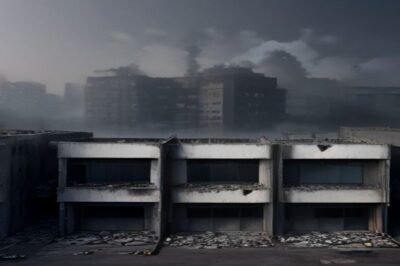
The capital city of Islamabad woke up to a harrowing reality this week as news broke of a catastrophic fire at a major government-run hospital, resulting in the tragic deaths of 14 infants. This incident, which has been widely reported by international outlets including The Hindu, has sent shockwaves across Pakistan and the global community, highlighting a terrifying lapse in safety protocols within the country’s most critical healthcare facilities. The fire, which reportedly originated in the neonatal intensive care unit (NICU), targeted the most vulnerable—newborns who were already fighting for their lives in incubators. As the smoke cleared, the grim reality of the situation became apparent: 14 families had been robbed of their children’s futures in a place that was supposed to be a sanctuary of healing. This tragedy is not just an isolated accident; it is a searing indictment of the crumbling infrastructure and the systemic neglect that plagues the public health sector in South Asia. The gravity of this loss cannot be overstated, as it touches upon the fundamental right to safety and life for the nation’s youngest citizens. The incident has prompted an immediate outcry for accountability, as the public demands to know how such a failure could occur in the heart of the nation’s capital, where resources and oversight are expected to be at their highest.
The Immediate Events: A Timeline of Chaos and Despair
The fire is believed to have started in the early hours of the morning, a time when staffing is often at its lowest and response times can be hampered by the stillness of the night. Early reports suggest that the blaze began in the NICU on the upper floors of the hospital building. Eyewitnesses and hospital staff described a scene of absolute pandemonium as thick, acrid smoke filled the corridors within minutes. Because the NICU is a specialized environment filled with oxygen cylinders and plastic-based medical equipment, the fire spread with an intensity that overwhelmed the initial response efforts. Nurses and doctors on duty reportedly tried to move the infants, but the rapid accumulation of carbon monoxide made the environment lethal almost instantly. By the time the local fire department arrived, the heat was so intense that entry into the ward was delayed. The harrowing sounds of alarms and the frantic cries of parents who had rushed to the scene created a backdrop of horror that will haunt the city for years to come. While some infants were successfully evacuated to other wards or nearby facilities, 14 babies could not be reached in time, succumbing to either the flames or smoke inhalation.
Investigating the Root Cause: Electrical and Structural Failures
Preliminary investigations into the Islamabad hospital fire point toward a recurring culprit in regional infrastructure disasters: an electrical short circuit. Expert analysis of the site suggests that the hospital’s wiring was not equipped to handle the high electrical load required by modern NICU equipment, including ventilators, incubators, and monitoring systems. Over the years, as the hospital expanded its capacity, the underlying electrical grid remained largely untouched, creating a ticking time bomb of overloaded circuits. Furthermore, the absence of an automated fire suppression system, such as ceiling-mounted sprinklers, meant that there was no immediate intervention to dampen the flames before they reached a critical mass. In many public hospitals in Pakistan, fire extinguishers are either outdated, empty, or placed in locations that are inaccessible during a crisis. The structural design of the building also played a role; narrow stairwells and a lack of external fire escapes made evacuation nearly impossible once the main hallways were engulfed in smoke. This disaster highlights a critical need for a comprehensive audit of all public buildings in Islamabad, particularly those housing high-risk patients.
The NICU Vulnerability: Why Neonatal Units are High Risk
Neonatal Intensive Care Units are uniquely susceptible to fire hazards due to the concentration of life-sustaining technology. The presence of pressurized oxygen is a major factor; oxygen itself is not flammable, but it acts as a powerful oxidizer that can turn a small spark into an uncontrollable inferno. Most of the equipment in these wards, including the casings of incubators and the tubing for ventilators, is made of polymers that release toxic fumes when burned. For infants, whose lungs are already underdeveloped or compromised, the inhalation of even a small amount of this toxic smoke is fatal. Additionally, NICU patients are entirely dependent on their caregivers for movement. Unlike adult wards where some patients might be ambulatory, every single patient in a NICU must be manually disconnected from machines and carried to safety, a process that is time-consuming and requires a high ratio of staff to patients. On the night of the Islamabad fire, it is reported that the staff-to-patient ratio was far below international standards, leaving the few nurses on duty with the impossible task of saving dozens of babies simultaneously.
Institutional Accountability and the Cycle of Inaction
In the wake of the tragedy, the Pakistani government has announced the formation of a high-level inquiry committee to determine the exact cause and identify those responsible. However, many citizens and activists are skeptical, noting that similar committees in the past have rarely led to significant policy changes or criminal prosecutions. The Health Ministry has come under intense fire for its perceived negligence in overseeing hospital safety audits. Critics argue that budget allocations for healthcare are often diverted to more visible projects, while the unglamorous but essential task of maintenance and safety upgrades is ignored. There are also calls for the resignation of senior hospital administrators, who are accused of ignoring previous warnings about the facility’s deteriorating electrical system. The political fallout is significant, as opposition parties use the incident to highlight the government’s failure to provide basic security for its citizens. For the families of the 14 infants, however, political rhetoric offers little comfort. They are calling for justice that goes beyond reports—they want a fundamental change in how the state values the lives of the poor who rely on public health services.
Global Standards vs. Local Realities: A Comparative Study
When compared to international healthcare safety standards, such as those set by the World Health Organization (WHO) or the National Fire Protection Association (NFPA), the conditions at the Islamabad hospital were drastically deficient. In developed nations, hospital wards are required to have fire-rated doors that can withstand heat for hours, localized smoke extraction systems, and redundant electrical feeds to prevent overheating. In contrast, many South Asian public hospitals operate with infrastructure that dates back several decades, with patchwork repairs that do not meet modern safety codes. The gap between global standards and local realities is often blamed on a lack of funding, but experts argue it is more a matter of prioritization and enforcement. Without a rigorous, independent body to inspect hospitals and the power to shut down non-compliant facilities, tragedies like the one in Islamabad are destined to repeat. The international community has often offered technical assistance for infrastructure development, but without domestic political will to maintain these systems, the impact remains minimal.
The Path Forward: Reforming Pakistan’s Healthcare Safety Codes
The death of 14 infants must serve as a turning point for Pakistan’s healthcare administration. Moving forward, several critical steps are necessary to prevent a recurrence. First, there must be a mandatory, nationwide implementation of the Building Code of Pakistan’s fire safety provisions in all medical facilities. Second, hospital staff must undergo regular, rigorous fire drill training specifically tailored for the evacuation of non-ambulatory patients. Third, the government must invest in smart monitoring technology that can detect electrical surges or smoke at the earliest possible stage and automatically alert both hospital security and the local fire department. Finally, there must be a cultural shift in how safety is perceived—not as a bureaucratic hurdle, but as the foundation of medical care. The loss of these 14 lives is a permanent scar on the nation, but if their legacy is a safer, more resilient healthcare system, then perhaps some measure of meaning can be found in this senseless tragedy. The eyes of the world are now on Islamabad to see if it will rise to the challenge of reform or allow this disaster to fade into the archives of forgotten incidents.
Conclusion: A Nation in Mourning and the Call for Justice
As the funerals for the 14 infants take place across the country, the mood in Pakistan remains one of deep mourning and simmering anger. This event is a reminder that the quality of a nation’s civilization is measured by how it protects its most helpless members. The fire in the Islamabad hospital was not just an act of God or a stroke of bad luck; it was the result of human error, systemic neglect, and a failure of governance. The implications of this news will resonate for years, influencing everything from healthcare policy to public trust in the state. For the parents who left the hospital with empty arms, no amount of financial compensation or official apologies can replace what was lost. The only true justice will be the assurance that no other parent will ever have to face such a nightmare again. The government must act now, with transparency and urgency, to ensure that hospitals are once again places of life, not death.




































Leave a Reply