
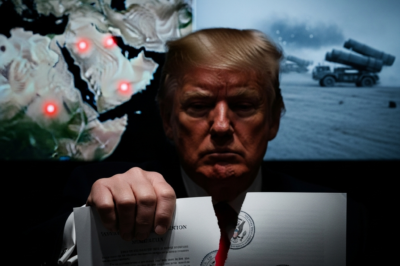
In a move that has sent shockwaves through the corridors of international diplomacy and global markets alike, the Islamic Republic of Iran has officially announced the suspension of its commitments under the recent Memorandum of Understanding (MoU) regarding ceasefire protocols and regional de-escalation. This dramatic pivot in Tehran’s foreign policy comes as a direct and immediate reaction to statements made by Donald Trump, who forcefully declared that the standing agreement was effectively "over." The geopolitical landscape of the Middle East, already teetering on a knife’s edge after years of proxy conflicts and economic sanctions, now faces a renewed era of profound uncertainty. For months, international mediators from the European Union and regional powers like Oman and Qatar had worked tirelessly to maintain a semblance of order through this MoU, but the latest rhetoric from the United States and the subsequent retaliatory stance from the Iranian leadership suggest that the window for diplomatic resolution is closing with alarming speed. This development represents more than just a diplomatic spat; it is a fundamental breakdown of the communication channels that were designed to prevent a full-scale kinetic conflict in a region that controls a significant portion of the world’s energy supply. Experts suggest that we are entering a phase of "Maximum Pressure 2.0," where the strategic patience previously exhibited by both sides has been replaced by a policy of immediate and aggressive reciprocity.
The Anatomy of the Ceasefire MoU and Its Sudden Collapse
To understand the gravity of the current situation, one must look at the origin of the Memorandum of Understanding that has now been discarded. The MoU was never a formal treaty, but rather a series of structured understandings aimed at limiting the scope of operations for Iranian-backed groups in exchange for certain degrees of sanction relief and the unfreezing of humanitarian assets. It was a fragile bridge built on the ruins of the 2015 Joint Comprehensive Plan of Action (JCPOA), which had been systematically dismantled during the first Trump administration. The suspension of these commitments by Iran signifies that the internal hardliners within the Iranian Parliament (Majlis) and the Islamic Revolutionary Guard Corps (IRGC) have successfully argued that diplomatic engagement with the United States is no longer a viable path to securing Iran’s national interests. The declaration by Trump that the agreement is "over" provided the necessary political cover for Tehran to walk away without appearing as the initial aggressor in the eyes of its domestic audience. This collapse is not merely a technicality; it removes the guardrails that prevented direct military friction in the Persian Gulf and the Levant, potentially leading to a vacuum that will be filled by increased military posturing and high-stakes brinkmanship.
Trump’s Disruptive Diplomacy and the ‘Maximum Pressure’ Doctrine
The catalyst for this latest escalation is rooted in the specific brand of disruptive diplomacy championed by Donald Trump. By declaring the agreement void, Trump is signaling a return to the "Maximum Pressure" campaign that defined his previous term. This strategy is predicated on the belief that economic strangulation and credible military threats are the only tools capable of forcing the Iranian regime to negotiate a "better deal" that includes restrictions on its ballistic missile program and regional influence. However, critics of this approach argue that it frequently leads to the opposite result, emboldening hardline factions in Tehran and pushing the country closer to strategic alliances with rivals like Russia and China. In his recent statements, Trump emphasized that the previous MoU was a "disaster" that allowed Iran to fund its proxies while gaining legitimacy on the world stage. By terminating the US involvement in this understanding, he is effectively challenging the current international order and forcing allies in Europe and the Middle East to choose a side. This zero-sum approach to foreign policy leaves little room for the nuanced back-channel communications that have historically prevented accidental escalations from turning into regional wars.
Tehran’s Strategic Reciprocity and Domestic Political Pressures
From the perspective of Tehran, the suspension of the MoU commitments is a calculated move of "strategic reciprocity." The Iranian leadership, led by the Supreme Leader and the newly consolidated conservative government, has long maintained that they will not remain bound by an agreement if the other party fails to fulfill its obligations. By suspending these commitments, Iran is signaling its readiness to resume higher levels of uranium enrichment, increase its support for the "Axis of Resistance," and potentially restrict maritime traffic in the Strait of Hormuz. Internally, the Iranian government is facing significant pressure to address the country’s economic woes, which have been exacerbated by years of sanctions. The failure of the MoU to provide the promised economic relief has made the diplomatic path unpopular among the Iranian public and the clerical establishment. By taking a hardline stance against Trump’s declarations, the regime aims to project strength and national unity, distracting from domestic grievances and consolidating its grip on power. The move is also a message to the international community that Iran will not be intimidated by rhetorical shifts in Washington, even as the risk of military confrontation grows.
Impact on Regional Proxies and the Shadow War
The most immediate and dangerous consequence of the MoU’s suspension will likely be felt on the battlefields of the Middle East. For the past year, the "shadow war" between Iran and its adversaries has been somewhat mitigated by the tacit understandings within the MoU. With those commitments suspended, we can expect a significant uptick in activities from the various groups within the Iranian-led "Axis of Resistance." This includes Hezbollah in Lebanon, various militias in Iraq and Syria, and the Houthi movement in Yemen. Without the restraining influence of the ceasefire protocols, these groups may feel empowered to launch more frequent and sophisticated attacks against regional targets and maritime shipping lanes. This creates a dangerous feedback loop: as proxy attacks increase, the calls for direct retaliation against Iranian soil grow louder in Washington and Tel Aviv. The collapse of the MoU effectively removes the "firewall" that separated localized conflicts from a broader regional conflagration. Military analysts are particularly concerned about the potential for miscalculation, where a single drone strike or a naval skirmish could trigger a chain reaction that neither side can easily stop.
Global Market Volatility and the Energy Security Dilemma
The international community is watching these developments with bated breath, primarily due to the potential impact on global energy markets. The Strait of Hormuz, which sits at Iran’s doorstep, is the world’s most important oil chokepoint, with approximately 20% of the world’s total oil consumption passing through it daily. Any threat to the security of this waterway, resulting from the suspension of the ceasefire commitments, could lead to a dramatic spike in oil prices, threatening the fragile recovery of the global economy. Already, energy futures have seen a noticeable uptick as traders price in the "geopolitical risk premium" associated with a potential US-Iran confrontation. Beyond oil, the breakdown of diplomacy threatens the stability of international trade routes in the Red Sea and the Gulf of Aden. Shipping companies are already facing increased insurance premiums and the need for costly diversions around the Cape of Good Hope. The economic fallout of a total collapse in US-Iran relations would be felt from the gas stations of the Midwest to the manufacturing hubs of East Asia, making this a global crisis rather than a localized diplomatic dispute.
The Future Outlook: Can Diplomacy Be Salvaged?
As the world grapples with the fallout of this suspension, the question remains whether diplomacy can be salvaged or if a military collision is inevitable. The European powers, known as the E3 (France, Germany, and the UK), are in a difficult position, attempting to bridge the gap between a confrontational Washington and a defiant Tehran. However, their leverage is limited, as they cannot provide the massive economic incentives Iran requires without running afoul of US secondary sanctions. China and Russia, meanwhile, are likely to use this friction to further their own interests, offering Iran economic and military lifelines that undermine Western efforts to isolate the regime. The path forward is fraught with peril. Some analysts suggest that a "New Normal" of low-level conflict and high-level tension will persist for the foreseeable future. Others warn that the end of the MoU marks the beginning of the end for the non-proliferation regime in the Middle East. Ultimately, the suspension of the ceasefire commitments by Iran, triggered by Trump’s declaration, serves as a stark reminder that in the realm of international relations, words have consequences, and the destruction of a diplomatic framework is far easier than its reconstruction. The coming weeks will be critical as the world watches to see if cooler heads can prevail or if the drumbeats of war will drown out the remaining voices of reason.
































Leave a Reply