
In Shorts:
- A curated list revealing popular films that originated from the literary works of Nobel Laureates in Literature.
- Highlights the global influence of authors like Rudyard Kipling, Ernest Hemingway, and John Steinbeck on Hollywood.
- Showcases a diverse range of genres, from family adventures to deep psychological dramas, all with a Nobel connection.
The Silver Screen’s Literary Pedigree: When Nobel-Winning Books Become Cinematic Classics
The glittering world of cinema often finds its most profound stories in the pages of great literature. But some films carry an extra layer of prestige, having been adapted from the works of authors who have been awarded the Nobel Prize in Literature. These aren’t just book-to-film adaptations; they are translations of genius, bringing the most celebrated narratives in human history to a visual medium.
At AlwaysFirst, we’ve curated a list of ten remarkable films that owe their origins to Nobel laureates. This journey through cinematic history reveals how the complex themes and rich characters penned by these literary giants were interpreted for audiences worldwide.
From the Indian Jungles to the American West
The list showcases an incredible diversity of storytelling. Take, for instance, Rudyard Kipling’s “The Jungle Book.” The 1907 Nobel laureate’s collection of stories has been adapted countless times, most famously by Disney, immortalizing Mowgli, Baloo, and Bagheera in the popular consciousness. Similarly, the rugged individualism and stark realities of the American West, as captured by John Steinbeck (Nobel laureate, 1962), came to life in powerful films like “The Grapes of Wrath” and “East of Eden.”
Exploring the Depths of the Human Condition
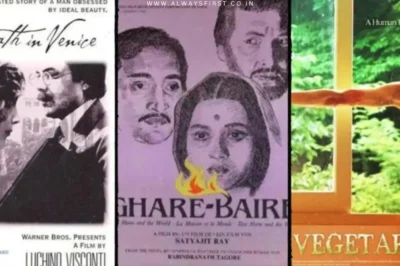
Beyond adventure, these adaptations often delve into profound psychological and philosophical territory. The works of Thomas Mann (Nobel laureate, 1929), such as “Death in Venice,” became visually stunning and introspective films exploring obsession and beauty. The brutal honesty and economic despair of the Great Depression were searingly portrayed in John Steinbeck’s “Of Mice and Men,” a story that has been adapted into multiple critically acclaimed films.
Ernest Hemingway (Nobel laureate, 1954), known for his sparse, powerful prose, saw his masterpieces transition into cinema classics. “The Old Man and the Sea,” a testament to human endurance, and “For Whom the Bell Tolls,” a epic war drama, are prime examples of how his themes of courage and loss resonated with filmmakers.
This fascinating intersection of high literature and popular cinema demonstrates that a powerful story, recognized by the highest literary accolade, possesses a universal appeal that transcends its original medium. It proves that the visions of Nobel Prize-winning authors are not confined to the page but continue to inspire, challenge, and entertain us on the silver screen.
Stay with AlwaysFirst for more deep dives into the connections between art, literature, and the movies you love.




































Leave a Reply