
The landscape of American energy is undergoing a seismic transformation, driven by an insatiable hunger for carbon-free electricity and the rapid expansion of high-computing technologies. In a landmark move that signals a federal embrace of nuclear power’s resurgence, the United States Department of Energy (DOE) has reportedly offered Constellation Energy a conditional loan guarantee worth approximately $5 billion. This massive financial injection is designed to facilitate the modernization and revitalization of critical nuclear infrastructure, specifically targeting the re-opening and technological upgrading of facilities that were once thought to be relics of the 20th century. As the Biden-Harris administration pushes toward a 100% clean energy grid by 2035, the reliance on intermittent sources like wind and solar has revealed a desperate need for stable, high-output baseload power. Constellation Energy, the nation’s largest operator of carbon-free nuclear plants, stands at the epicenter of this shift. This $5 billion commitment is not merely a subsidy; it is a strategic maneuver intended to safeguard domestic energy security while fueling the massive data centers that power the global artificial intelligence revolution.
The Strategic Pivot: DOE’s Loan Programs Office and Nuclear Modernization
The conditional commitment comes from the DOE’s Loan Programs Office (LPO), an entity that has transitioned from a quiet administrative wing to a powerhouse of industrial policy. Under the leadership of Jigar Shah, the LPO has been tasked with deploying billions of dollars to scale up emerging technologies and revitalize existing clean energy assets. The $5 billion offer to Constellation Energy represents one of the largest single commitments to the nuclear sector in recent history. It underscores a fundamental change in the US government’s approach to nuclear energy—moving from a period of decommissioning and stagnation to one of proactive investment and life extension.
This financing is primarily intended to support the massive capital expenditures required to upgrade existing reactor components, improve safety systems, and enhance thermal efficiency. Unlike the construction of new plants, which can take decades and face astronomical cost overruns, upgrading existing reactors provides a faster and more cost-effective route to increasing grid capacity. Constellation Energy operates a fleet that provides roughly 20% of the carbon-free electricity in the United States, making them the most logical partner for a federal initiative of this scale. The funds will likely be used to replace aging steam generators, modernize control rooms with digital interfaces, and reinforce structural integrity to allow for license extensions that could keep these plants operational for another twenty to forty years.
The Three Mile Island Revival: A Symbol of the Nuclear Renaissance
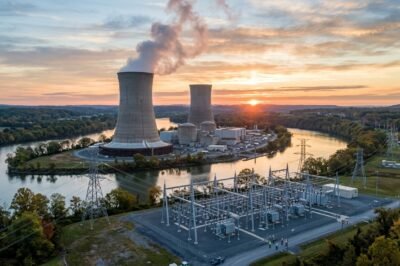
Central to the discussions surrounding this financing is the historic plan to restart Unit 1 of the Three Mile Island nuclear plant in Pennsylvania. Renamed the Crane Clean Energy Center, the facility has become the poster child for the new era of nuclear power. Constellation announced earlier this year a long-term power purchase agreement (PPA) with Microsoft, which seeks to use the plant’s entire output to power its expanding network of data centers. The $5 billion federal backing provides the financial backbone necessary to execute this complex restart, which involves rigorous inspections, regulatory hurdles from the Nuclear Regulatory Commission (NRC), and significant hardware overhauls.
The symbolic weight of Three Mile Island cannot be overstated. Decades ago, the site was synonymous with the decline of nuclear energy in the United States following the partial meltdown of Unit 2. Today, the revival of Unit 1 signifies a pragmatic realization: that the transition to a digital economy cannot happen without the dense, reliable energy that only nuclear power can provide. The Microsoft deal demonstrated that the private sector is willing to pay a premium for carbon-free, 24/7 electricity, and the US government’s $5 billion offer ensures that the infrastructure is robust enough to meet that demand. This synergy between federal policy, private tech giants, and utility operators is creating a new blueprint for American industrial growth.
Economic Implications: Market Reaction and Investor Sentiment
The announcement of the $5 billion financing offer has sent shockwaves through the financial markets, solidifying Constellation Energy’s position as a top-tier utility stock. Investors have responded favorably, recognizing that federal loan guarantees significantly lower the cost of capital for high-risk, high-reward energy projects. By de-risking the modernization of these plants, the DOE is effectively providing a floor for Constellation’s valuation, ensuring that the company can pursue aggressive growth without over-leveraging its balance sheet. This has led to a surge in the company’s stock price, outperforming traditional utility benchmarks and attracting interest from ESG-focused institutional investors.
Furthermore, the economic impact extends far beyond the stock market. The upgrading of these reactors is expected to create thousands of high-paying, specialized jobs in the nuclear engineering, construction, and maintenance sectors. In regions like Pennsylvania and Illinois, where Constellation maintains a heavy presence, these plants serve as economic anchors for local communities. The $5 billion investment ensures the longevity of these jobs and provides a boost to the local tax base, which funds schools and public infrastructure. From a broader macroeconomic perspective, the federal government is betting that a stable, low-cost energy supply will keep the US competitive in the global race for AI dominance, preventing tech companies from seeking cheaper, fossil-fuel-based energy in other jurisdictions.
Technological Hurdles and the Path to Regulatory Approval
While the financial commitment is a major milestone, the path to fully modernized reactors is fraught with technical and regulatory challenges. Upgrading a nuclear plant is not as simple as swapping out old parts; it requires a meticulously documented process that satisfies the stringent safety standards of the NRC. Constellation must demonstrate that the proposed upgrades—such as new cooling systems and advanced fuel assemblies—do not compromise the safety margins of the reactors. The $5 billion in financing will be crucial in hiring the necessary expert consultants and conducting the exhaustive environmental and safety studies required for approval.
There is also the matter of the nuclear supply chain. Years of stagnation in the US nuclear industry have led to a thinning of the domestic supply chain for specialized reactor components. A portion of the DOE financing may be directed toward revitalizing these supply lines, encouraging domestic manufacturers to scale up production of nuclear-grade steel, valves, and sensors. By creating a steady demand for these components through a multi-billion dollar upgrade program, the US can reduce its reliance on foreign suppliers and ensure that its critical energy infrastructure remains under domestic control. This technological sovereignty is a key pillar of the current administration’s broader national security strategy.
Addressing the Challenges of Nuclear Waste and Public Perception
Despite the current optimism, two perennial issues remain: the management of spent nuclear fuel and public perception regarding safety. While the $5 billion focuses on upgrades and power production, the long-term storage of nuclear waste remains a political stalemate at the federal level. Constellation and other operators continue to store waste on-site in dry casks, a solution that is safe in the short term but lacks a permanent geological repository. Critics argue that expanding the life of these plants only adds to the volume of waste without a clear exit strategy. However, proponents of the DOE loan suggest that keeping carbon-free plants running is a far greater priority in the context of the immediate climate crisis.
Public perception, however, seems to be shifting. As the reality of climate change becomes more apparent and the energy requirements of the internet become more obvious, younger generations and even traditional environmental groups are becoming more open to nuclear power. The narrative is changing from ‘nuclear is dangerous’ to ‘nuclear is a necessary tool for survival.’ The DOE’s investment is, in many ways, an investment in this shifting cultural tide, betting that the American public will support a nuclear-heavy energy mix if it results in lower carbon emissions and a more resilient economy.
Conclusion: Future Implications for the Global Energy Map
The US offer of $5 billion to Constellation Energy is more than just a financial transaction; it is a declaration of intent. It signals that the United States is ready to lead the world in a nuclear-powered future, leveraging its existing assets to jumpstart a new era of industrial productivity. As this financing trickles through the economy, we are likely to see similar moves across the energy sector, with other utility giants seeking federal partnerships to revitalize their own aging fleets. This model of public-private cooperation—where the government provides the low-cost financing and the private sector provides the operational expertise and market demand—could become the standard for the global energy transition.
In the long term, the success of Constellation’s upgrades will serve as a proof-of-concept for the entire industry. If these plants can be modernized efficiently and integrated into the needs of the modern tech economy, it will pave the way for the deployment of the next generation of reactors, such as Small Modular Reactors (SMRs). For now, the focus remains on the $5 billion at hand, a sum that promises to breathe new life into the American grid and ensure that the reactors of yesterday are equipped to power the innovations of tomorrow. The world is watching, as the US attempts to prove that its oldest clean energy technology is, in fact, its most essential.





































Leave a Reply