
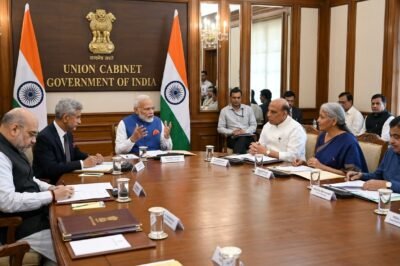
In a move that brings significant financial relief and festive cheer to millions across the nation, the Union Cabinet, chaired by Prime Minister Narendra Modi, has officially approved a 3 percent hike in Dearness Allowance (DA) for central government employees and Dearness Relief (DR) for pensioners. This decision, announced just ahead of the peak festive season, is not merely a routine administrative update but a calculated economic intervention designed to mitigate the erosive effects of inflation on the purchasing power of the government’s vast workforce. For months, speculation had been rife regarding the quantum of the increase, with employee unions and financial analysts closely monitoring the All India Consumer Price Index (AICPI) data. By settling on a 3 percent increase, the government has balanced the fiscal constraints of the national exchequer with the rising cost of living faced by approximately 49.18 lakh central government employees and 64.89 lakh pensioners. This development marks a pivotal moment in the current fiscal year, reflecting the government’s commitment to maintaining the real wages of its employees amidst global economic volatility and domestic price fluctuations.
Understanding the 3% DA Hike: Mechanics and Implementation
The latest approval brings the total Dearness Allowance to a substantial 53 percent of the basic pay, up from the previous 50 percent. This increase is effective retrospectively from July 1, 2024. Consequently, employees and pensioners will receive arrears for the preceding months, providing a timely liquidity boost right before major festivals like Diwali. The Dearness Allowance is a compensatory payment made to employees to hedge against the rising prices of essential commodities and services. It is calculated based on the 12-month average of the Consumer Price Index for Industrial Workers (CPI-IW), which is released monthly by the Labour Bureau under the Ministry of Labour and Employment.
Historically, the government revises DA and DR twice a year—once in January and once in July. The delay in the July announcement had led to some anxiety among the workforce, but the 3 percent figure aligns with the consensus expectations of market experts. While some employee federations had hoped for a 4 percent hike to match previous increments, the 3 percent adjustment is seen as a pragmatic response to the current inflationary trajectory. By pegging the total DA at 53 percent, the government has crossed a significant psychological threshold, further emphasizing the need for robust inflation-indexing in public sector wages.
Financial Implications for the National Exchequer
The fiscal impact of this decision is profound. According to official estimates, the combined impact on the exchequer on account of both Dearness Allowance and Dearness Relief will be approximately Rs 9,448.35 crore per annum. For the current financial year (2024-25), which covers the period from July 2024 to March 2025, the total outgo is expected to be around Rs 7,086.26 crore. This expenditure represents a significant portion of the non-developmental budget, yet it is considered essential for maintaining morale and social security among government servants.
The breakdown of the financial burden is as follows:
- Annual Cost for DA: Billions of rupees dedicated to active service members across various departments including Defense and Railways.
- Annual Cost for DR: A massive allocation for pensioners who rely on this relief to sustain their livelihoods during retirement.
- Arrears Payment: The immediate cash outflow required to cover the months of July, August, and September.
From a budgetary perspective, the Ministry of Finance must now account for this additional spending. However, the government usually sets aside a buffer for such revisions during the Union Budget, ensuring that the fiscal deficit targets are not drastically undermined. The challenge remains in balancing these recurring costs with the need for capital expenditure and infrastructure development, which are the primary drivers of long-term economic growth.
Macroeconomic Impact: Inflation and Consumption
The infusion of nearly Rs 9,500 crore into the hands of over 1.1 crore individuals is bound to have a tangible impact on the Indian economy. In the short term, this increased disposable income is expected to stimulate consumer demand. Since the announcement coincides with the festive season, much of this additional income is likely to be spent on consumer durables, electronics, apparel, and travel. This surge in spending provides a much-needed stimulus to the retail sector, helping businesses recover and grow.
However, economists also warn of the potential inflationary pressure that such a liquidity boost can create. When a large section of the population suddenly has more money to spend, it can lead to demand-pull inflation, especially if the supply of goods and services does not keep pace. Furthermore, the DA hike itself is a response to inflation, creating a feedback loop where rising prices lead to higher wages, which in turn can lead to higher prices. The Reserve Bank of India (RBI) will likely keep a close watch on these developments as it formulates its monetary policy to keep inflation within the target band of 4 percent plus or minus 2 percent.
Impact on Employee Morale and Union Demands
For the central government employees, the 3 percent hike is a welcome relief, but it also reignites the debate over the 8th Pay Commission. Traditionally, a new Pay Commission is set up every ten years to review and revise the entire salary structure of government employees. With the 7th Pay Commission recommendations having been implemented since 2016, unions are increasingly vocal about the need for a new commission to address structural anomalies and ensure that wages remain competitive with the private sector. The current 53 percent DA level is often seen as a trigger point where the government might consider merging DA with basic pay, though no official announcement has been made in this regard.
Employees in the Indian Railways, Postal Department, and the Armed Forces are among the largest beneficiaries. For a junior-level employee, the hike might mean a few hundred rupees extra per month, but for senior officials, the increase can be several thousand. Beyond the monetary value, the timely approval of DA is viewed as a sign of respect for the dedicated service of government officials. It mitigates the “bracket creep” where inflation pushes taxpayers into higher tax brackets without an actual increase in real income.
The Political Landscape and Festive Sentiment
The timing of the Cabinet’s approval is politically significant. With several state elections on the horizon and the national discourse focused on economic stability, providing a benefit to such a large and influential constituency is a strategic move. Government employees often represent a stable middle-class voting bloc, and their financial well-being is a key metric for assessing the success of the administration’s economic policies. By announcing the hike before Diwali, the government ensures that the positive sentiment is maximized.
Furthermore, this move often sets a precedent for state governments. Historically, many state administrations follow the central government’s lead and announce similar hikes for their own employees and pensioners. This creates a cascading effect across the country, further amplifying the total economic impact and ensuring that the benefits of inflation-linked adjustments reach the grassroots level of the public sector hierarchy across India.
Future Implications: The Road Ahead for Public Finance
Looking forward, the periodic revision of Dearness Allowance remains a cornerstone of India’s public sector wage policy. However, as the DA percentage continues to climb, the government faces a growing pension liability, especially under the Old Pension Scheme (OPS) which continues to be a point of contention in several states. While the New Pension System (NPS) was designed to reduce this burden, the Dearness Relief for older retirees remains a substantial fixed cost. The sustainability of such hikes depends heavily on the country’s GDP growth and tax revenue collection.
In conclusion, the 3 percent DA hike is a balanced act of governance. It provides immediate relief to the workforce, stimulates the economy during a critical festive window, and fulfills a statutory obligation to protect employees from the vagaries of inflation. While it poses a challenge to the fiscal deficit, the long-term benefits in terms of employee productivity and consumer sentiment are likely to outweigh the costs. As the nation moves into the second half of the fiscal year, all eyes will be on how this liquidity interacts with the broader economic indicators and whether it paves the way for further structural reforms in the 8th Pay Commission era.





































Leave a Reply