
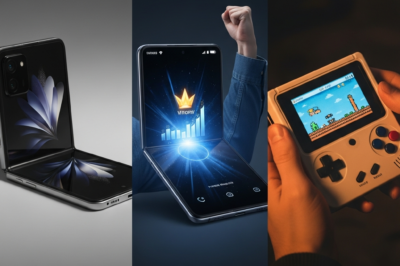
The Android ecosystem is currently undergoing one of its most transformative periods in recent memory, characterized by a relentless pursuit of hardware perfection and software integration. As we look toward the horizon of late 2024 and early 2025, the news cycle is dominated by a trio of major developments that showcase the diversity of the platform. From the high-stakes world of luxury foldables with Samsung’s Galaxy Z Flip 8 leaks to the critical acclaim surrounding Honor’s Magic V6, and the burgeoning niche of high-performance gaming with the Retroid Nova, the landscape is shifting. These updates represent more than just incremental hardware refreshes; they signify a maturing market where consumer expectations for durability, performance, and portability are being met with radical engineering solutions. As reported by Forbes and other leading tech analysts, the ‘Android Circuit’ is buzzing with a renewed energy that challenges even the most established players in the silicon valley. In this deep dive, we explore how these devices are setting the stage for the next decade of mobile computing and why the Android platform remains the epicenter of consumer electronics innovation.
The Galaxy Z Flip 8: Samsung’s Strategic Counter to the Foldable Competition
Samsung has long been the undisputed king of the clamshell foldable market, but with competitors like Motorola and Oppo closing the gap, the upcoming Galaxy Z Flip 8 is under immense pressure to deliver a ‘wow’ factor. Recent leaks suggest that Samsung is focusing heavily on two critical areas: display durability and battery longevity. For years, the Achilles’ heel of the Flip series has been the crease and the fragility of the ultra-thin glass. Insider reports indicate that the Flip 8 will feature a refined ‘Ironflex’ display technology, which utilizes a new substrate designed to withstand significantly more fold cycles while reducing the visible indentation. Furthermore, there is intense speculation regarding the external ‘Cover Screen.’ While the Flip 6 and 7 made strides in usability, the Flip 8 is rumored to expand the cover display even further, potentially reaching the hinge line to allow for full-app functionality without ever opening the device. Under the hood, we expect to see the Snapdragon 8 Gen 4 chipset, optimized specifically for the thermal constraints of a folding chassis. This move toward higher efficiency is crucial for extending the battery life of a device that is inherently limited by its split-cell design. Samsung’s Galaxy AI will also play a pivotal role, with rumors of a ‘Portrait Studio’ and real-time translation features that take advantage of the dual-screen form factor. The Flip 8 isn’t just a phone; it is Samsung’s statement that they can still innovate faster than their rivals can imitate.
Honor Magic V6: Defining the New Standard for Ultra-Thin Engineering
While Samsung focuses on the clamshell, Honor is making waves in the book-style foldable segment with the Magic V6. Having recently secured several industry awards for design excellence, the Magic V6 is being hailed as a triumph of industrial engineering. The primary narrative surrounding the V6 is its sheer thinness. Honor has managed to achieve a profile that, when folded, is barely thicker than a standard flagship smartphone like the iPhone 15 Pro Max or the Galaxy S24 Ultra. This was achieved through the use of a proprietary Silicon-Carbon battery technology, which allows for higher energy density in a significantly smaller physical footprint. The Magic V6’s success at international trade shows highlights a shift in consumer sentiment: users want the large screen of a tablet without the bulk of a traditional foldable. The software experience on the Magic V6 has also seen a massive overhaul with MagicOS, which now features advanced multitasking gestures that rival the fluidity of iPadOS. By winning prestigious awards, Honor has proven that it is no longer just a budget alternative to Huawei or Samsung; it is a premium innovator capable of leading the market in hardware aesthetics and battery science. The implications of the V6’s design will likely force other manufacturers to rethink their hinge mechanisms and internal cooling solutions in the coming years.
Retroid Nova: The Rise of the Premium Android Gaming Handheld
Moving away from smartphones, the Android world is seeing a massive resurgence in dedicated gaming hardware, led by the announcement of the Retroid Nova. For the uninitiated, Retroid has carved out a loyal following by producing affordable emulation devices. However, the Nova represents a pivot toward the high-end market. It is rumored to house a chipset capable of handling not just retro consoles, but modern Android titles and high-end cloud gaming services with ease. The Nova is expected to feature a 1080p OLED display, hall-effect joysticks to prevent stick drift, and a dedicated cooling fan—features usually reserved for much more expensive PC-based handhelds like the Steam Deck. The significance of the Retroid Nova lies in its software versatility. Running a clean version of Android 14, it allows users to access the Google Play Store, Xbox Game Pass, and various emulation frontends, making it a Swiss Army knife for gamers. As mobile gaming continues to eclipse traditional console gaming in terms of revenue, devices like the Retroid Nova are essential for bridging the gap between casual phone gaming and the enthusiast experience. The community is particularly excited about the ergonomics of the Nova, which appear to borrow cues from the best controllers in the industry, ensuring that long sessions of Genshin Impact or retro classics are comfortable for the user.
The Broader Implications: AI Integration and the 2025 Roadmap
When looking at the Galaxy Z Flip 8, the Magic V6, and the Retroid Nova collectively, a clear trend emerges: the integration of artificial intelligence into the very fabric of the hardware. For the Flip 8, AI is about enhancing the user’s daily workflow and photography. For the Magic V6, AI manages power consumption and optimizes the foldable display’s refresh rate to preserve the thin battery. For the Retroid Nova, AI upscaling techniques are being explored to make lower-resolution retro games look stunning on a modern OLED panel. The ‘Android Circuit’ is no longer just about who has the most RAM or the fastest CPU clock speed. It is about who can provide the most intelligent and seamless experience. Google’s influence through the Android 15 update will be the glue that holds these disparate devices together. We are seeing a push for ‘Satellite Connectivity’ becoming a standard across the board, and a renewed focus on ‘Private Space’ features that allow users to hide sensitive apps. This holistic approach to the ecosystem ensures that whether you are a business professional with an Honor foldable or a gamer with a Retroid handheld, the underlying platform is secure, smart, and interconnected.
Market Dynamics: Samsung vs. The New Global Contenders
The competitive landscape of 2024 is vastly different from that of five years ago. Samsung’s market share in the foldable segment is being nibbled away by brands like Honor, Xiaomi, and OnePlus. The Forbes report highlights that while Samsung has the brand recognition and the retail footprint, the ‘spec-war’ is being won by Chinese manufacturers who are willing to take greater risks with hardware design. The Magic V6 is a prime example of this risk-taking, pushing the boundaries of what is physically possible in a folding device. Meanwhile, the Retroid Nova represents a different kind of threat—the decentralization of the Android experience. Consumers are no longer looking for one device to do everything; they are increasingly willing to purchase secondary, specialized Android devices for specific tasks like gaming or reading. This fragmentation is actually a strength for the Android ecosystem, as it allows for a level of customization and choice that the closed ecosystem of Apple simply cannot match. As we move into 2025, the pressure will be on Samsung to not only maintain its quality but to regain its reputation as the primary driver of hardware innovation.
Conclusion: A Golden Age for Android Enthusiasts
In conclusion, the ‘Android Circuit’ is currently delivering a level of excitement that suggests we are entering a new golden age for mobile technology. The Galaxy Z Flip 8 promises to refine the foldable experience into something truly mainstream and durable. The Honor Magic V6 has set a new benchmark for elegance and engineering, proving that the ‘foldable tax’ in terms of weight and thickness is nearing its end. Finally, the Retroid Nova signifies the maturity of the Android gaming market, offering premium features at a price point that challenges the status quo. For the consumer, this means more choices, better technology, and a more competitive market that drives prices down and quality up. As these devices hit the shelves and the hands of reviewers, one thing is certain: the Android platform has never been more vibrant, more capable, or more essential to the future of the digital world. The journey from the early days of clunky hinges and slow processors to the sleek, AI-driven powerhouses of today is a testament to the power of open-source innovation and global competition.




































Leave a Reply